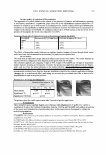
2003 ANNUAL SCIENTIFIC MEETING BIOCHEMICAL AND BIOENGINEERING ANALYSIS OF THE SKIN'S NATURAL MOISTURIZING FACTORS Marisa H. Robinson and R. Randall Wickett, Ph.D. University of Cincinnati College of Pharmacy, Cincinnati, Ohio Introduction 211 The natural moisturizing factor (NMF) of the skin is important for maintaining proper moisture levels in the stratum corneum. NMF is largely a degradation product of filaggrin, a histidine-rich protein found in the upper epidermis, which aggregates keratin filaments in the cells of the stratum granulosum. In the stratum corneum, filaggrin is degraded into a number of low molecular weight, hygroscopic molecules such as urea, pyrrolidone carboxylic acid, and individual amino acids. These molecules comprise the NMF. In these studies, we are using free amino acids as markers for NMF levels, as they are the major components. NMF levels can be expected to be altered by common activities such as bathing, soaking and surfactant damage. There is surprisingly little information on the effects these activities have on the skin. Our group has done several studies on soaking and extraction of the skin to uncover the effects of these treatments on NMF. We have developed a sensitive method to quantify the components of NMF using High Performance Liquid Chromatography (HPLC). Materials and Methods Analytical Method: A D-Squame® adhesive disc is removed from the skin and placed in a microcentrifuge tube. 300 µL of 0.006 M perchloric acid and 10 µL of 2 mmol/mL AABA are added to each tube. The samples sit for 3 hours at room temperature, after which the liquid extract is removed by pipetter to a fresh microcentrifuge tube, and the tube containing the D-Squame® is retained for protein analysis by the Pierce BCA protein assay. 20 µL of the extract is placed in a HPLC microvial, along with 30 µL of borate buffer and 10 µL of Waters AccQ-Fluor derivatizing reagent (6-a-quinolyl-n hydroxysuccinimidyl carbamate) and immediately vortexed for 5 seconds. Amino acid analyses are performed on a 15 cm C-18 reversed-phase column at 40° C under gradient conditions. The run time is 40 minutes. Peaks are eluted in order of increasing hydrophobicity with the most hydrophilic amino acids eluting earliest. Fluorescence detection is used, with excitation at 250 nm and emission at 395 nm. We have selected four amino acids to represent all of the free amino acids for quantification: serine, histidine, citrulline, and phenylalanine. Experimental Method: Volunteers with normal skin on the forearms were selected. After a one week no-product washout on the test areas, two sites were marked on each volar forearm, with treatments matched between contralateral sites as controls. Baseline biophysical measurements (MAT, TEWL, pH, sorption/desorption) were taken after a twenty-minute acclimation period. One site perarm was extracted with 1: 1 acetone/ether for 5 minutes, and the extracted sites re-measured. One arm was soaked in a 40 +/- 2.5 degree Celsius bath for 10 minutes, and then blotted dry. Measurements were collected 0.25, 0.50 and 4 hours after bathing. 15 or 20 D-Squames® were taken sequentially on each site for measurement of NMF levels 0.50 and 4 hours after soaking. Three studies of this variety were performed, the second and third of which omitted the solvent extraction. The second and third studies included D-Squame® collection on the soaked sites at both 0.50 hours and 4 hours after soaking, to measure NMF recovery over this time period. In the third study, samples were also collected on the outer calf after a one-week washout with no lotion in order to generate dry skin. The sites were equilibrated for 20 minutes, then biophysical measurements and 15 D-Squames® were collected.

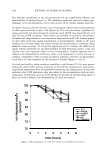
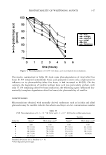
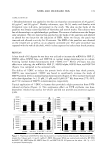
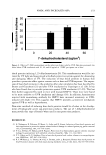
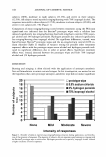
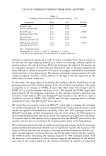
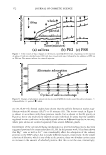
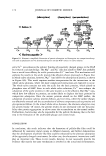
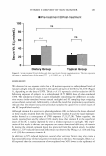
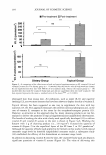
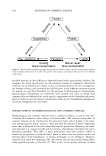
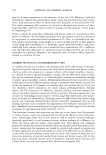
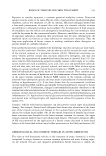
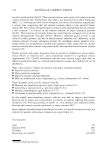
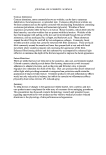
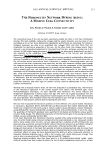
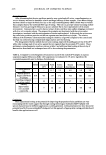
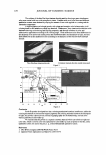
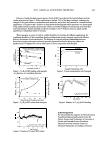
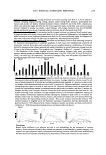
212 JOURNAL OF COSMETIC SCIENCE Results and Discussion: All three studies showed a reduction of NMF by the water soak alone. This effect was intensified by extraction of the lipid with acetone/ether, aJthough the extraction alone did not remove NMF (Figure 1). Surprisingly, the second and third studies reveaJed a significant recovery ofNMF levels in the water soaked sites over the 3.5 hours between sample coUections (Figure 2). The water soak also caused a short-term significant elevation in skin pH, which returned to normal by the four-hour measurement time (Figure 3). Unlike the pH, however, moisture accumulation (MAT) remained low relative to baseline at four hours after soaking (Figure 4). Sorption/desorption showed some effect in the second study, but none in the third, perhaps because the study was run during the winter and the skin was already quite dry. NMF measurement on the calf was unexpectedly similar to that of the forearm, particularly in light of the extremely dry skin observed there (Figure 2). Conclusions Water soaks as short as IO minutes can dramatically alter the biophysical and biochemicaJ properties of the stratum comeum. Recovery from damage is a complex process not adequately described by any one measurement. Acknowledgements This material is based upon work supported under a Society of Cosmetic Chemists' Graduate Research Fellowship. Figure 1: Summed Amino Acids S1rlpl Slllp15 Tape Slltp Numbar Figure 3: pH Change from Basellr,e □ cor1ro1 0� ....... -----------...i.=..c..Soak..=-ed� ■ 0.6 0.4 :;I 0.2 i D -1------1.. __ -0.2 -0.4�------------� Strip 1 Slrlp 3 Slrlp 5 Strip 10 S1rlp 15 Tape llrlp nuriler 0.7 -r---------------=-'..=-'-' I 0.1 G.5 ju u, 11.J o.z 0.1 8■Mln• 30 1nlr111i. poa., 4 hours post- •oak ■oak
Purchased for the exclusive use of nofirst nolast (unknown)
From: SCC Media Library & Resource Center (library.scconline.org)