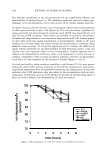
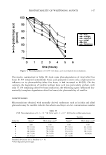
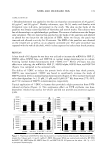
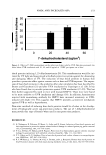
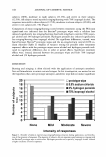
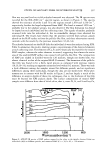
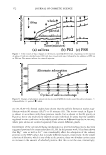
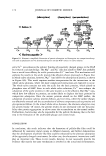
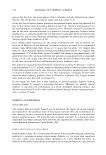
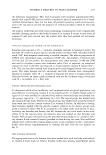
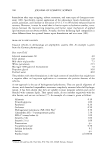
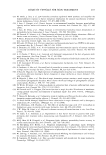
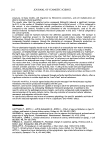
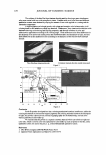
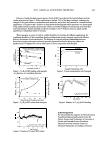
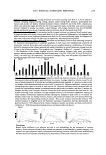
146 JOURNAL OF COSMETIC SCIENCE The addition of perfumes to the microemulsions did not significantly influence the photostability of arbutin (Figure 3). The whitening agent was protected against pho todamage in the microemulsion, even in the presence of the various odorous molecules. A similar trend was observed for kojic acid: all perfumed compositions studied appeared to offer some protection to kojic acid (Figure 4). This was particularly significant for orange and violet, the latter having the surprising result of 85% non-degraded kojic acid after five-hour-DVB irradiation. These results can probably be ascribed to the presence of linalool in both perfumes: as seen in previous experimental work (10), linalool appears to exert some protection against autoxidation in microemulsions, thanks to the good stability of its tertiary allylic free radical, which has the potential to terminate many oxidative chain reactions. To verify this hypothesis and to evaluate the influence of model odorous molecules on the photostability of both whitening agents, citral and linalool were also separately added to the microemulsion. Linalool appeared not to influence the photostability of arbutin, while citral determined a certain decrease in stability, comparable to that occurring in aqueous solutions moreover, the photostabil ity of kojic acid was improved by the presence of linalool (Figures 1 and 2). As citral and vanillin, whose oxidative instability is well known (15,16), were present among the several other odorous molecules in the perfume compositions, some photo degradation experiments were also performed evaluating the disappearance of these two molecules after UVB irradiation they were added to the microemulsion with no whit ening agent or with kojic acid, to verify whether the presence of the whitening agent or kojic acid could influence the photostability of citral and vanillin. 100 C 95 .c 90 L... ca "'C C a, a, "'C � 85 � a, C) a. a, - 80 "'C C a C 75 70 0 1 2 3 4 time (hours) 5 --f- m.e. -.......orange --+-coconut --violet �tea ---1::r-fragrance 6 Figure 3. Photodegradation of 0.25% w/w arbutin in perfumed microemulsions.

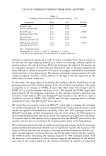
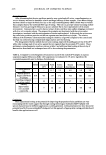
PHOTOSTABILITY OF WHITENING AGENTS 147 100 "'C 95 ·u n:J .2 90 "o' .-. �1: -X-m.e. "'C Q,) Q,) 0 85 "'C L... n:J a. C- 80 ---...-orange ---.-coconut --violet ---tea ---&-fragrance "'C C 75 C 70 o 1 2 3 4 5 6 time (hours) Figure 4. Photodegradation of 0.25% w/w kojic acid in perfumed microemulsions. The results, summarized in Table IV, show some photodegradation of citral (after five hours 61.4% remained unmodified). Kojic acid appeared to exert only a slight positive influence on its photostability (after five hours it had increased to 64.9% ). On the contrary, the degradation of vanillin without kojic acid was particularly evident, with only 25 .1 % remaining after five-hour irradiation the whitening agent influenced dra matically (complete degradation after five hours) the photostability of vanillin. CONCLUSIONS Microemulsions obtained with naturally derived surfactants such as lecithin and alkyl glucosides may be suitable vehicles for arbutin and kojic acid at concentrations similar Table IV UVB Photodegradation of 2.3 x 10- 5 M Citral and 1.3 x 10- 5 M Vanillin in Microemulsions Citral Time (h) Alone* With kojic acid* 0 100 89.2 (2.4) 2 74.9 (3.3) 3 68.1 (0.4) 4 66.7 (1.4) 5 61.4 (2.2) Standard deviations are in brackets (n = 4). * Non-degraded percentages. 100 94.9 (3.6) 79.8 (1.9) 78.2 (2.0) 70.2 (2.2) 64.9 (2.5) Alone* 100 87.5(2.1) 67.8 (3.1) 51.0 (2.5) 34.3 (1.8) 25.1 (2.0) Vanillin With kojic acid* 100 42.1 (3.2) 12.7 (1.3) 10.3 (1.1) 6.8 (0.6)
Purchased for the exclusive use of nofirst nolast (unknown)
From: SCC Media Library & Resource Center (library.scconline.org)