j. Cosmet. sci., 55, 449-461 (September/October 2004) Stability study of lipoic acid in the presence of vitamins A and E in o/w emulsions for cosmetic application A. SEGALL, M. SOSA, A. ALAMI, C. ENERO, F. HORMAECHEA, M. T. PIZZORNO, C. BREGNI, and R. SERRAO, Department of Pharmaceutical Technology, School of Pharmacy and Biochemistry, University of Buenos Aires. Jun/n 956, 1113 Buenos Aires (A.S., M.S., F.H., M.T.P., C.B., R.S.), and Laboratorios Codac S. R.L., Ggnova 4045, 1702 Ciudadela (A.A., C.E.), Argentina. Accepted for publication July 7, 2004. Synopsis The effectiveness of any cosmetic product containing a functional ingredient is determined by the skin delivery of the active molecule, which is influenced by the type of carrier and the molecule itself. Further- more, the functional ingredient should be stable in the formulation. The purpose of this paper is to study the stability of lipoic acid in the presence of vitamins A (as palmitate) and E (as acetate) in semisolids for cosmetic use. The systems formulated were studied in regard to their aspect, pH, stability under centrifugation, and rheological behavior. The chemical analyses of lipoic acid and vitamins A and E were carried out by HPLC after studying the specificity of the method employed in each case. The quantitation of the active principles was performed by HPLC with C•s (5 pm) columns. The mobile phase was methanol for the vitamins, with spectrophotometric detection at 325 nm for vitamin A and 230 nm for vitamin E. The mobile phase for lipoic acid was methanol:water (80:20) and phosphoric acid at pH 3.0, with spectrophotometric detection at 332 nm. All systems were stable to centrifugation, and no significant modification of rheological behavior was observed in relation to the base emulsion used as control. The chemical studies performed indicated that although lipoic acid is not very stable in these formulations, the presence of vitamin A favors its chemical stability. INTRODUCTION Lipoic acid, also called thioctic acid, is a powerful antioxidant within the cells and, at the same time, a coenzyme that participates in complex reactions of cellular metabolism (1). Furthermore, lipoic acid plays an important role as topical photo-protectant thanks to its interesting antioxidant property (2). Some authors have studied the transdermal delivery of lipoic acid from different cosmetic formulations (3). This vitamin has two forms of molecular structure: the oxidized form, a cyclic disulfide, and the reduced open-chain form, dihydrolipoic acid, which has two sulfi•ydryl groups. 449

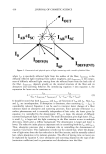
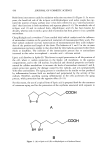
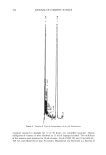
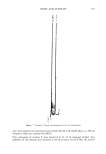
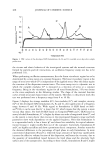
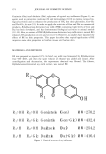
450 JOURNAL OF COSMETIC SCIENCE Both forms interconvert easily by oxidation-reduction reactions (1) (Figure 1). In recent years, the beneficial role of the ot-lipoic acid/dihydrolipoic acid redox couple has cap- tured the interest of many authors since it has been referred to as a "universal antioxi- dant" that functions in both membrane and aqueous phases (4-6). The metabolic role of ot-lipoic acid (1) and its reduced form, dihydrolipoic acid (2), has been known for decades, whereas only recently a great deal of attention has been given to it as a possible antioxidant. Chatgillialoglu and co-workers (7) have studied thiyl radical catalysis and the influence of antioxidant vitamins in the geometrical isomerism of monosaturated fatty acids. The thiyl radical catalyzed cis-trans isomerization of monounsaturated fatty acids indepen- dent of the position and length of the chain. The behavior of 1 and 2 in the cis-trans isomerization reaction is similar to that described for thiyl radicals generated either from thioIs or disulfides. The inibition of the isomerization process due to antioxidants increased in this order: ot-tocopherol ascorbic acid all-trans retinol. Lipoic acid dissolves in lipids (8). This favors its rapid penetration in all the portions of the cell, where it confers protection to the lipidic cell membrane, to the aqueous compartments, and to the cell nucleus. Its physical and chemical properties are funda- mental for cellular metabolism: it increases the levels of antioxidant vitamins C and E, grants protection against the damage caused by free radicals, and acts synergistically with other antioxidants. The aging process is considered to be similar to that produced by inflammation because both are mediated and perpetuated by the activity of free radicals. Therefore, anything causing inflammation in the cells accelerates the aging process, while prevention has the opposite effect (9-11). For this reason, the use of a topical form of lipoic acid is proposed both for the treatment of cutaneous aging and for the prevention of the erythema associated with exposure to A SH SH B Figure 1. (A) ot-lipoic acid. (B) ot-dihydrolipoic acid (reduced form).
Purchased for the exclusive use of nofirst nolast (unknown)
From: SCC Media Library & Resource Center (library.scconline.org)