464 JOURNAL OF COSMETIC SCIENCE A wide spectrum of formulations is available for use in topical therapy, including simple solutions, fluid emulsions and suspensions, sprays and aerosols, gels, and creams and ointments (2). These most common topical formulations are essentially able to control the release of a drug substance but not its penetration rate or residence time in the different layers. The development of the new membrane-moderated and matrix reservoir devices improve the penetration of some drugs, by targeting either to the stratum corneum or to the follicles, and control their release profiles. The use of particulate carriers for this purpose presents an interesting challenge concerning the targeting of topically applied drugs to the different skin layers and appendages. Solid lipid nanoparticles (SLN TM) and nanostructured lipid carriers (NLC TM) are novel particulate lipidic carriers that have been extensively studied for different administration routes, such as the gastrointestinal, ocular, and topical routes (3-5). Regarding topical administration, these systems show adhesive properties and, therefore, an occlusive effect, which is dependent on the size, crystalline status, and lipid composition of the particles (6,7). SLN and NLC can also protect chemically labile active ingredients in water-containing formulations against chemical degradation (4). The aim of the present study was to characterize the rheological behavior of different SLN and NLC aqueous dispersions in order to elucidate the viscoelastic improving effects of these new drug vehicles for skin application. MATERIALS Softisan © 138 was purchased from Condea (Witten, Germany), Miglyol©812 from Caelo (Hilden, Germany), and Compritol©888 and Tego Care©450 from Gattefoss• (Weil a.R., Germany). Lutrol©F68 was a gift from BASF AG (Ludwigshafen, Germany), and sunflower oil and deoxycholic acid sodium salt were obtained from Fluka Chemie AG (Steinhelm, Switzerland). Long-chain triacylglycerols (LCT) were purchased from Braun (Melsungen, Germany) and tocopherol from Sigma Aldrich (Deisenhofen, Germany). All samples developed for this study were prepared using ultra-pure Millipore water (Schwalbach, Germany) of specific resistance greater than 18 Mll-cm 1 METHODS PRODUCTION OF LIPID NANOPARTICLES According to Miiller eta/. (4), SLN and NLC aqueous dispersions were prepared by the hot high-pressure homogenization technique using the high-pressure homogenizer APV Micron Lab 40 (APV Systems, Liibeck, Germany). Briefly, the lipid components were admixed and melted at 90øC, and this liquid lipid solution was dispersed in an aqueous surfactant solution heated to the same temperature, using an Ultra-Turrax T25 (Jankle & Kunkel GmbH and Co KG, Staufen, Germany) at 8000 rpm for one minute. The obtained pre-emulsion was then homogenized at 90øC, applying three homogenization cycles at 500 bar. The produced O/W nanoemulsion was cooled down, the recrystallized lipid providing SLN or NLC aqueous dispersions.

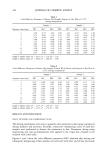
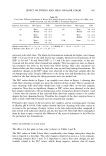
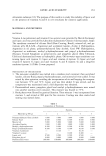
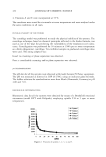
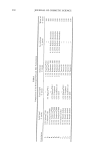
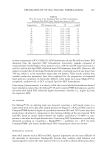
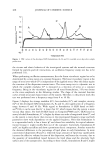
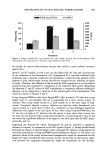
VISCOELASTICITY OF SLN AND NLC FORMULATIONS 465 PARTICLE SIZE AND ZETA POTENTIAL ANALYSIS Particle size analysis of the SLN and NLC aqueous dispersions was performed by laser diffraction using an LS230 (Coulter Electronics, Krefeld, Germany). The mean particle size and the polydispersity index (PI) were determined by photon correlation spectros- copy (PCS) (Malvern Zetasizer IV, Malvern Instruments, UK) (n = 5, standard deviation 2%). Zeta potential (() measurements were performed in distilled water (n = 3, standard deviation 5%) adjusted to a conductivity of 50 12S/cm by addition of 0.9% (m/V) NaC1, using a Zetasizer IV (Malvern Instruments, UK) (8). The electrophoretic mobility was converted to a ( by the Helmholtz-Smoluchowski equation. DSC ANALYSIS The degree of crystallinity was determined by differential scanning calorimetry (DSC) measurements on a Mettier DSC 821e (Mettier Toledo, Giessen, Germany). Samples containing 15 mg of SLN or NLC aqueous dispersions, i.e., 1-3 mg of solid lipid, were accurately weighed in 40-121 aluminium pans, heated from 25øC to 85øC, and cooled from 85øC to 25øC under liquid nitrogen. DSC scans were recorded at a heating and cooling rate of 5 K/min. The melting points and crystallization points corresponded, respectively, to the maximum and minimum of the DSC curves. The recrystallization index was calculated using the following equation (9): AHsLN or NLC aqueous dispersion RI( % ) = AH3ulk .tat .... l X Cøncentratiøn/jpid p3ase X 1 O0 RHEOLOGICAL ANALYSIS Rheological analysis of the SLN and NLC aqueous dispersions was carried out in order to compare the different viscoelastic behaviors of these carriers. Therefore, an oscillation frequency sweep test was performed with a RheoStress RS 100 rheometer (Haake, Karlsruhe, Germany), equipped with a cone-and-plate test geometry (plate diameter 20 ram, cone angle 4ø). All measurements were carried out at a temperature of 20 ø + 0.1øC, recording the variation of the storage (G') and loss (G") moduli, as well as the complex viscosity (•q*), over a frequency range from 0 to 10 Hz at a constant stress amplitude of 5 Pa. The complex modulus (G*) was measured as a function of shear stress (Pa) at a constant frequency of 1 Hz. RESULTS AND DISCUSSION SLN and NLC aqueous dispersions containing 10% (m/m) or 15% (m/m) of lipid phase were developed for the present investigation. Table I shows the composition of these formulations. PARTICLE SIZE AND ZETA POTENTIAL ANALYSIS Aqueous dispersions prepared with Softisan©138 and Compritol©888 showed physical stability and. a narrow size distribution (0.25) one week after preparation when stored
Purchased for the exclusive use of nofirst nolast (unknown)
From: SCC Media Library & Resource Center (library.scconline.org)