466 JOURNAL OF COSMETIC SCIENCE

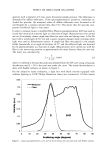
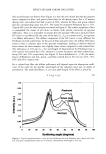
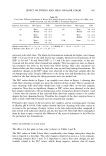
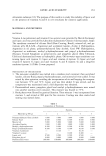
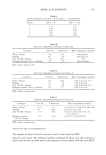
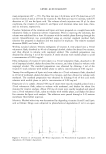
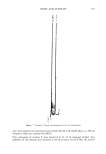
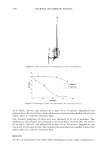
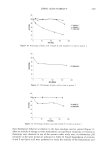
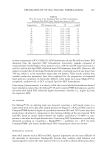
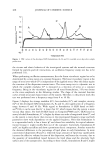
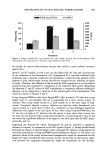
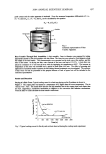
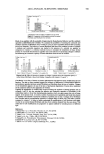
VISCOELASTICITY OF SLN AND NLC FORMULATIONS 467 Table II PCS, PI, and ( of the Developed SLN and NLC Formulations Measured One Week After Production, Stored at 20øC Formulation PCS diameter (nm) PI ((mV) A 178 + 4 0.16 + 0.04 -15 A• 192 + l 0.14 + 0.05 -19 B 209 + 3 0.25 + 0.07 -23 B• 220 + 1 0.22 + 0.08 -25 B 2 233 + 1 0.23 + 0.09 -26 B 3 231 + 0 0.19 + 0.10 -24 B 4 243 +_ 4 0.18 + 0.11 -28 C 397 -+ 3 0.56 + 0.13 -6 C• 259 _+ 2 0.35 + 0.14 -10 C 2 267 + 3 0.36 + 0.15 -11 C• 268 _+ 1 0.33 _+ 0.16 -9 C4 254 _+ 1 0.34 + 0.17 -12 at room temperature (20øC) (Table II). SLN formulations (A and B) exhibited lower PCS diameters than the respective NLC formulations. Conversely, samples composed of stearyl alcohol revealed higher mean particle sizes (250 nm) and PI values between 0.3 and 0.6, and for this lipid NLC exhibited lower PCS diameters than SLN. However, LD analysis revealed that all developed formulations had a maximum particle size lower than 700 nm, which is in the nanometer range (data not shown). These results confirm that suitable production parameters have been employed for the preparation of nanosized lipid particles composed of chemically different solid lipids and using Miglyol©812, tocopherol, sunflower oil, or LCT as liquid lipid for NLC formulations. Concerning ( measurements, it is clearly visible that stearyl alcohol formulations showed lower absolute ( values than the Softisan©138 and Compritol©888 formulations, and for all tested solid lipids NLC exhibited higher electrostatic stability (i.e., higher [([) than the respective SLN. DSC ANALYSIS For Softisan©138, no melting peak was detected, revealing a still liquid status or a supercooled melt seven days after sample production (Figure 1). SLN and NLC based on Compritol©888 showed a degree of crystallinity between 60% and 70% (seven days after production), calculated in comparison to the melting enthalpy of the raw material. SLN and NLC based on stearyl alcohol showed the highest crystallinity (75-80%) in com- parison to the other developed formulations. Concerning NLC formulations, crystallinity decreased according to: tocopherol Miglyol©812 sunflower oil LCT, for both Compritol©888 - and stearyl alcohol-based NLC formulations (data not shown). RHEOLOGICAL ANALYSIS Semi-solid systems such as SLN and NLC aqueous dispersions are the most difficult of the materials to characterize rheologically because they combine solid behavior and liquid properties within the same material (10-12). In order to obtain information about
Purchased for the exclusive use of nofirst nolast (unknown)
From: SCC Media Library & Resource Center (library.scconline.org)