2004 ANNUAL SCIENTIFIC SEMINAR 499 ETHNIC HAIR: SOCIAL CONTEXT AND SCIENTIFIC REALITIES Victoria Holloway, M.D. L'Oreal Institute for Ethnic Hair and 3'kin Research Hair styling is an important means of self-expression, particularly for women of African descent. Hair care practices reflect both the needs of the consumer based on her specific hair type and styling desires as well as the trends of the moment. Specific hair care practices will be reviewed, as well as the scientific specificities of the hair of people of different ethnicities. This lecture will review some of the Institute's recent research on the physical and morphological properties of the hair.

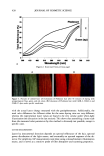
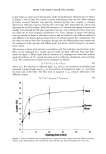
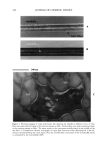
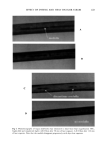
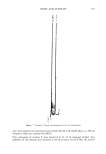
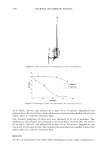
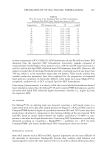
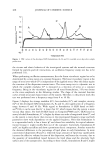
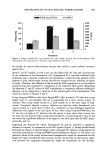
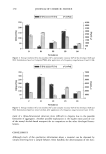
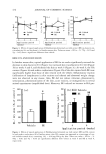
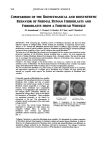
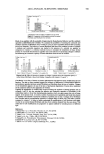
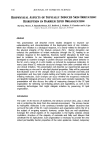
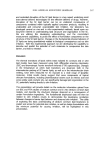
500 JOURNAL OF COSMETIC SCIENCE COMPARISON OF THE BIOMECHANICAL AND BIOSYNTHETIC BEHAVIOR OF NORMAL HUMAN IrIBROBLASTS AND ]:IBROBLASTS FROM A FOREHEAD WRINKLE M. Jouandeaud ', C. Viennet 2, S. Bordes', B. C!oss •, and P. Humbert 2 •R&D Department. SILAB, Brive, France 2Lab of Engineering and Cutaneous Biology, University Hospital St. Jacques, Besancon, France Introduction. With increasing age, metabolic activity of fibroblasts decreases and they lose their adhesion capacity to collagen fibers, thereby limiting the possibility of organizing dermal tissue •. Johnson et al. 2 sho•ved that fibroblasts obtained from donors of different ages presented a general deceleration in term of protein synthesis. Moreover, fibroblasts aged artificially by successive passages synthesized lower quantities of type I and III collagens than young fibroblasts 3'n'5. The behavior of old fibroblasts has already been investigated, but fe•v studies were carried out on the functional capacities of old fibroblasts directly resulting from a •vrinkle. We thus examined the behavior of human fibroblasts obtained from biopsies from a forehead •vrinkle. The aim of this study •vas to investigate the biomechanical and biosynthetic behavior of fibroblasts from •vrinkles and to compare them to those of normal fibroblasts. Collagen I, the major collagen of the dermal matrix, was chosen as a nmrker for the study of the synthetic activity of fibroblasts. The biomechanical behavior of fibroblasts front wrinkles •vas studied using a three-dimensional model of collagen gels to •Ssualize reorganization capacities. We then examined the possibility of a plant extract to restore and compensate losses of the synthesis and org•mization capacities of a collagen gel by fibroblasts from •vrinkles. We thus sho•ved that selected soy peptides could improve the synthesis and contractile capacities of fibroblasts from wrinkles. Contractile capacity of fibroblasts front wrinkles is reduced The biomechanical behavior of hmnan fibroblasts from •vrinkles and that of normal fibroblasts was studied using a model of human fibroblast cultures suspended in a collagen gel. Normal huntan fibroblasts have considerable properties of reorganization and reorientation of the collagen fibers 6. Fibroblasts influence the alignment of collagen fibers, which in turn affects the distribution of fibroblasts 7. These properties are manifested physically in the lattices by contraction of the gel. This phenomenon is primarily related to locomotion of the cells inside collagen lattices 6. It was sho• that normal human fibroblasts suspended in a collagen gel could contract and reorg•mize collagen fibers, in contrast to fibroblasts from wrinkles that exlfibited significant reduced contractile capacities (-66%) (fig. D. i - ...... ,•,,...•: ß •..•' . .... ß Figure 1: Compafimn of the biomech•ic• behavior of nom• fibroblasts and basic fibrobl• offices after 3 days in a collagen la•ice. Collagen I synthesis is reduced in fibroblasts from wrinkles. We determined the synthesis capacities of fibroblasts obtained from biopsies of forehead wrinkles and normal human fibroblasts. In order to determine ff collagen production by fibroblasts from wrinkles and normal fibroblasts •vere different, •ve quantified collagen synthesis by the fibroblasts cultivated in monolayers. The collagen I synthesis capacity of fibroblasts frown •vrinkles was lcnver (-70%) than that of normal fibroblasts (fig. 2).
Purchased for the exclusive use of nofirst nolast (unknown)
From: SCC Media Library & Resource Center (library.scconline.org)