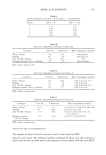
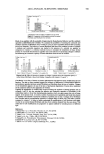
2004 ANNUAL SCIENTIFIC SEMINAR 505 group of controls for whom vernix was removed. Retention of vernix on the infant skin surface following birth resulted in significantly different biophysical properties when compared to those of infants for whom vernix was removed at birth. The rate of stratum corneum (SC) moisture accumulation was significantly higher for the vernix treated skin (back site) at birth and 24 hours later. The baseline SC hydration was significantly higher at birth (chest and back sites) for the vernix treated group than for the vernix removed group. The skin surface pH was significantly lower with vernix treatment both initially and at 24 hours for the back. The observed effects of vernix on SC pH are potentially attributable to components within vernix and/or to their breakdown products. The implications of the pH changes on SC barrier characteristics are discussed. The findings suggest that it is appropriate to leave vernix in place at birth, to minimize its removal during bathing, and to evaluate "vernix equivalents" to facilitate epidermal barrier development and infection control in preterm infants.

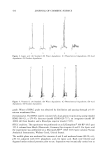
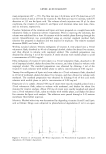
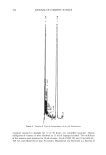
506 JOURNAL OF COSMETIC SCIENCE BIOPHYSICAL ASPECTS OF TOPICALLY INDUCED SKIN IRRITATION: DISRUPTION IN BARRIER LIPID ORGANIZATION David J. Moore, S. Ramakrishnan, S.E. Bedford, J. Mathias, P. Chandar and A. Lips Unilever Research & Development, Edgewater, NJ 07020 Abstract This presentation will describe recent studies designed to improve our understanding and characterization of the biophysical basis of skin irritation. While skin irritation is a biological response, it is clearly related to disruption in the physical integrity of the stratum corneum (SC). Barrier disruption can enhance the penetration of irritant molecules through the SC, leading to an irritation response in the epidermis. However, barrier disruption by itself may lead to irritation. In our laboratory experimental approaches have been developed to examine changes in protein structure and lipid phase behavior in the SC, and a range of in vitro models, as induced by exogenous molecules. In many cases these SC molecular structural changes have been correlated with in vivo clinical irritation. This presentation will describe our experimental approach to measuring ex vivo and in vitro lipid physical properties. Data will be presented that illustrate some of the changes which occur in SC ceramide and fatty acid organization and how lipid crystal melting and fluidity can be compromised by irritating molecules. Such changes can occur whether the exogenous molecules are lipophilic biological actives or other commonly used cosmetic ingredients. The presentation will also discuss the utility of measuring changes in the SC lipid organization for selecting non-irritating actives and ingredients, as well as for screening technologies that might mitigate irritation by preserving SC lipid organization. Introduction The outer 15-20 microns of epidermis, the stratum corneum (SC), play a critical role in protecting the body from the external environment. The primary barrier to hydrophilic molecules is the continuous lameliar lipid bilayer structures that surround the cells of the SC. Lipid composition and organization within the SC is the subject of on-going research, however, certain facts are well established. Amongst the critical aspects of SC organization is the highly ordered, almost crystalline, structure of the majority of ceramide and fatty acid bilayers that constitute the SC lipid phase. Such organization is necessary to provide the very robust permeability barrier properties of the outer epidermis. Indeed, temporary
Purchased for the exclusive use of nofirst nolast (unknown)
From: SCC Media Library & Resource Center (library.scconline.org)