ANTI-AGING EFFECTIVENESS OF RETINOL EMULSIONS 277 (4) M. Gallarate, R. Cavalli, E. Gagliardi, and M. E. Carloni, On the use of saccharose esters as emulsifiers for W/O/W multiple emulsions containing ascorbic acid, Acta Techn. Legis MedicamentiJ X(l), 1-16 (1999). (5) M. Gallarate, M. E. Carlotti, M. Trotta, and S. Bova, On the stability of ascorbic acid in emulsified systems for topical and cosmetic use, Int.]. Phann., 188, 233-241 (1999). (6) E. P. Guenin and J. L. Zatz, Skin permeation of retinyl palmitate from vesicles,]. Soc. Cosmet. Chem., 46, 261-270 (1995). (7) A. Vahlquist, What are natural retinoids?, Dermatology, 199 (Suppl. 1), 3-11 (1999). (8) T. Tsunoda and K. Takabayashy, Stability of all-trans-retinal in cream, ]. Soc. Cosmet. Chem.J 46, 191-198 (1995). (9) E. Andersson, I. Rosdahl, H. Torma, and A. Vahlquist, Ultraviolet irradiation depletes cellular retinal and alters the metabolism of retinoic acid in cultured human keratinocytes and melanocytes, Melanoma Res., 4, 339-346 (1999). (10) M. E. Carlotti, V. Rossatto, and M. Gallarate, Vitamin A and vitamin A palmitate stability over time and under UVA and UVB radiation, Int.]. Phann., 240, 85-49 (2002). (11) M. E. Carlotti, S. Sapino, D. Vione, E. Pelizzetti, M. Trotta, and L. Battaglia, Photostability and stability over time of retinyl palmitate in an O/W emulsion and in SLN introduced in the emulsion, ]. Disp. Sci. Technol., 26, 125-138 (2005). (12) S. Sapino, M. E. Carlotti, E. Pelizzetti, D. Vione, M. Trotta, and L. Battaglia, Protective effect of SLNs encapsulation on the photodegradation and thermal degradation of retinyl palmitate introduced in hydroxyethyl cellulose gel,]. Drug Del. Sci. Tech., 15, 159-165 (2005). (13) R. G. Harry, Harry's Cosmeticology, 7th ed., J. B. Wilkinson and R. J. Moore Eds. (George Godwin, London, 1982), p. 226. (14) H. A. Lieberman, M. M. Rieger, and G. S. Banker, Pharmaceutical Dosage Forms: Disperse Systems, Vol. 1 (Marcel Dekker, New York, 1988).

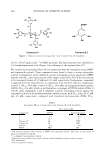
]. Cosmet. Sci.J 57, 279-289 CTuly/August 2006) Inhibitory effects of antioxidant constituents from Melathria heteraphylla on matrix metalloproteinase-1 expression in UVA-irradiated human dermal fibroblasts Y. H. CHO, J. H. KIM, G. S. SIM, B. C. LEE, H. B. PYO, and H. D. PARK, R&D Center, Hanbul Cosmetics Corporation, 72-7, Yongsung-Ri, Samsung-Myun, Umsung-Kun, Chungbuk 369-834 (Y.H.C., ].H.K., G.S.S., B.C.L., H.B.P.), and Department of Biotechnology, College of Engineering, Daegu UniversityJ Gyeongsan 712-714 (H.D.P.), Korea. Accepted for publication February 21, 2006. Synopsis Matrix metalloproteinases ( MMPs) are known to play an important role in photoaging by mediating the degradation of extracellular matrix proteins. To develop a new anti-aging agent for cosmetics from natural products, Melothria heterophylla (Lour.) Cogn. was selected for its antioxidant activity and inhibitory effect on expression of MMP-1 in UVA-irradiated human skin fibroblasts. Two compounds (compounds 1 and 2) were isolated from an ethyl acetate soluble fraction of the ethanolic extracts they were identified as l ,2,4,6-tetra-0-galloyl-�-0-glucopyranose (1) and 3,4,5-trihydroxybenzoic acid (2). These compounds were found to scavenge radicals and reactive oxygen species (ROS) and were measured to have SC 50 values of 3.9 µMand 13.3 µM against 1,1-diphenyl-2-picrylhydrazyl (DP PH) radicals and values of 4.3 µMand 4.0 µM against superoxide radicals in the xanthine/xanthine oxidase system, respectively. Compounds 1 and 2 showed a dose-dependent inhibitory effect on the expression and activity of MMP-1 in UV A-induced human skin fibroblasts, but no inhibition of MMP-1 mRNA expression. Therefore, we concluded that compounds 1 and 2 significantly inhibited MMP-1 expression at the protein level. Also, these compounds were determined to have a potent antioxidant activity. From these results, we suggest that these compounds might be useful as a new anti-aging agent for photodamaged skin, but the in vitro findings must be verified in in vivo studies. INTRODUCTION The skin is increasingly exposed to ambient UV irradiation, thus increasing risks for photooxidative damage with long-term detrimental effects like photoaging, character ized by wrinkles and loss of skin tone and resilience (1). UV irradiation is known to produce reactive oxygen species (ROS), which initiate the degradation of the extracel- Address all correspondence to Y. H. Cho. 279
Purchased for the exclusive use of nofirst nolast (unknown)
From: SCC Media Library & Resource Center (library.scconline.org)