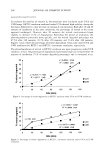
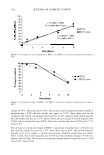
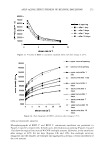
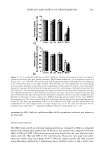
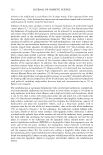
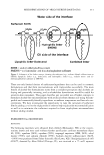
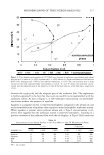
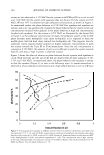
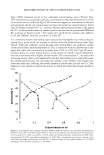
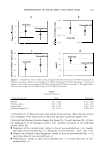
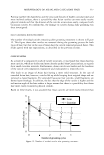
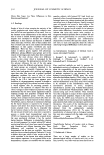
MICROEMULSIONS OF TRIGLYCERIDE-BASED OILS 319 oil phase and an excess water phase, respectively. In some cases, the head of the fish can slant towards lower salt concentration when the surfactant concentration decreases. In this case, as the surfactant concentration increases, the middle-phase microemulsion requires higher salinities i.e., the surfactant system in the middle phase becomes more hydrophilic, suggesting that the lipophilic compound present in the middle-phase partitions into the excess oil. In contrast, if the head of the fish slants towards higher salt concentrations, the middle phase becomes more hydrophobic, which can be attributed to the partitioning of the hydrophilic compound into the excess water. This well known phenomenon is described in Bourrel and Schecter (1). As shown in Figure 3, the fish leans towards high-hydrophobicity oil when the sebum fraction in oil is close to zero or when the fraction of co-oil is equal to one. In other words, when surfactant concentration increases, the middle-phase microemulsion requires more hydrophilic oil. This suggests that the middle phase becomes more hydrophilic, implying the partitioning of the lipophilic compound, which is sorbitol monooleate, into the excess oil phase. EFFECT OF SALINITY ON THE FISH DIAGRAM FOR SQUALANE, ISOPROPYL MYRISTATE, AND ETHYL LAURA TE A fish diagram with squalane at 1.5% NaCl is shown in Figure 4. The fish diagram at this salt concentration varies as compared to the fish diagram at 0.5% salt concentration (Figure 3). At 1.5% NaCl, Winsor I-III-II and I-IV-II transitions are observed at low and high surfactant concentrations, respectively. These Winsor I-III-II and I-IV-II tran- 60 IV 50 � 40 C: 30 II 20 : 10 a 0 0.2 0.4 0.6 0.8 1 Sebum fraction in oil Figure 4. Fish diagram with squalane at 1.5% NaCl as a function of surfactant concentration and sebum fraction in oil (a value of O is 100% co-oil and 1 is 100% sebum oil). Surfactant/linkers studied here are AOT ( 4% ), hexylglucoside (5 .06% ), and sorbitan monooleate (5 .13 % ). The concentration ratio is kept constant as the total surfactant/linker concentration is varied. (25°C).

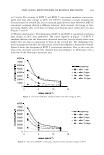
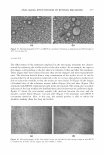
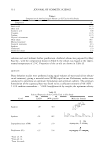
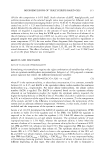
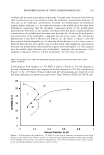
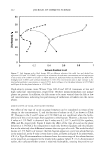
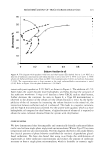
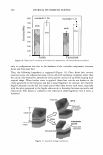
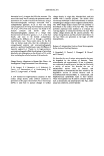
320 JOURNAL OF COSMETIC SCIENCE sitions are also observed at 1.5% NaCl for the systems with IPM and EL as co-oil, as well as at 3.0% NaCl for the system with squalane (data not shown). For the system at 0.5% NaCl, Winsor I-IV-I is observed at high surfactant concentration, as shown in Figure 3. As mentioned earlier, the phase behavior at 0.5% NaCl for squalene and squalane are similar, and so we can qualitatively compare the phase behavior for the system at low salt concentrations (studied with squalane) to the phase behavior at high salt concentrations (studied with squalane). For the system at 0.5% NaCl, as illustrated by the slanted fish in Figure 3, as the surfactant concentration increases, the surfactant system in the middle phase becomes more hydrophilic since more hydrophilic oil is required to form the middle phase (the fish head slants towards less hydrophilic oil). This suggests that the surfactant system requires higher salinities at higher surfactant concentrations to push the system towards the Type III or II microemulsions. Since the salt concentration is constant at 0.5% NaCl, this amount of salt is not sufficient to push the system towards Type II, and thus a Type I system is observed instead. Figure 5 shows the effect of salinity on phase behavior for the systems with squalane as co-oil. Both the body and the tail of the fish are observed for all three salinities: 0.5%, 1.5%, and 3.0% NaCl. As mentioned above, the phase behavior with squalane is similar to that for squalene (Figure 3 ), as seen in the following ways: (i) nonmicroemulsion is observed at a low surfactant concentration and a high sebum fraction in oil (ii) a Winsor � 0 � � � ::I rn 60 50 40 30 20 10 0 0 0.2 0.4 0.6 0.8 1 Sebum fraction in oil Figure 5. Fish diagram with squalane at different salinities (the thin solid line, dashed line, and thick solid line represent 0.5%, 1.5%, and 3% NaCl, respectively) as a function of surfactant concentration and sebum fraction in oil (a value of 0 is 100% co-oil and 1 is 100% sebum oil). Surfactant/linkers studied here are AOT (4%), hexylglucoside (5.06%), and sorbitan monooleate (5.13%). The concentration ratio is kept constant as the total surfactant/linker concentration is varied (25°C). Refer to Figure 3 for the phase behavior at 0.5% NaCl and Figure 4 for the phase behavior at 1.5%.
Purchased for the exclusive use of nofirst nolast (unknown)
From: SCC Media Library & Resource Center (library.scconline.org)