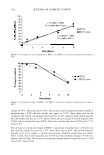
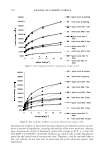
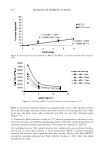
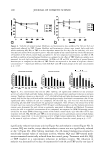
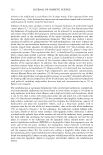
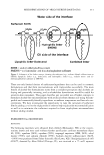
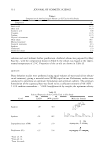
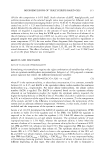
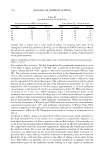
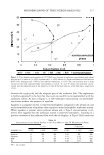
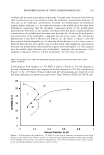
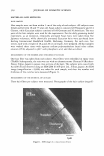
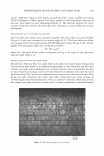
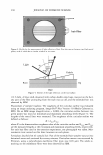
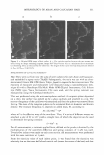
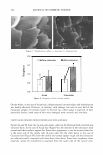
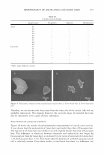
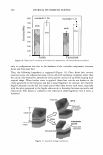
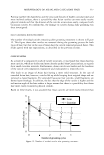
332 JOURNAL OF COSMETIC SCIENCE the elasticity was relatively high on the outer half of each cell. This correlates with the accepted bilayer structure of the cuticle cell, such that the former is regarded as the endocuticle, while the latter is regarded as the exocuticle. Although it is possible that the A-layer may be included in the latter, we have found the elasticity value of the A-layer (unpublished results) to be much higher than the values obtained for the exocuticle in the present study, and therefore this possibility can be excluded. The elasticity of each exocuticle and endocuticle was calculated according to the Sneddon theory, using the method described by Parbhu et al. (6). The shape of the end of the tip was assumed to be parabolic, with an approximate 20-nm diameter of curvature. The Poisson ratio was defined as 0.4, according to the value of common polymers. DAILY GROOMING TREATMENT As a simulation of daily grooming treatments occurring over three months, hairs bleached once and shampooed, conditioned, and blow-dried ninety times were com bined. This combination was repeated four times. After the completion of each combi nation treatment, ten fibers were taken from each hair tress. Two cross sections were exposed for each fiber, and these were observed by SEM. The number of cuticle layers was counted at four points in each cross section. RESULTS AND DISCUSSION STRUCTURE OF HAIR CUTICLE The number, thickness, interval, and tilt angle of the cuticles of both races are shown in Figure 6 (a-d), respectively. The measured values are shown in Table I. In all cases there were statistically meaningful differences at the 99% confidence level as determined by t-test, and therefore we conclude: • Asian hair has more cuticles than Caucasian hair (Figure 6a). • Asian hair has thicker cuticles than Caucasian hair (Figure 66). • The interval of cuticles is narrower for Asian hair than for Caucasian hair (Figure 6c). • The surface inclination of Asian hair is steeper than that of Caucasian hair (Figure 6d). EXTENDED HAIR SURF ACE Typical extended Asian and Caucasian hairs are shown in Figure 7a and 76, respectively. Both types of hair were damaged by the extension process, and some cracks were found ( .J, in Figure 7). In addition, the damage characteristics for each race were observed. In the case of Asian hair, it seemed that whole cuticle cells lifted up and the outlines of the cuticular edges were relatively smooth. In comparison, the liftup of Caucasian cuticles was less and the outlines of the cuticular edges were rougher. Measured roughness values of the cuticular outlines are shown in Figure 8. The values were similar for Asian and Caucasian cuticles prior to extension after extension, however, the values were increased in both cases, and it was particularly remarkable in the case of Caucasian hair. In addition, a lot of deposits, collapsed small fragments, and delamination within the

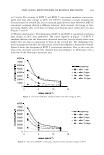
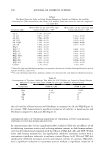
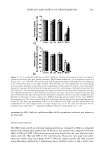
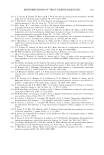
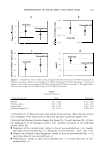
MORPHOLOGY OF ASIAN AND CAUCASIAN HAIR 333 a 9 (l'l Asian hair d) 8 e f u Caucasian hair ·-g 7 0 � ◄► 11) 6 ::I z 5 [ C '--" 8 .0 (l'l Caucasian hai d) u ·-g 7 .5 Asian hair 11) u f � 7 .0 ::I r/1 t+-. 0 6.5 6.0 0.50 a :::1. (l'l 0.45 11) u ·-g t+-. 0.40 0 (l'l (l'l 11) u 0.3 5 4.0 3 .5 a:, d) 3 .0 eh � 2.5 2.0 b f Caucasian hair -=+_--------- f----------� - - --- --- Asian hair d Asian hair Caucasian hair Figure 6. a: Number of cuticles. Values are an average of 203 fibers (Asian) and 214 fibers (Caucasian). b: Thickness of cuticles. Values are an average of 193 fibers (Asian) and 195 fibers (Caucasian). c: Interval of surface cuticles. Values are an average of 200 fibers (Asian) and 282 fibers (Caucasian). d: Tilt angle of hair. Values are an average of 1020 fibers (Asian) and 610 fibers (Caucasian). Cuticular structure Number Thickness (µm) Interval (µm) Inclination angle, 0 (0) Table I Cuticular Structures Asian 7.13 ± 0.90 0.45 ± 0.04 6.61 ± 0.52 3.34 ± 0.07 Caucasian 6.55 ± 0.84 0.43 ± 0.03 6.98 ± 0.60 2.78±0.15 cuticle sheets(¢::: in Figure 76) were observed for Caucasian hairs. These deposits seemed to be remnants of the endocuticle, as has been reported in previous papers (8,9). Criteria for classification of cuticular damage. For Asian (N = 9) and Caucasian (N = 8) hair, the appearances of the damaged cuticles were classified according to the following criteria (Table II): • Roughness of the cuticular edge: similar to that of non-extended hair ( -) or rougher than that of non-extended hair ( + ). (Boundary R value between - and + was 1. 15 ). • Deposits and collapsed small fragments: similar to those of non-extended hair(-) or more than those of non-extended hair ( + ). • Delamination: similar to that of non-extended hair (-) or more than that of non extended hair ( + ).
Purchased for the exclusive use of nofirst nolast (unknown)
From: SCC Media Library & Resource Center (library.scconline.org)