ANTI-AGING EFFECTIVENESS OF RETINOL EMULSIONS 263 was from Sigma. RETI C emulsion (water, glycerin, hydrogenated polysobutene, octo crylene, prunus armeniaca, zea maize, ascorbic acid, butyl methoxydibenzoylmethane, isohexadecane, retinal, BHT, glycine soja, triethanolamine, dimethicone, methylpara ben, sodium hydroxide, arginine PCA, phenoxyethanol, magnesium sulfate, ammonium polyacryloyldimethyl taurate, disodium EDTA, tocopherol, propylparaben, tetrasodium EDTA, acrylates/C10�3o alkyl acrylate crosspolymer, polyglyceryl-4 isostearate, cetyl dimethicone copolyol, hexyl laurate, butylparaben, ethylparaben, and perfume) was a gift from Vichy® (Milan, Italy). RETI C concentrate emulsion (water, hydrogenated polysobutene, squalane, glycerin, ascorbic acid, cetyl alcohol, PEG-40 stearate, glyceril stearate, prunus armeniaca/apricot kernel oil, sodium hydroxide, zea maize/corn starch, petrolatum, retinal, PEG-10, sor bitan tristearate, glycine soja/soybean oil, methylparaben, arginine PCA, phenoxyetha nol, tocopherol, disodium EDTA, chlorhexidine digluconate, propylparaben, hydroge nated lecithin, phosphoric acid, polycaprolactone, CI 14700, FD&C red N°4, CI 47005/ D&C yellow N°10, and perfume) was a gift from Vichy® (Milan, Italy). RETINOL CONCENTRATION The determination of retinal concentration in two commercial products (RETI C and RETI C concentrate emulsions) was performed by HPLC at the opening and after three months. The emulsions studied were supplied by the factory (Vichy), kept in their original aluminum tubes, and stored protected from direct sunlight and sources of heat. HPLC METHOD ANALYSIS The concentration of retinal was determined by HPLC analysis using a LC-10 AD pump unit control, a SPD-10 AV UV-Vis spectrophotometric detector set at 325 nm, and a C-R6A Chromatopac integrator (Shimadzu Corporation, Kyoto, Japan). An RP Cl8 column (80 mm x 4.6 mm) was used. The mobile phase consisted of methanol/ethanol/ water (66.6/16.7 /16.7, v/v). The flow rate was 0.8 ml/min. Samples were prepared as follows: 0.5 grams of emulsion were diluted with 2.5 ml of octyl octanoate, and 0.5 grams of aluminum sulfate were added. The mixture was stirred on vortex and centrifuged at 3000 rpm for ten minutes. After centrifugation, the oil phase was diluted in a 1 :20 ratio with ethanol and analyzed by HPLC. The determi nations were repeated three times. RADIATION STABILITY STUDY RETI C and RETI C concentrate emulsions were irradiated under UVB and UV A lamps in a solarbox. The radiation intensity under the lamps was measured, under the same conditions adopted for sample irradiation, using a multimeter (CO.FO.ME.GRA., Mi lan, Italy), at 10 cm from the lamps, equipped with a probe sensitive to radiation in the wavelength interval of 290-400 nm. The radiation power per unit area emitted by the UVA lamp was 8.9 x 10- 4 W cm- 2 and that emitted by the UVB lamp was 2.6 x 10- 4 W cm - 2 . It must be considered that the skin, all the year round, receives a high amount of UVA radiation and, especially during summertime, a large amount of UVB radiation.

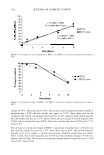
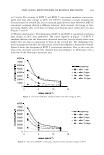
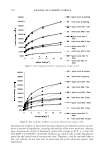
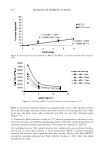
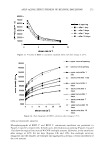
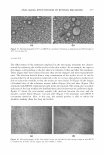
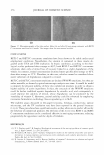
264 JOURNAL OF COSMETIC SCIENCE Comparing the power of radiation per unit area of the lamps with that of standard solar radiation (1.1 x 10- 3 W cm- 2 for UVA and 1.3 x 10⁻⁴ W cm- 2 for UVB), it is clear that our UVA and UVB lamps show an irradiation intensity very similar to that of standard sunlight. Therefore, this radiation stability study has relevance for comparison with real conditions, and it can be useful for understanding the process. (12). Five grams of RETI C and RETI C concentrate emulsions were irradiated in magneti cally stirred closed Pyrex containers (diameter 4.0 cm, height 2.5 cm, volume 5.0 ml) under a TL K05-40 W UV A lamp and a TL 40 W/12 RST40Tl2 UVB lamp (Philips, Eindhoven, Netherlands). The glass cells were placed at a 10-cm distance from the lamps. At predetermined times, 0, 30, 60, 90, 120, and 180 minutes, the samples, after dilution, were analyzed to detect changes in the percentage of retinal. The photodeg radation of retinal was determined by the HPLC method reported above. STUDY OF ST ABILITY OVER TIME AT 40°C The stability of retinal over time was verified by storing RETI C and RETI C concen trate emulsions in the dark at 40°C. An aliquot (10 grams) of each emulsion was stored in a container in an incubator at 40°C. After one, three, seven, and ten days of storage, samples of each emulsion were taken from the container and analyzed after dilution by the HPLC method. Any variation in color, weight loss, and separation was examined, and the physical-chemical parameters were determined. STUDY OF STABILITY OVER TIME AT 25 ° C Samples of each emulsion (10 grams) were stored in hermetically sealed containers at room temperature. HPLC analysis of the diluted samples after one, three, seven, and ten days of storage at 25 ° C was carried out. The retinal concentration in both the emulsions three months after opening was also determined. The organoleptic features and the weight loss over time were verified. Moreover the physical-chemical parameters were investigated: (a) Viscosity. Viscosity before and after storage at 40°C or at 25°C was determined at room temperature (25.0 ± 0.5°C) with a Model DV-II digital viscometer (Brookfield, Stoughton, MA). Experiments were performed on aliquots (13 g) of each emulsion. Apparent viscosity was determined at 5, 20, and 50 rpm. The data were plotted on diagrams of viscosity (mPa s) versus shear rate (s- 1 ). ( b) Rheologic determinations. The flux rheograms were carried out for emulsions main tained ten days at 40°C or at 25°C using the rotational viscometer reported above, equipped with 021 and 029 spindles. The measurements were performed at 25.0 ± 0.5°C. The results were expressed with shear stress (mPa) versus shear rate (s- 1 ) curves. The upper curve was obtained by determining the shear stress at increasing shear rates, maintaining each shear rate for one minute. The back curve was obtained by determining the shear stress at decreasing shear rates. ( c) Conductivity. The conductivity of the emulsions after storage both at 40°C and at 25°C was determined over time at 25.0 ± 0.5°C. The values recorded at 80 Hz with
Purchased for the exclusive use of nofirst nolast (unknown)
From: SCC Media Library & Resource Center (library.scconline.org)