]. Cosmet. Sci., 55, 309-325 Quly / August 2006) Microemulsions of triglyceride-based oils: The effect of co-oil and salinity on phase diagrams NAPAPORN KOMESV ARAKUL, MONICA D. SANDERS, ERIKA SZEKERES, EDGAR]. ACOSTA, JAMES F. FALLER, TONY MENTLIK, LOUIS B. FISHER, GREGG NICOLL, DAVID A SABATINI, and JOHN F. SCAMEHORN, University of Oklahoma, School of Chemical, Biological, and Material Engineering and the Institute for Applied Surfactant Research, Sarkeys Energy Center, 100 E. Boyd, Norman, OK 73019 (N.K., M.D.S., E.S., J.F.S.), University of Toronto, Chemical Engineering and Applied Chemistry, 200 College Street, Toronto, Ontario, Canada M5S3E5 (BJ.A.), Mary Kay Inc., 1330 Regal Row, Dallas, TX 75247 U.F.F., T.M., L.B.F., G.N.), and University of Oklahoma, Civil Engineering and Environmental Science Department and the Institute for Applied Surfactant Research, 202 W. Boyd, Norman, OK 73019 (D.A.S.). Accepted for Publication March 2, 2006. Synopsis Microemulsification of triglyceride-based oil is challenging due to the formation of undesirable phases such as macroemulsions, liquid crystals, or sponge phases. This research evaluates the formation of artificial sebum microemulsions using linker molecules, with the addition of co-oil to help enhance sebum solubi lization. The microemulsion consists of a lipophilic linker (sorbitan monooleate), a hydrophilic linker (hexylglucocide), a main surfactant (sodium dioctyl sulfosuccinate), a co-oil, and artificial sebum. The effect of adding co-oil to the phase behavior and the microstructure of the resulting microemulsion is described. The effect of several types of co-oil is also studied the co-oils evaluated here are sgualene, sgualane, isopropyl myristate, and ethyl laurate. The effect of salinity on the microemulsion phase behavior is also presented. Fish diagrams are obtained by plotting total surfactant/linker concentration as a function of sebum fraction in the oil mixture (co-oil + sebum). Different microemulsion types (Winsor Types I, II, III, and IV) are formed, depending on the total surfactant/linker concentration and the fraction of co-oil in the oil mixture. Winsor Type IV (single-phase) microemulsions are observed at high surfactant/linker concentrations. These single-phase, isotropic, and low-viscous fluids are particularly useful for cleansing and delivery of functional ingredients in skin care products. Salt addition shifts the fish diagram towards more hydrophobic oil systems and higher surfactant/linker concentrations. The current address of Napaporn Komesvarakul is Unilever Home and Personal Care-North America, 40 Merritt Blvd, Trumbull, CT 06611. The current address of Erika Szekeres is Clorox Service Company, 7200 Johnson Drive, Pleasanton, CA 94588. Address all correspondence to David A. Sabatini. 309

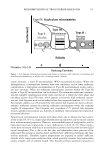
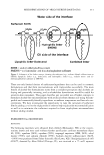
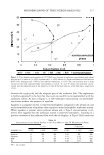
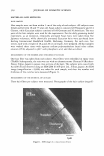
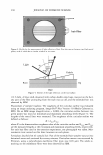
310 JOURNAL OF COSMETIC SCIENCE INTRODUCTION Microemulsions are transparent and thermodynamically stable mixtures of oil and water stabilized by surfactants. Microemulsions contain extremely high oil/water interfacial areas, offering ultra-low interfacial tension (less than 0.1 mN/m). Practical applications of microemulsion systems include enhanced oil recovery (EOR), drug delivery, nano particle synthesis, food, and cosmetics ( 1-3 ). The transparency of microemulsions makes them especially attractive for cosmetic formulations as they give the perception of a "clean" system. The ultralow interfacial tension between oil and water facilitates the penetration of the product into nanoscale pores of human skin, making microemulsions a candidate for deep-cleansing products. A Type I microemulsion (0/W microemulsion) is conceptualized as swollen micelles surrounded by water where surfactant micelles coexist with excess oil. A Type II mi croemulsion (W /0 microemulsion) is conceptualized as swollen reverse micelles sur rounded by oil where the reverse micelles coexist with excess water. A Type III micro emulsion consists of an oil, water, and a "middle" bicontinuous microemulsion phase coexisting in a three-phase equilibrium. A Type IV microemulsion is defined as a single-phase microemulsion system where both oil and water are completely solubilized in the surfactant microemulsion phase. Microemulsion transition can be achieved in several ways, depending on the type of surfactants. For example, for ionic surfactant systems, a Type I-III-II transition can be obtained by increasing the electrolyte concen tration, whereas increasing the temperature can achieve the same transition for nonionic surfactant systems. The optimum condition is defined as the condition at which an equal volume of oil and water is solubilized in the bicontinuous phase (Type III). The elec trolyte concentration required at the optimum condition is called "optimum salinity" or S*. The solubilization parameter (SP), which is defined by the amount of oil solubilized in the middle phase per unit mass of surfactant, at this optimum condition is known as the optimum solubilization parameter (SP*) maximizing this parameter for triglyceride oils is a goal of this work. Two important parameters that describe the ability and effectiveness of a surfactant to form microemulsions are the size and curvature of the microemulsion and the flexibility of the surfactant film it forms (4). An elastic and flexible surfactant film favors the formation of a microemulsion, whereas a lamellar phase is formed with a more rigid or stiff film. The flexibility of the film also depends on the molecular structure of the surfactant. Cosolvents such as short chain alcohols can improve the film's flexibility (5-8). While microemulsion phase behavior can be described in various ways, the "fish diagram" is one of the most common. A fish diagram is typically plotted between the surfactant concentration and a scan or tuning parameter (e.g., salt or hydrophobicity of the system), as shown in Figure 1. R0 is radius of the oil droplet and Rw is the radius of the water droplet. The curvature of the oil and water droplets is then equal to l/R0 and 1/Rw, respectively. The scan parameter directly affects the curvature of the surfac tant membrane, which is a very important factor for a surfactant to form microemul sions, as mentioned above. Electrolyte addition to ionic surfactant systems increases the hydrophobicity of the surfactant system and decreases the surfactant film curvature (see Figure 1). Therefore, when the surfactant system has relatively low hydrophobicity or is at low salinity, a Type I microemulsion (0/W microemulsion) occurs. At high hydrophobicity, where the cur-
Purchased for the exclusive use of nofirst nolast (unknown)
From: SCC Media Library & Resource Center (library.scconline.org)