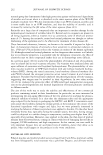
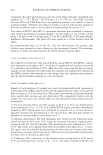
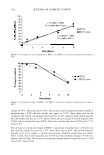
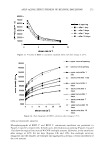
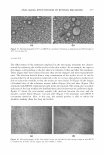
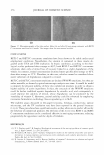
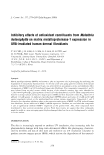
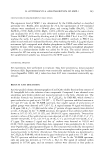
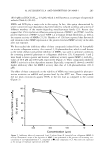
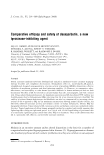
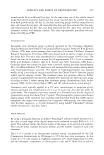
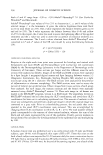
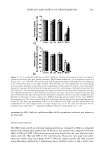
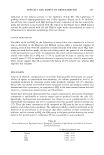
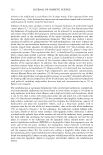
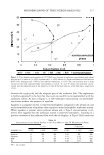
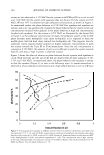
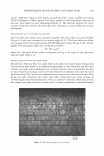
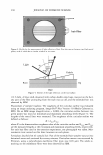
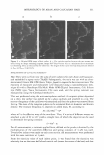
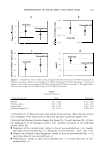
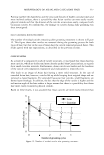
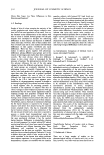
EFFICACY AND SAFETY OF DEOXYARBUTIN 12 g � : QB .. • 06 • 0 04 .! .! 02 0 +-------r-------,--------, 0 a 10 :a) an:.- 12 • 06 • 04 a Q2 * 0 +------.--------.--------, 0 b 10 2J QR( ..... 3l 299 Figure 1. Viability and morphology of normal human fibroblasts and keratinocytes were less significantly affrcreJ by JA compareJ to HQ. Human f"ibroblasts anJ keratinocytes cultures were treated daily with fresh media containing either dA or HQ in a dose-dependent manner for five clays. On day 6, cells were cletachecl and counted with a Coulter Counter. The cell number of the treated flask was divideJ hy the mean cell numbl'r of the vehicle-control flasks anJ plorceJ vs the test comrounJ concentrations. (a) Effect of· dA anJ HQ on viability of normal human fibroblasts. Duplicate samples were measured for each duplicate flask/ concentration. (b) Effect of dA ancl HQ on viability of normal human keratinocytes. Results are expressed as the mean of triplicate cultures/concentration. (c-e) Morphology of keratinocytes culturl's treateJ with (c) vehicle alone, or with 25 pM of (d) dA, or (e) HQ. * = Significant difference between the clA- and HQ-created groups at the same concentration at /1 0.05. melanin content (Figure 3a,b). AR did not alter either tyrosinase act1v1ty or melanin content. Within intact light human melanocytes, dA, KA, and TBP significantly in hibited tyrosinase activity (Figure 3c). In contrast, HQ exhibited no significant inhi bition of tyrosinase activity in melanocytes from light skin (Figure 3c). AR-treated melanocytes exhibited enhanced in situ tyrosinase activity as compared to the untreated control. REVERSIBILITY OF TYROSINASE INHIBITORS IN CULTURED HUMAN MELANOCYTES The time-dependent inhibition and the reversibility of inhibition on the tyrosinase activity and melanin content of dark human melanocytes treated with dA was assessed and compared with the effect of HQ and TBP at concentrations that did not significantly affect viability. Treatment of dark melanocytes with dA and TBP for five and ten days

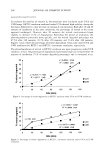
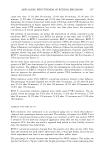
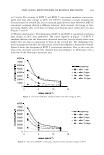
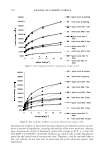
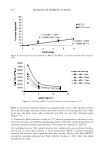
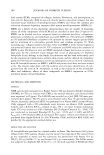
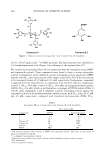
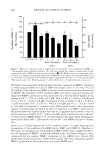
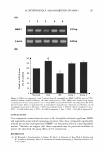
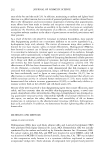
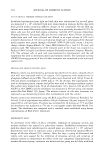
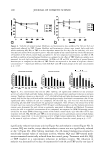
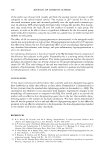
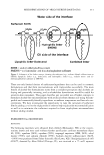
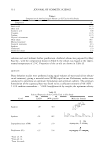
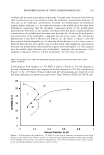
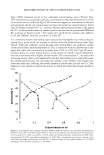
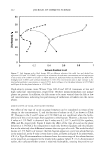
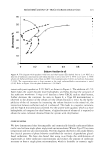
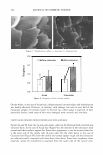
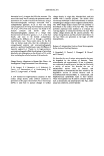
300 12 a 0 100 191 On:(114 JOURNAL OF COSMETIC SCIENCE :ax, 29) 1.4 - 12 � 1L--��-----=--.._� 0 • 0.8 'i 0.6 u ! 0.4 Q2 0 +--"""'T"--�----.---�--, 0 SI b 1a:J 151 OR� 3D ZIJ Figure 2. Viability of normal human fibroblasts and keratinocytes was unaffected by AR and KA and significantly affected by TBP. Human fibroblast and keratinocyte cultures were treated daily with fresh media containing AR, KA, or TBP in a dose-dependent manner for five days. On the sixth day, cells were detached and counted with a Coulter Counter. The cell number of the created flask was divided by the mean cell number of the vehicle-control flasks and plotted v. the test compound concentrations. (a) Effect of AR and KA on viability of normal human fibroblasts as compared to the effect of TBP. Duplicate samples were measured for each duplicate flask/concentration. (b) Effect of AR and KA on viability of normal human keratinocytes as compared to the effect of TBP. Results are expressed as the mean of triplicate cultures/ concentration. * = Significant difference from both KA- and AR-treated groups at the same concentration at p 0.05. 1JII C * - i'II � IQ dA IQISO "IP5l - 0.311 1.56 Figure 3. At a concentration that did not affect viability, dA significantly inhibited in situ tyrosinase activity of cultured dark and light human melanocytes, with concomitant significant reduction in melanin content. Triplicate cultures at a density of 1 x 10⁵ cells/well of dark and light skin human melanocytes were treated daily for five days with fresh media containing the previously determined concentrations that did not significantly affect viability of each test compound. On the fifth day, cells were fed with fresh media containing 1 µCi/ml of H 3 -tyrosine and the appropriate compound. After 24 hours, the radioactivity of the tritiated water was counted in a Packard 1900 CA liquid scintillation analyzer, and the melanin and protein content were determined for each culture as previously mentioned in Materials and Methods. Tyrosinase activity for cells in a specified concentration of test compound was expressed as DPM/24 hours/µg protein divided by the mean DPM/24 hours/µg protein of the vehicle-control flasks. (a,b) The effect of five days treatment with dA, HQ, AR, KA, and TBP on in situ tyrosinase activity and melanin content of dark human melanocytes, respectively. (c) In situ tyrosinase activity of light human melanocytes. Results are expressed as the mean of triplicate cultures ± SD. * = Significant difference from the control group at p 0.05. significantly reduced tyrosinase activity (Figure 4a) and melanin content (Figure 46). In contrast, HQ was similar, except that the melanin content was not significantly reduced at day 5 (Figure 46). After halting treatment, the dA-treated melanocytes returned to statistically normal values of tyrosinase activity, whereas HQ- and TBP-treated mela nocytes remained statistically reduced from the control group. Treatment with dA, HQ, or TBP resulted in a concomitant reduction in melanin content. The reduction in melanin was detected by five days of treatment for both dA and TBP and by ten days of
Purchased for the exclusive use of nofirst nolast (unknown)
From: SCC Media Library & Resource Center (library.scconline.org)