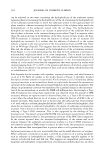
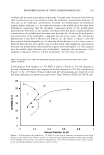
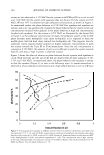
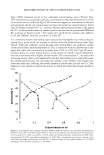
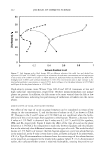
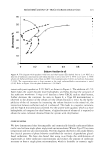
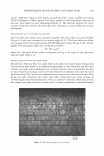
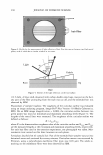
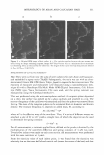
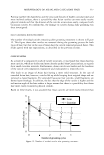
338 JOURNAL OF COSMETIC SCIENCE Caucasian cuticles. The progress of cuticle abrasion during daily grooming processes endorses this assumption. It is assumed that that there is a racial difference in the component that absorbs stress first. In the case of Asian hair, the cohesion between cuticle cells seems to be affected by the stress first, while in the case of Caucasian hair, the cuticle cell structures themselves seem to be damaged first. REFERENCES (1) H. Otsuka and T. Nemoto, Study on Japanese hair, Koshokaishi, 12, 192-197 (1988). (2) B. M. Das. A study of cross sections of head hair from some Caucasoid and mongoloid populations of Assam, India, Z. Morph. Anthrop., 65, 324-328 (1974). (3) A. Franbourg, P. Hallegot, F. Baltenneck, C. Toutain, and F. Leroy. Current research on ethnic hair, J. Am. Acad. Dermatol., 48, 115-119 (2003). (4) S. Hayashi, T. Okumura, and A. Ishida, "Preliminary Study on Racial Difference in Scalp Hair," Biology and Disease of the Hair, T. Kobori et al., Eds. (University of Tokyo Press, Tokyo 1976), pp. 555-561. (5) B. M. Das, Medullary structure of head hair in some Caucasoid and mongoloid populations of Assam, India, Z. Morph. Anthrop., 63, 102-109 (1971). (6) A. N. Parbhu, W. G. Bryson, and R. Lal. Disulfide bonds in the outer layer of keratin fibers confer higher mechanical rigidity: Correlative nano-indentation and elasticity measurement with an AFM, Biochemistry, 38, 11755-11761 (1999). (7) J.P.Cleveland, S. Manne, D. Bocek, and P. K. Hansma. A nondestructive method for determining the spring constant of cantilevers for scanning force microscopy, Rev. Sci. Instrum., 64, 403--405 (1993). (8) J. A. Swift. Fine details on the surface of human hair, Int. J. Cosmet. Sci., 13, 143-159 (1991). (9) S. B. Ruetsch and H.-D. Weigmann. Mechanism of tensile stress release in the keratin fiber cuticle. I.,]. Soc. Cosmet. Chem., 47, 13-26 (1996).

J. Cosmet. Sci., 57, 339 Quly/August 2006) DELIVERY SYSTEM HANDBOOK FOR PERSONAL CARE AND COS METIC PRODUCTS, Meyer R. Rosen, Ed. (William Andrew Publishing, Nor wich, NY, 2005), 1106 pp., $295. Delivery systems have become a hot topic at seminars and meetings following a new emphasis on "actives" in skin care products. The stars were in alignment as marketing considerations, regulations (or their absence), and scientific advances con verged. As a result, there are many novel technologies to choose from. A delivery system can be self-contained (e.g., a patch), a traditional vehicle (e.g., an emulsion), or a composite consisting of a traditional vehicle in which a microsys tem, such as a liposome, is an important component. Among the many potential benefits claimed for various delivery sys tems are stabilization of a labile substance, improved homogeneity, enhanced deposi tion on skin or hair, and/or control of per meation through the skin. An additional consideration is that the delivery system itself may contribute directly to product performance. Although a great deal on delivery sys tems has been published, the information is scattered and a compilation that brings various aspects of the topic together is wel come. This book provides the reader with Book Revie"\\' philosophical viewpoints, historical per spectives, scientific background, and many examples of delivery systems and their ap plications. I recommend this book to ev eryone working in skin care and hair care, but especially to those who are new to the field. The editor has attempted to separate the 45 chapters (by over 7 5 authors) according to general topics, but there is inevitably a certain amount of repetition and overlap. This is not altogether a bad thing. Al though some of the chapters are devoted to proprietary technology and are somewhat promotional in nature, there is an abun dance of scientific description. Several chapters cover the basics of skin structure and penetration and give over views of the history and variety of delivery systems. Two chapters provide a compre hensive overview of microcapsules. Among other delivery systems considered are lipo somes, microparticles, microemulsions, multiple emulsions, foams, gels, lipid based systems, silicone-based systems, patches, and polymer-bound systems. Some of the chapters deal with particular actives and methods of improving their delivery. Still other chapters deal with safety testing and marketing. All in all, the treatment is encyclopedic.-JOEL L. ZA TZ-Professor Emeritus, Rutgers U niver sity 339
Purchased for the exclusive use of nofirst nolast (unknown)
From: SCC Media Library & Resource Center (library.scconline.org)