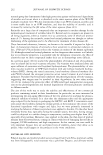
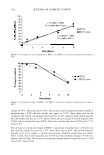
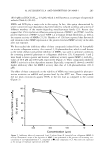
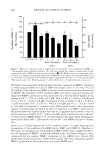
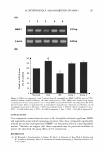
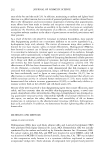
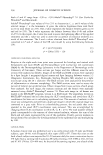
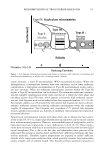
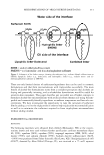
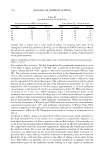
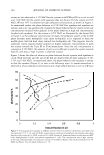
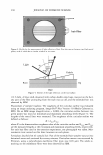
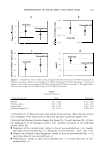
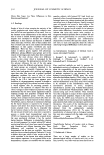
MICROEMULSIONS OF TRIGLYCERIDE-BASED OILS Water side of the interface Surfactant SDHS Sl.JNa SO 3 N a a � -;:,,-s '.:.��:�;:,, --;:::-0:,�;:,,;.0;._;;., � � � f Hydrophilic linker SMDNS Oil side of the interface Lipophilic linker Dodecanol SDHS = sodium dihexylsulfosuccinate Combined linker SMDNS = sodium mono- and dimcthylnaphalene sulfonate 313 Figure 2. Schematic of the linker concept, showing the surfactant (e.g., sodium dihexyl sulfosuccinate or SDHS), lipophilic linker (e.g., dodecanol), and hydrophilic linker (e.g., sodium mono- and di methylnaphthalene sulfonate or SMDNS). There are only limited choices of surfactants/ingredients that can be used in cosmetic formulations and that form microemulsions with triglycerides successfully. The main benefit of alcohol-free formulations stems from a consumer perception that alcohols are drying and potentially irritating, and so alcohol-free formulations would be useful for sensitive-skin consumers. This paper describes our successful use of linker concepts to formulate alcohol-free microemulsions with artificial sebum (human oil) using biocom patible and cosmetically friendly ingredients at ambient temperature and low salt con centrations. We have investigated the opportunity to tune the curvature of surfactant film by adding co-oil to the triglyceride in order to help triglyceride microemulsification as well as to minimize the surfactant required to form single-phase microemulsions without adding alcohol. EXPERIMENT AL PROCEDURES MATERIALS The following materials were obtained from Aldrich (Milwaukee, WI) at the concen trations shown and were used without further purification: sorbitan monooleate (Span 80, 99%), squalene (98%), squalane (99%), isopropyl myristate (IPM, 98%), ethyl laurate (99% ), and sodium chloride (99% ). Sodium dioctyl sulfosuccinate (AOT, -100%) was purchased from Fisher Scientific (Fair Lawn, NJ). Hexylpolyglucocide AG 6206™, donated by Akzo Nobel (Chicago, IL), was received as a 75 wt% aqueous

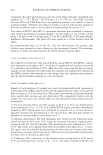
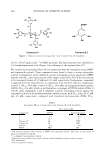
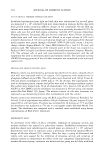
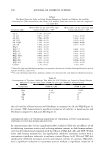
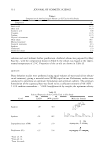
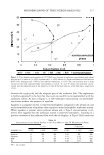
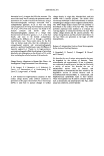
314 JOURNAL OF COSMETIC SCIENCE Table I Composition of Artificial Liquid Sebum (25°C) Used in This Study Component Laurie acid Oleic acid lsostearic acid Tricaprin Triolein Glycerol triisostearate Oleyl oleate Myristyl myriscate Isostearyl isostearate Squalene Cholesterol Cholesterol oleate % 11.73 11.73 5.86 11.73 11.73 5.86 10.6 10.6 4.13 12.23 1.53 2.27 solution and used without further purification. Artificial sebum was prepared by Mary Kay Inc., with the composition shown in Table I the sebum was liquid at the experi mental temperature of 25 ° C. Properties of the co-oils are shown in Table II. METHODS Phase behavior studies were performed using equal volumes of water and oil (or sebum/ co-oil mixtures), giving a water/oil ratio (WOR) equal to one. Preliminary studies were conducted to determine an optimum formulation and optimum salinity. The optimum formulation of the aqueous phase was found to be a surfactant mixture of 4% AOT + 5.13% sorbitan monooleate + 5.06% hexylglucocide by weight the optimum salinity Table II Selected Properties of the Co-Oils Used in This Study Co-oil EACN MW (g/mole) Molecular formula Squalene 410 Squalane -24 422 Isopropylmyristate (1PM) 13 6 270 ft fHs CH 3 (CH 2 ) 1 1 CH 2 -C-O CHCH 3 Ethyllaurate (EL) 13 c 224 a From ref. 39. 6 From ref. 12. c From this work.
Purchased for the exclusive use of nofirst nolast (unknown)
From: SCC Media Library & Resource Center (library.scconline.org)