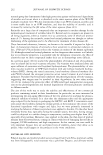
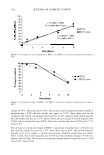
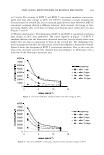
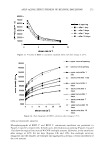
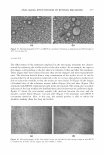
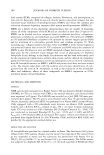
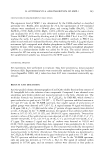
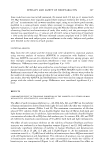
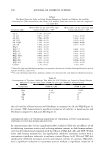
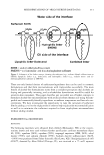
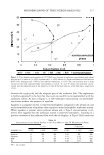
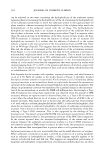
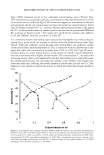
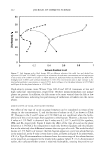
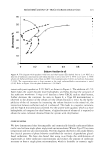
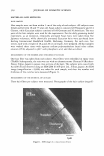
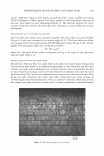
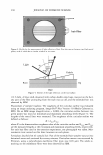
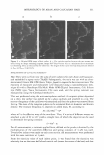
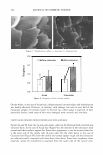
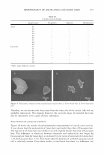
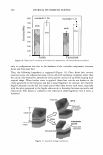
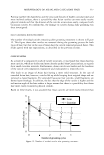
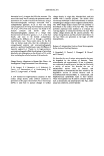
330 JOURNAL OF COSMETIC SCIENCE hair fiber Figure 3. Holder for the measurement of light reflection of hair. Five hairs are set between two black metal plates, each of which has a circular window at its center. Light Root Hair Figure 4. Scheme of the light reflection on the hair surface. (13.5 mm). A brass stub, mounted with carbon double-sided tape, was put on the hair, any part of the fiber protruding from the stub was cut off, and the extended hair was observed by SEM. Measurement of cuticular roughness. The roughness of the cuticular outline was evaluated using an image analyzing program, Image-Pro® Plus Version 4.0 (Media Cybernetics, MD). On an SEM image (magnification x 2,000), the cuticular outline between two given points was traced at minimum and maximum smoothing levels (Figure 5 ). The lengths of the traced lines were measured. The roughness of the cuticular outline was defined as follows: R = Lmin/Lmax where R is the dimensionless roughness value of the cuticular outline and Lmin and Lmax are the measured lengths at the minimum and maximum smoothing levels, respectively. For each hair fiber used in the extension experiment, one photograph was taken. Mea surements were carried our for three locations on each photo. Particulates detached from the extended hair. Parr of the extended hair samples was put into deionized water and sonicated for twenty minutes. Particulate matter was recovered by filtration, using a polycarbonate membrane filter (pore size: 0.05 µm). The solids re maining on the membrane filter were then observed by SEM.

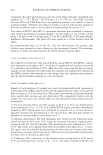
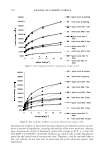
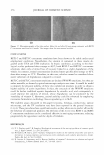
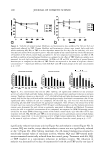
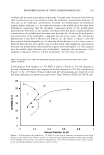
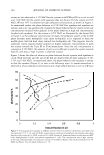
MORPHOLOGY OF ASIAN AND CAUCASIAN HAIR 331 a b C Figure 5. a: Original SEM image of hair surface. b, c: The cuticular outline between the two arrows was traced using an image analyzing program, Image-Pro® Plus Version 4.0, at a minimum (b) or maximum (c) smoothing level, as indicated by the white line. The length of the traced line was measured and defined as Lmin and Lmax• respectively. MEASUREMENT OF CUTICULAR ELASTICITY Hair fibers were cut from near the scalp of seven subjects for each Asian and Caucasian, and embedded in epoxy resin (TAAB). Subsequently, the resin was cut with an ultra microtome Ultracut EM UPR (Leica, Tokyo, Japan) to expose the hair cross sections. The elasticity of exocucicle and endocuticle were measured using a nanoindentation tech nique (6) with a NanoScope Illa Multi Mode AFM (Digital Instruments, CA). Silicon tips (NCH type, Veeco Instruments, CA) were used, and the spring constant was measured by using the Cleveland method (7). This was performed using the micromanipulator method: A tungsten sphere deposited on a clean, dry surface was picked up by a glass capillary and attached to a tip. The resonant frequency of the cantilever was measured and then the sphere was removed from the tip. The mass of the tungsten sphere can be estimated from its diameter and known density. The resonant frequency, u, depends on added mass, MJ according to M = k(2 m,r2 -m* where m* is the effective mass of the cantilever. Thus, if a series of different masses are attached, a plot of M vs 1/u2 yields a straight line, of which the slope (m) can be used to determine the spring constant: k=4,r2 · m For all measurements, a constant applied force, defined as the product obtained by the multiplication of the cantilever deflection and spring constant, of 4 µN was used. Twenty-five indents were made on each cross section. All measurements were performed with the same cantilever at 1 µm/s. From the elasticity value of each indent point, it was found that the elasticity was relatively low on the inner half of each cuticle cell (nearer the center of the hair) and that
Purchased for the exclusive use of nofirst nolast (unknown)
From: SCC Media Library & Resource Center (library.scconline.org)