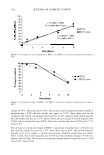
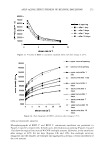
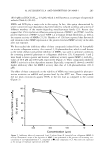
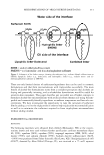
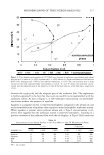
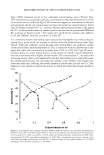
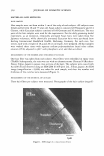
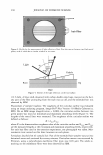
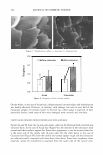
328 JOURNAL OF COSMETIC SCIENCE MATERIALS AND METHODS HAIR SAMPLES Hair samples were cut from within 1 cm of the scalp of each subject. All subjects were female and between 18 and 77 years old. Asian subjects consisted of 89 Japanese and 114 Chinese, while Caucasian subjects consisted of 160 Germans and 50 Americans. The root parts of the hair samples were used for the experiments. For the daily-grooming model experiment, as an exception, chemically untreated Asian hairs were taken from five Japanese volunteers, while chemically untreated Caucasian hairs were purchased from Keding International Haarfabrik GmbH, Backnang, Germany. For each race, five tresses, each with a weight of 10 g and 20 cm in length, were prepared. All hair samples were washed three times with aqueous sodium polyoxyethylene lauryl ether sulfate solution (15 % ) ad justed to pH7 with phosphoric acid, and then air-dried. MEASUREMENT OF THE NUMBER AND THICKNESS OF CUTICLES One hair fiber was taken from each subject. Hair fibers were embedded in epoxy resin (TAAB). Subsequently, the resin was cut with an ultramicrotome Ultracut N (Reichert Nissei, Tokyo, Japan) to expose cross sections of the hairs. The samples were coated with Au (200 A) and observed using an SEM JSM 6330F Qeol Ltd., Tokyo, Japan). An SEM image (magnification x 5,000) was taken for each sample, and then the number and thickness of the cuticles were measured (Figure 1). MEASUREMENT OF THE INTERVAL OF CUTICLES Three hair fibers per subject were measured. Photographs of the hair surface (magnifi- lµm Figure 1. SEM image of a cross section of hair.

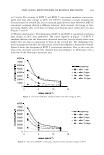
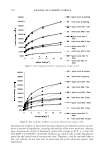
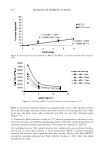
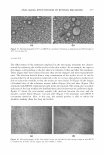
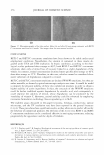
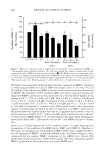
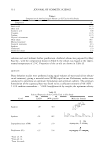
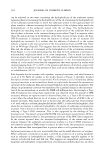
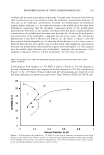
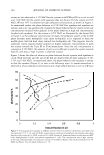
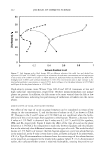
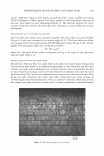
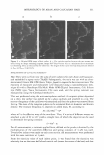
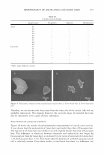
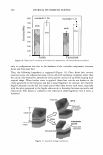
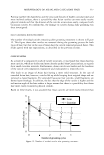
MORPHOLOGY OF ASIAN AND CAUCASIAN HAIR 329 cation xSOO) were taken at three points on each hair fiber, using a profile microscope VK-8510 (Keyence, Osaka, Japan). Five lines, parallel to the longitudinal direction of the hair, were drawn on each photograph (Figure 2). The intervals between the inter sections of the lines and the cuticular edges were measured at at least 100 points in each photograph. MEASUREMENT OF THE SURFACE INCLINATION Five hair fibers per subject were aligned in parallel with each other, in a special holder (Figure 3). Light was irradiated at an incident angle of 45°. The light reflection of hair was measured with a Goniophotometer GP-200 (Murakami Color Research Lab., Tokyo, Japan). The inclination angle was calculated as follows: 8 = ( 45--ys)/2 where 8 is the angle of the surface inclination and 'Ys 1s the angle of the specularly reflected light (Figure 4). DAMAGE EVALUATION OF EXTENDED HAIR Extended hair. One hair fiber was taken from each subject and small tresses of Asian and Caucasian hair were made. In a preliminary experiment, it was found that the lift-up of cuticles was slight when undamaged hair cut from near the scalp was extended. In order to induce easier hair damage, hair tresses were treated with shampoo and conditioner and then blow-dried. This process was repeated thirty times prior to the extension test. Nine Asian and eight Caucasian hair fibers were taken from each tress. Root sections of 10-mm length were then extended by 35% at a speed of 5 mm/min. Both ends of each hair sample were then attached to a glass plate, in order to maintain its extended length IOµm Figure 2. Microscope image of a hair surface.
Purchased for the exclusive use of nofirst nolast (unknown)
From: SCC Media Library & Resource Center (library.scconline.org)