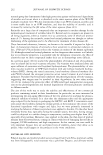
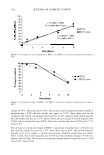
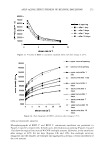
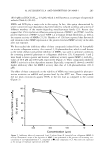
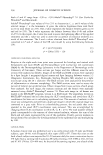
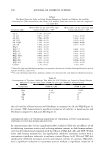
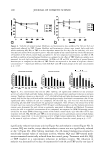
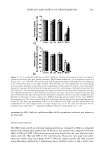
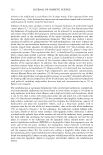
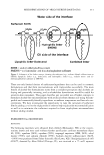
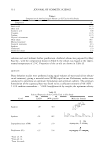
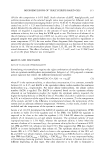
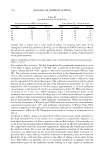
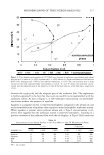
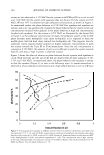
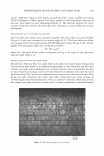
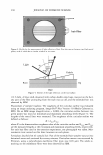
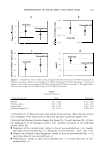
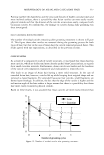
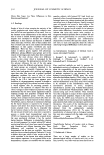
MORPHOLOGY OF ASIAN AND CAUCASIAN HAIR 333 a 9 (l'l Asian hair d) 8 e f u Caucasian hair ·-g 7 0 � ◄► 11) 6 ::I z 5 [ C '--" 8 .0 (l'l Caucasian hai d) u ·-g 7 .5 Asian hair 11) u f � 7 .0 ::I r/1 t+-. 0 6.5 6.0 0.50 a :::1. (l'l 0.45 11) u ·-g t+-. 0.40 0 (l'l (l'l 11) u 0.3 5 4.0 3 .5 a:, d) 3 .0 eh � 2.5 2.0 b f Caucasian hair -=+_--------- f----------� - - --- --- Asian hair d Asian hair Caucasian hair Figure 6. a: Number of cuticles. Values are an average of 203 fibers (Asian) and 214 fibers (Caucasian). b: Thickness of cuticles. Values are an average of 193 fibers (Asian) and 195 fibers (Caucasian). c: Interval of surface cuticles. Values are an average of 200 fibers (Asian) and 282 fibers (Caucasian). d: Tilt angle of hair. Values are an average of 1020 fibers (Asian) and 610 fibers (Caucasian). Cuticular structure Number Thickness (µm) Interval (µm) Inclination angle, 0 (0) Table I Cuticular Structures Asian 7.13 ± 0.90 0.45 ± 0.04 6.61 ± 0.52 3.34 ± 0.07 Caucasian 6.55 ± 0.84 0.43 ± 0.03 6.98 ± 0.60 2.78±0.15 cuticle sheets(¢::: in Figure 76) were observed for Caucasian hairs. These deposits seemed to be remnants of the endocuticle, as has been reported in previous papers (8,9). Criteria for classification of cuticular damage. For Asian (N = 9) and Caucasian (N = 8) hair, the appearances of the damaged cuticles were classified according to the following criteria (Table II): • Roughness of the cuticular edge: similar to that of non-extended hair ( -) or rougher than that of non-extended hair ( + ). (Boundary R value between - and + was 1. 15 ). • Deposits and collapsed small fragments: similar to those of non-extended hair(-) or more than those of non-extended hair ( + ). • Delamination: similar to that of non-extended hair (-) or more than that of non extended hair ( + ).

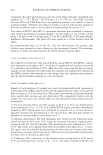
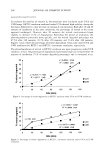
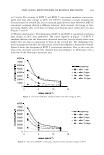
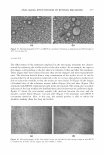
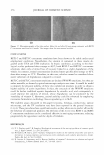
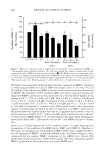
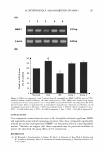
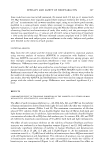
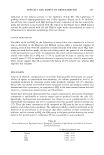
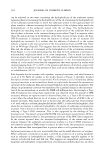
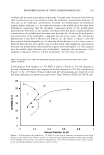
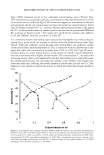
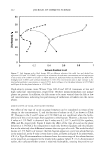
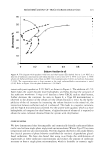
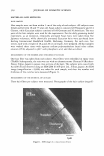
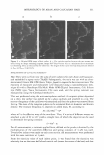
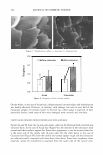
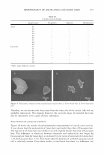
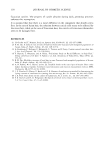
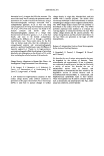
334 CZl CZl aJ JOURNAL OF COSMETIC SCIENCE Figure 7. Extended hair surface. a: Asian hair. b: Caucasian hair. 1.20 □ before extension Ill after extension 1.15 1.10 1.00 Asian Caucasian Figure 8. Roughness of the cuticular outline. On the whole, in the case of Asian hair, collapse around cuticular edges and delamination was hardly observed. However, in contrast, such damage was seen in over half of the Caucasian samples. In sections nearer to the hair tip, where aging is expected to have proceeded further, both types of hair were damaged more severely and similarly. PARTICULATES OBTAINED FROM EXTENDED AND SONICATED HAIR Figures 9a and 96 show the typical particulates collected by filtration from extended and sonicated hairs. In the case of Asian hair (Figure 9a), the outlines of the substances look smooth and their surfaces appear flat. From their appearance, it can be assumed that this is the outer side of the cuticle cells (A-layer side). On the other hand, in the case of Caucasian hair (Figure 96), both the outline and surface appear rough and the substances are relatively small, compared with those from Asian hairs. From their roughness, these materials cannot be considered to originate from the outer side of the cuticle cells.
Purchased for the exclusive use of nofirst nolast (unknown)
From: SCC Media Library & Resource Center (library.scconline.org)