244 JOURNAL OF COSMETIC SCIENCE (19) C. L. Froebe, F. A. Simion, L. D. Rhein, R.H. Cagan, and A. Kligman, Stratum corneum lipid removal by surfactants: Relation to in vivo irritation, Dermato/ogica, 181, 277-283 (1990). (20) D. T. Downing, W. Abraham, K. K. Wegner, K. W. Willman, and]. L. Marshall, Partition of sodium dodecyl sulfate into stratum corneum lipid liposomes, Arch. Dermatol. Res., 285, 151-157 (1993). (21) J. Vilaplana, J.M. Mascaro, C. Trullas, J. Coll, C. Romaguera, C. Zemba, and C. Pelejero, Human irritant response to different qualities and concentrations of cocoamidopropylbetaines: A possible model of paradoxical irritant response, Contact Dermatitis, 26, 289-294 (1992). (22) K. P. Wilhelm, M. Samblebe, and C. P. Siegers, Quantitative in vitro assessment of N-alkyl sulphate induced cytotoxicity in human keratinocytes (HaCaT): Comparison with in vivo human irritation tests, Br.]. Dermatol, 130, 18-23 (1994). (23) K. P. Wilhelm, A. B. Cua, H. H. Wolff, and H. I. Maibach, Surfactant-induced stratum corneum hydration in vivo: Prediction of the irritation potential of anionic surfactants,]. Invest. Dermatol., 101, 310-315 (1993). (24) G. K. Menon, and P. M. Elias, Morphologic basis for a pore-pathway in mammalian stratum corneum, Skin Pharmacol., 10, 235-246 (1997). (25) P. M. Elias, Lipids and the epidermal permeability barrier, Arch. Dermatol. Res., 270, 95-117 (1981). (26) W. M. Deen, Hindered transport of large molecules in liquid-filled pores, AIChEJ., 11, 1306-1314 (1987). (27) K. D. Peck, A.H. Ghanem, and W. I. Higuchi, Hindered diffusion of polar molecules through and effective pore radii estimates of intact and ethanol treated human epidermal membrane, Pharm. Res., 11, 1306-1314 (1994). (28) K. D. Peck, J. Hsu, S. K. Li, A. Ghanem, and W. I. Higuchi, Flux enhancement effects of ionic surfactants upon passive and electroosmotic transdermal transport, ]. Pharm. Sci., 87, 1161-1169 (1998). (29) K. D. Peck, V. Srinivasan, S. K. Li, W. I. Higuchi, and A. Ghanem, Quantitative description of the effect of molecular size upon electroosmotic flux enhancement during iontophoresis for a synthetic membrane and human epidermal membrane,]. Pharm. Sci., 85, 781-788 (1996). (30) S. K. Li, W. Suh, H. H. Parikh, A. Ghanem, S. C. Mehta, K. D. Peck, and W. I. Higuchi, Lag time data for characterizing the pore pathway of intact and chemically pretreated human epidermal mem brane. Int.]. Pharm., 170, 93-108 (1998). (31) H. Tang, S. Mitragotri, D. Blankschtein, and R. Langer, Theoretical description of transdermal trans port of hydrophilic permeants: Application to low-frequency sonophoresis.j. Pharm. Sci., 90, 545-568 (2001). (32) A. Tezel, A. Sens, and S. Mitragotri, Description of transdermal transport of hydrophilic solutes during low-frequency sonophoresis based on a modified porous pathway model,]. Pharm. Sci., 92, 381-393 (2003). (33) S. K. Li, A.H. Ghanem, K. D. Peck, and W. I. Higuchi, Characterization of the transport pathways induced during low to moderate voltage iontophoresis in human epidermal membrane,]. Pharm. Sci., 87, 40-48 (1998). (34) J. Kushner, D. Blankschtein, and R. Langer, Experimental demonstration of the existence of highly permeable localized transport regions in low-frequency sonophoresis,j. Pharm. Sci., 93, 2733-2745 (2004). (35) A. Einstein, Investigation on the Theory of Brownian Movement (Dover, New York, 1956), Vol. 58. (36) L. Magid, "Light Scattering in Micellar Systems," in Dynamic Light Scattering: The Method and Some Applications, W. Brown, Ed. (Oxford University Press, Oxford, 1993), pp. 554-593. (3 7) A. Rohde and E. Sackman, Quasieleatic light-scattering studies of micellar sodium dodecyl sulfate solutions at the low concentration limit,]. Colloid Interface Sci., 70, 494-505 (1979). (38) R. R. Warner, Y. L. Boissy, N. A. Lilly, M. J. Spears, K. McKillop, J. L. Marshall, and K. J. Stone, Water disrupts stratum corneum lipid lamellae: Damage is similar to surfactants,]. Invest. Dermatol., 113, 960-966 (1999). (39) J. L. Zatz and B. Lee, "Skin Penetration Enhancement by Surfactants," in Surfactants in Cosmetics, M. M. Rieger and L. D. Rhein, Eds. (Marcel Dekker, New York, 1997), pp. 501-517. (40) Y. J. Nikas and D. Blankschtein, Complexation of non-ionic polymers and surfactants in dilute aqueous solutions, Langmuir, 10, 3512-3528 (1994). (41) M. Loden, The simultaneous penetration of water and sodium lauryl sulfate through isolated human skin,]. Soc. Cosmet. Chem., 41, 227-233 (1990). (42) K. P. Ananthapadmanabhan, D. J. Moore, K. Subramanyan, M. Misra, and F. Meyer, Cleansing without compromise: The impact of cleansers on the skin barrier and the technology of mild cleansing, Dermatologic Therapy, 17, 16-25 (2004).

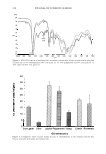
J. Cosmet. Sci., 58, 245-254 (May/June 2007) Vehicle and enhancer effects on human skin penetration of aminophylline from cream formulations: Evaluation in vivo LAI-HAO WANG, CHIA-CHEN WANG, and SU-CHING KUO, Department of Applied Chemistry, Chia Nan University of Pharmacy and Science, Tainan 71710, Taiwan R.0.C. Accepted for publication March 6, 2007. Synopsis The effects of four essential oils (rosemary, ylang, lilacin, and peppermint oils), and three plant oils (jojoba oil, corn germ oil, and olive oil) on the permeation of aminophylline were studied using human skin. The permeation effects of these oils were compared with those of three chemical penetration enhancers. Although all oils enhanced the permeation of aminophylline, their effects were less than that of ethanol. Jojoba oil was found to be the most active, causing about a 32% peak height decrease of N-H bending absorbances in comparison with the control, while peppermint, lilacin, rosemary, and ylang oils caused 28%, 24%, 18%, and 12% peak height decreases, respectively. Microemulsions containing 10% jojoba oil and 30% corn germ oil were found to be superior vehicles for the percutaneous absorption of aminophylline. Comparision with results obtained from high-performance liquid chromatography shows good agreement. INTRODUCTION Theophylline is a xanthene derivative. When theophylline is combined with ethylene diamine in anhydrous alcohol, it forms the compound aminophylline (1). Aminophylline has been reported to break down fat and cellulite from cells by triggering enzymes that help the body to release fat from stores in certain areas of the body. It works well on the thighs and buttocks of women and has a smoothing effect on the skin. However, some individuals suffer from allergic reactions to ethylenediamine hydrochloride (2). The aminophylline cream has been studied by Fourier transform infrared FTIR (3), electro chemical detection (4), reversed-phase high-performance liquid chromatography (HPLC) (5), and spectral analysis (6). There was only one study applied to aminophylline cream, in which permeation through rat skin in vitro was performed in a two-compartment diffusion cell to a select enhancer (7). Human skin is usually the preferred skin mem brance to use in an absorption study. No animal model gives absorption values identical to those obtained in human skin (8). The stratum corneum has long been considered a major barrier to the penetration of topically applied chemicals. Studies have Address all correspondence to Lai-Hao Wang. 245
Purchased for the exclusive use of nofirst nolast (unknown)
From: SCC Media Library & Resource Center (library.scconline.org)