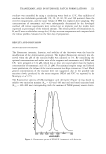
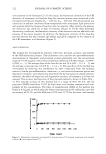
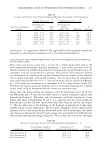
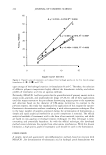
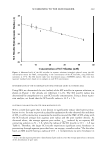
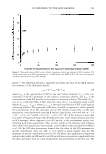
TRANEXAMIC ACID IN HYDROGEL PATCH FORMULATIONS 217 for amino acids has been reviewed by Fekkes (24). The widely used post-column de rivatizing reagents for a commercial amino acid analyzer are ninhydrin and OP A. Phenylisothiocyanate and OPA have been widely used as pre-column derivatizing re agents due to their advantages over the others. Fluorescence derivatization has been frequently shown to improve detection sensitivity and selectivity as noted by the nu merous reviews available on this topic (25,26). In the course of searching for a simple, rapid, sensitive and quantitative derivatization procedure, a spectrofluorimetric determination was chosen as an alternative detection to UV-spectrophotometry due to its greater specificity and sensitivity. Naphthalene-2,3- dicarboxaldehyde (NDA) is a selected fluorogenic reagent that specifically performs derivatization with primary amines in the presence of cyanide ion (27). Greater stability of a sphingoid base derivative with NDA than with o-phthalaldehyde (OP A), a prede cessor reagent, has been reported (28). In the mixture containing excess NDA and CN-, fluorescent side-product formation slowly occurred (27). Therefore, separation tech niques were usually required for the determination (27 ,28). In this study, no interfering signal was observed from an optimized derivatization of tranexamic acid with NDA in the presence of cyanide ion (NDA/CN-). The reported protocol is a simple and rapid spectrofluorimetric method with sufficient sensitivity, accuracy, and precision for the analysis of tranexamic acid in gel preparations. To date, this study is the first report that demonstrates the application of NDA/CN- reagent for spectrofluorimetric determina tion of tranexamic acid without other separation techniques. With this derivatization protocol, the determination of tranexamic acid in other formulation types or matrices could be possible. MATERIALS AND METHODS APPARATUS A Jasco spectrofluorometer, Model FP-777 Gasco, Japan), with a 150-W xenon lamp and 1-cm quartz cells was used throughout the study. The excitation and emission wave lengths were set at 420 and 480 nm, respectively, with a 5-nm slit-bandwidth for both entrance and exit slits. Photomultiplier tube (PMT) gain was assigned at the "very low" level. CHEMICALS Tranexamic acid powder was obtained from Daiichi Fine Pharmaceutical (Tokyo, Japan). NDA was obtained from Fluka (WI, USA). Methanol (HPLC grade), potassium cyanide, and anhydrous disodium hydrogen phosphate were obtained from Merck (Darmstadt, Germany). Disodium tetraborate, sodium chloride, potassium chloride, and potassium dihydrogen orthophosphate were purchased from BDH Laboratory Supplies (Poole, England). Methocel® E4M and Methocel® ES0 were purchased from Colorcon (PA, USA). Acrylax® 1061 was a gift from Neoplast (Nonthaburi, Thailand). Carbopol® 980 NF was purchased from BF Goodrich. (Cleaveland, OH, USA). Polyvinylpyrrolidone (PVP) K90 was obtained from Serva Feinbiochemica GmbH & Co. (Heidelberg, Ger many). All other chemicals were of the highest purity available and used as received.

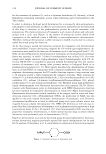
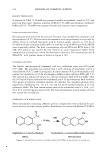
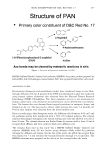
218 JOURNAL OF COSMETIC SCIENCE REAGENT PREPARATION A solution of NDA (5.36 mM) was prepared weekly in methanol, stored at 4°C, and protected from light. Aqueous solutions of KCN (5.36 mM) and disodium tetraborate buffer (pH 9.5, 50 mM) were prepared weekly and stored at room temperature. DERIVATIZATION PROCEDURE Derivatization protocols from the previous literature were modified for tranexamic acid determination (10,27). Derivatization of tranexamic acid was performed in a test tube by adding 50 µl of standard tranexamic acid or diluted sample solution in 1.85 ml of 50-mM disodium tetraborate buffer (pH 9.5), and then 50 µl of NDA and 50 µl of KCN were sequentially added. The final concentrations of both NDA and KCN were 0.134 mM. The solution was reacted for five minutes at room temperature before being transferred to a normal-size cuvette for fluorimetric detection. The chemical reaction of NDA/CN- with primary amine is shown in Figure 2 (27). ST AND ARD SOLUTIONS The highest concentration of tranexamic acid on a calibration curve was 84.0 µg/ml (0.53 mM). The procedure was started from a stock solution of tranexamic acid at a concentration of 26.72 mM (4.20 mg/ml). An exact amount (0.42 g) of tranexamic acid powder was dissolved in 0.15 M of phosphate-buffered saline solution (PBS) (pH 7.4). The solution was adjusted to volume in a 100-ml volumetric flask with this buffer. Then the 0.50 ml of adjusted solution was transferred into a 25-ml volumetric flask to obtain 84.0 µg/ml of solution (standard solution A). Another five standard solutions were prepared by transferring 0.5, 1.0, 2.0, 3.0, and 4.0 ml of standard solution A to 5-ml volumetric flasks. The final concentrations used in the evaluation were 8.4, 16.8, 33.6, 50.4, 67.2, and 84.0 µg/ml, respectively. The assay of tranexamic acid in sample solution was carried out in triplicate. HYDROGEL PATCH FORMULATION Three formulations containing different gel base compositions were evaluated for ana lytical recovery and their release profiles. Formulation A consisted of Methocel® E4M as + R-NH2 C-H II N aphthalene-2,3-dicarboxaldehyde (NDA) CN NR N-substituted-1-cyanobenz[ f]isoindole derivative CBI-derivative Figure 2. Derivatization reaction of primary amine with NDA in the presence of cyanide ion.
Purchased for the exclusive use of nofirst nolast (unknown)
From: SCC Media Library & Resource Center (library.scconline.org)