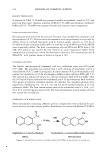
J. Cosmet. Sci., 58, 215-227 (May/June 2007) Spectrofluorimetric determination of tranexamic acid in hydrogel patch formulations by derivatization with naphthalene-2,3-dicarboxaldehyde/cyanide CHADARAT DUANGRAT, KIATTIKUN WONGSRI, and YANEE PONGPAIBUL, Department of Pharmaceutical Sciences, Faculty of Pharmacy, Chiang Mai University, Chiang Mai 50200, Thailand. Accepted for publication March 6, 2007. Synopsis The aim of this research was to develop and validate a spectrofluorimetric method for determination of tranexamic acid in hydrogel patch formulations. Tranexamic acid (trans-4-arninomethylcyclohexanecarbox ylic acid, trans-AMCHA) is an antifibrinolytic drug that recently gained attention as a skin-whitening agent due to its inhibitory effect on ultraviolet (UV)-induced pigmentation in vivo. Derivatization with naph thalene-2,3-dicarboxaldehyde (NDA) in the presence of cyanide ion (CN-) to produce a fluorescent 1-cya nobenz(/}isoindole (CBI) product (A ex = 420 nm, Aem = 480 nm) is for the first time reported for the determination of tranexamic acid in hydrogel patch formulations. Other separation techniques were not used in the analysis of the CBI-fluorescent product as required in the previous studies. The developed method was proven to be precise and accurate with percent recoveries ranging between 98.0% and 101.8% at the concentration range of 8.4-84.0 µg/ml (R 2 0.999). The intra- and inter-day precisions as expressed by the relative standard deviations (RSD) were below 1.85%. Derivatization of tranexarnic acid with NDA/CN was completed within five minutes and was stable for at least 30 minutes. The method has been applied to the analysis of drug content and release profiles in tranexamic hydrogel patch formulations. INTRODUCTION Tranexamic acid (trans-4-aminomethylcyclohexanecarboxylic acid, trans-AMCHA) is an antifibrinolytic drug that inhibits breakdown of fibrin clots. It is used in the treatment and prophylaxis of hemorrhage associated with excessive fibrinolysis (1). Tranexamic acid is also reported to decrease ultraviolet (UV) and arachidonic acid-induced pigmen tation in vivo (2). This activity has made this drug an interesting candidate for use as a skin-whitening active ingredient. Tranexamic acid is listed in the British Pharmacopoeia (2004) as raw material, sterile injection, and tablet (3). However, several topical for mulations of this drug have been established, such as a hemostatic oral patch for controlled release of tranexamic acid in the oral cavity ( 4), as a local tranexamic acid gel Address all correspondence to Chadarat Duangrat. 215

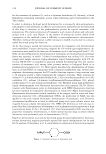
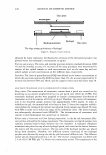
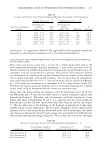
216 JOURNAL OF COSMETIC SCIENCE for the treatment of epistaxis (5), and as a liposome formulation (6). Recently, a lotion formulation containing tranexamic acid as a skin-whitening agent was launched in the Thai market. In order to develop a hydrogel patch formulation for a site-specific skin-antipigmenta tion purpose in our laboratory, an effective and convenient method for the determination of this drug is necessary in the preformulation process for topical tranexamic acid preparations. The chemical structure of tranexamic acid consists of amino and carboxylic groups with a cyclic ring (Figure l) the absence of aromaticity and/or double bond conjugation in the molecule causes a difficulty in spectrophotometric determination. Therefore, chemical derivatization is often necessary to modify its structure to contain a useful functional group for detection. As for this concept, several derivatization protocols for tranexamic acid determination were established. Various derivatizing reagents for UV-visible spectrophotometric de termination were used for the detection of tranexamic acid in the low µg/ml level (7-12). Only one spectrofluorimetric determination of tranexamic acid in pharmaceutical dosage forms was reported, in which 7-chloro-4-nitrobenzofuran was utilized (13). For more complicated sample matrices, high-performance liquid chromatography with UV de tection (HPLC-UV) is considered a practical method for measuring very low concen trations of tranexamic acid among other primary amines in biological fluids or in pharmaceutical products (14-17). Most reports described the determination of tranex amic acid with HPLC in conjunction with a chemical modification step. Several chro mophoric derivatizing reagents for UV-visible detection require a long reaction time ( 30 minutes) and/or a high temperature for complete reactions. These reagents are chloranil (7), p-dimethylaminobenzaldehyde (8), 2,4,6-trinitrobenzenesulfonic acid (10), ninhydrin (11), sodium 2,6-dinitro-4-trifluoromethylbenzenesulfonate (14), phenyl isothiocyanate (15), and sodium picrylsulfonate (16). Methods using high-performance liquid chromatography with fluorescent detection have been reported (18, 19). Deriva tization with fluorescamine prior to determination with HPLC-fluorescence detection has been reported for tranexamic determination in serum (18). Major disadvantages of fluorescamine derivatization include instability of the reagent itself in water and limit detection sensitivity (20). o-Phthalaldehyde (OPA), the predecessor of NDA, was also applied to the post-column fluorogenic derivatization of tranexamic acid. However, instrumental modification to have an additional pump and a post-column reactor was required for post-column derivatization (19). HPLC-UV detection at 220 nm was re ported for direct determination of tranexamic acid in pharmaceutical preparation at high concentration levels (0.38-1.40 mg/ml) (21). Gas chromatography (GC) was also em ployed for tranexamic determination, in which several reaction steps to obtain volatile derivatives were performed prior to determination (22,23). Based on derivatization at an amino functional group for spectrophotometric detection, various derivatizing reagents previously reported for amine determination can be used for the analysis of tranexamic acid. A comprehensive comparison of derivatizing reagents Figure 1. Chemical structure of tranexamic acid.
Purchased for the exclusive use of nofirst nolast (unknown)
From: SCC Media Library & Resource Center (library.scconline.org)