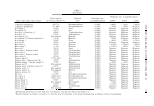
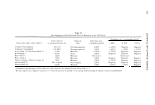
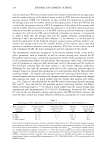
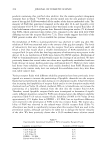
DYE-INDUCED ALLERGIC CONTACT DERMATITIS 213 in Table II. The positive DNCB control at the 0.5% induction/challenge concentration elicited positive responses in all animals tested. DISCUSSION Dye allergies can be a challenging problem for the sensitized consumer. To avoid offending substances, labels are difficult to read without knowledge of dye chemistry. Furthermore, it is very difficult for the dermatologist to treat and diagnose allergies to commonly used dyes. The dyes tested in this research can be found in clothing fabrics, such as cotton, wool, nylon, silk, acrylic, and acetate animal skins used for clothing, such as furs, sheepskin, leather, and suede bast fibers used in paper, rope, and clothing (juts, flax, sunn, hemp, and ramie) inks (general printing inks, pen inks, marking pens, stamp pads) paper (colored paper and carbon paper) solvents used for painting/staining/ repairing furniture (lacquers, varnishes, wood stains, and resins) colored plastics (poly styrene, vinyl, and pvc) shoe polishes photographic filters colored metals (anodized aluminum) and even biological stains used in various types of laboratories. From the standpoint of the cosmetic chemist, the most common use of these dyes is in soaps and hair dyes. There are some reports in the literature of dye allergies that were not confirmed by this research. For example, three dyes studied did not elicit a positive allergic reaction in guinea pigs (disperse blue 1, disperse red 55, and disperse yellow 49), but were reported in Fisher's Contact Dermatitis as "known to be potentially allergenic" (5). One possible explanation for this phenomenon, which is implied in Fisher's text, is that the "fre quency of cross-reactivity between Azo dyes and PPD could be explained by Mayer's hypothesis that they shared common transformation to quinonediimine by cells of the skin" (5). It is possible that this transformation did not occur in the guinea pig skin, accounting for these findings. Some of the dyes studied in this research are known by different names depending upon their intended use. For example, acid yellow 23, which is considered a non-certified dye, is known as FD&C yellow no. 5 or yellow 5 when the heavy metals are removed. This dye was found to be allergenic in our guinea pig model and may be labeled under several different names. This research has generated a list of commonly used dyes that may demonstrate an increased risk of allergic contact dermatitis in humans, based on guinea pig findings. This list may provide a reference for the cosmetic chemist, who wishes to develop products that could be considered hypoallergenic, by avoiding known allergenic dyes. The hypoallergenic label, which means reduced allergy, not non-allergic, is especially important in hair dyes. Dye-sensitive consumers have the greatest problem with hair dyes because the ammonia and/or hydrogen peroxide present in the hair dye enhances penetration of the allergen into the skin, increasing exposure. The allergenic dye may also be left in contact with the skin for 20 to 40 minutes, allowing sufficient time for an immune response. Dye allergies have a dramatic presentation, with total facial swell ing so severe that the eyes cannot be opened. Avoiding the dyes identified in this research as allergenic may be important in the development of products bearing the hypoallergenic claim.

214 JOURNAL OF COSMETIC SCIENCE REFERENCES (1) Opinion of the Scientific Committee on Cosmetic Products and Non-Food Products Intended for Consumers Concerning p-Phenylenediamine. Adopted by the SCCNFP during the 19th Plenary Meet ing, 27 February 2002. (2) E. Nettis, M. C. Colanardi, A. Ferrannini, and A. Tursi, Suspected tartrazine-induced acute urticaria/ angioedema is only rarely reproducible by oral rechallenge, Clin. Exp. Allergy, 33(12), 1725-1729 (2003). (3) M. S. Bhatia, Allergy to tartrazine in psychotropic drugs,]. Clin. Psychiatry, 61(7), 473--476 (2000). (4) J. R. Dipalma, Tartrazine sensitivity, Am. Fam. Physician, 42(5), 1347-1350 (1990). (5) R. L. Rietschel and J. F. Fowler Jr., Fisher's Contact Dermatitis, 4th Ed. (Williams and Wilkins, Baltimore, 1995). (6) K. L. Hatch, H. Motschi, and H. I. Maibach, Disperse dyes in fabrics of patients patch tested positive to disperse dyes, Am. J. Contact Dermatitis, 14(4), 2005-2012 (2003). (7) F. Giusti, L. Mantovani, A. Martella, and S. Seidenari, Hand dermatitis as an unsuspected presentation of textile dye contact sensitivity, Contact Dermatitis, 47(2), 91-95 (2002). (8) S. Seidenari, F. Giusti, F. Massone, and L. Mantovani, Sensitization to disperse dyes in a patch population over a five-year period, Am. J. Contact Dermatitis, 13(3), 101-107 (2002). (9) J. Opie, A. Lee, K. Frowen, J. Fewings, and R. Nixon, Foot dermatitis caused by the textile dye basic red 46 in acrylic blend socks, Contact Dermatitis, 49(6), 297-303 (2003). (10) W. Uter, H. Lessmann, J. Geier, D. Becker, T. Fuschs, and G. Richter, IVDK Study Group, and German Contact Dermatitis Research Group (DKG), The spectrum of allergic (cross-) sensitivity in clinical patch testing with 'para amino' compounds, Allergy, 57(4), 319-322 (2002). (11) F. Giusti, F. Massone, L. Bertoni, G. Pellacani, and S. Seidenari, Contact sensitization to disperse dyes in children, Pediatr. Dermatol, 20(5), 393-397 (2003). (12) A. T. Goon, N. J. Gilmour, D. A. Basketter, I. R. White, R. J. Rycroft, and J. P. McFadden, High frequency of simultaneous sensitivity to disperse orange 3 in patients with positive patch test to para-phenylenediamine, Contact Dermatitis, 48(5), 248-250 (2003). (13) E. V. Buehler, Delayed contact hypersensitivity in the guinea pig, Arch. Dermatol., 91, 171-177 (1965). (14) E. V. Buehler and]. F. Griffith, Experimental Skin Sensitization in the Guinea Pig and Man Animal Models in Dermatology (Churchill Livingstone, Edinburgh, 1975). (15) G. Klecak, "Identification of Contact Allergens: Predictive Tests in Animals," in Advances in Modern Toxicology Vol. 4: Dermatotoxicology and Pharmacology Qohn Wiley & Sons, New York/London/Sidney/ Toronto, 1977). (16) G. Klecak, H. Geleick, and J. R. Frey, Screening of fragrance materials for allergenicity in the guinea pig: A comparison of four testing methods,]. Soc. Cosmet. Chem., 28, 53-64 (1977). (17) The Society of Dyes and Colourists, Colour Index, 3rd Ed., 1971 revised 1975, 1982, 1987, 1992.
Purchased for the exclusive use of nofirst nolast (unknown)
From: SCC Media Library & Resource Center (library.scconline.org)