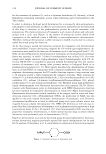
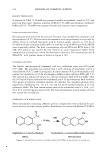
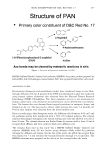
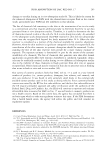
256 JOURNAL OF COSMETIC SCIENCE practice (1). Some reported products using categories of D&C red no. 17 include skin and hair care preparations, makeup, fragrance preparations, and sunscreens (2). Contamination of azo dyes in general by aromatic amine starting materials is a concern to the European Union (EU). Regulation 21 CFR 7 4.131 7 states that the D&C red no. 1 7 starting material, 4-aminoazobenzene, must be present in levels less than 0.1 % for use in commercial products. Because of toxic impurities, all batches of the colorant must be certified by the FDA. D&C red no. 1 7, along with three additional azo dyes, was recently reviewed in the EU on the basis that these dyes are not direct carcinogens, but may potentially form carcinogenic aromatic amines by metabolism of the parent azo dye (3 ). The EU sum marized the safety data known to exist regarding D&C red no. 1 7. Of particular concern regarding D&C red no. 17 was potential metabolism to 4-aminoazobenzene. Ames test results indicated that commercially available samples were mutagenic to Salmonella typhimurium with metabolic activation, but the purified dye was not found to be mu tagenic. The Prival mutagenicity protocol was not used, and so these results were inconclusive, since the metabolic activation conditions were not adequate. In vitro studies for clastogenesis using CHO cells without metabolic activation showed an increase in the number of breaks in metaphase following addition of D&C red no. 17. Carcinogenic potential was investigated by oral administration via food as a 1 % oil solution at a rate of 2 mg/animal/day and repeated s.c. injections to mice of 0.25 ml of a saturated solution of D&C red no. 17 in lard or about 5 mg of crystals. No tumors were observed in either study group. Skin painting studies in 100 Swiss Webster mice were carried out by administering D&C red no. 17 in an aqueous solution of sodium lauryl sulfate to the depilated skin once weekly for 18 months. No significant differences in body weight changes, survival, or tumor incidences were found when compared to the control group. (3) The metabolic cleavage of azo pigment 1-[ 4-phenylazophenylazo}-2-naphthol (PAN) will yield the carcinogenic amine, 4-aminoazobenzene, and therefore poses a potential risk to the health of the consumer (Figure 1). This pigment is the red color in the certified color additive D&C red no. 17. The total extent of percutaneous absorption of this azo pigment was unknown. Therefore, the purpose of this study was to measure the extent of absorption and metabolism of the azo pigment 1-[ 4-phenylazophenylazo}-2- naphthol through human and porcine skin. D&C red no. 17 was found in only a limited number of commercial products. Therefore, 14 C-PAN was applied to skin in a com mercially available sunscreen product that contained D&C red no. 1 7. MATERIALS AND METHODS MATERIALS 14 C-P AN was synthesized by Research Triangle Institute (Research Triangle Park, NC) at a specific activity of 22.9 mCi/mmol and a radiochemical and chemical purity of 98%. Samples of D&C red no. 17 were obtained from the US FDA Colors Technology Branch (College Park, MD). All other chemicals were obtained from Sigma-Aldrich. HPLC-grade solvents were obtained from J.T. Baker Chemical Co. (Phillipsburg, NJ).

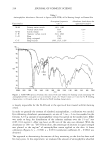
SKIN ABSORPTION OF D&C RED NO. 1 7 257 Structure of PAN • Primary color constituent of D&C Red No. 17 �OH �VJ � 2-Naphthol � NHz �N�� 0 � 4-Aminoazobenzene � � NH2 1-[ 4-Phenylazophenylazo ]-2-naphthol 0 (PAN) Aniline Azo bonds may be cleaved by metabolic reactions in skin Figure 1. Structure and potential metabolism of PAN. HEPES-buffered Hanks' balanced salt solution (HHBSS dry power packets prepared by Gibco BRL, Life Technologies, Grand Island, NY) was prepared fresh before each study. ABSORPTION STUDIES Percutaneous absorption and metabolism studies were conducted using in vitro flow through diffusion cells (4). A portion of the PAN skin absorption studies was conducted using human cadaver abdominal skin obtained from the National Disease Research Interchange (NDRI, Philadelphia, PA). Since metabolic activity is not maintained in human cadaver skin, only absorption and penetration can be determined, not metabo lism. The human skin was obtained from surgical procedures or autopsies, frozen, and shipped on dry ice. The pigs used to obtain viable porcine skin were 3-4 months old. Porcine skin samples were obtained from the dorsal midline area. Prior to conducting a skin absorption study, the diffusion cells (diameter 0.64 cm2) and the perfusion system were disinfected with a 70% (v/v) ethanol solution. The ethanol solution was pumped throughout the system (tubing and cells) and allowed to sit for at least 30 min. The ethanol solution was flushed from the system until at least 10 ml of receptor fluid effluent had been collected from each diffusion cell. The receptor fluid used in this study was a HEPES buffered Hanks' balanced salt solution (HHBSS) with 4% w/v bovine serum albumin (BSA) added for perfusion through the diffusion cell system. On the day of the study, the pH of the receptor fluid was adjusted to 7.4 and sterilized by vacuum filtration through a 0.22-µm filter. The HHBSS solutions were prepared on the day of or the evening before the study.
Purchased for the exclusive use of nofirst nolast (unknown)
From: SCC Media Library & Resource Center (library.scconline.org)