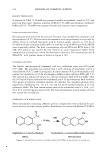
246 JOURNAL OF COSMETIC SCIENCE shown that most compounds have low permeabilities through the skin. Consequently, some transdermal drug delivery systems have utilized enhancers to accelerate drug permeability (9). Although many studies on the essential oils in topical dermal prepa rations, cosmetics, and toiletries (and also in experimental dermopharmacy) as penetra tion enhancers have been reported (10,11), no attenuated total reflection Fourier trans form infrared (ATR-FTIR) spectroscopy and stratum corneum stripping study dealing with the interaction of aminophylline cream with human skin in the presence and absence of essential oils and chemical penetration enhancers has appeared in the litera ture. The aim of this study was to investigate skin absorption, namely essential oil and soft (lipophilic skin) penetration enhancers, incorporated in w/o emulsions, respectively. The preparations were applied to the human skin in vivo! and after 30 to 60 min, the amount of aminophylline in the stratum corneum layers was determined using ATR FTIR and HPLC. EXPERIMENT AL APPARATUS Infrared spectra were recorded with a Perkin Elmer System 2000/IRDM FTIR spectro photometer with an attenuated total reflection (ATR) (accessory from Grase by Specac Inc.) system. An ATR-crystal (ZnSe dimensions, 7 cm x 1 cm incident angle, 45°) enabled horizontal positioning of the subject's forearm (ventral). Spectra obtained rep resented an average of ten scans, collected at a resolution of 4 cm - 1 . Subsequent spectral analysis was performed using a Spectrum v 2.0 (Perkin Elmer Ltd.). HPLC was per formed with a Hitachi model L-7100 pump and a model 7125 injector equipped with a 20-µl sample loop and a model L-7455 photodiode array detector (DAD). Chromato grams were acquired and peak areas calculated by means of a D-7000 chromatogram data integrator. REAGENTS AND MATERIALS Aminophylline was purchased from Sigma (USA). All other chemicals were analytical reagent grade. The chemicals investigated in this study were l-methyl-2-pyrrolidone, �-cyclodextrin hydrate, and tricaprylin (C8), purchased from Tedia and Aldich. Samples of plant oils (jojoba oil, corn germ oil, olive oil), essential oils (rosemary oil, ylang oil, lilacin oil, peppermint oil), and cosmetics were bought from a number of retail outlets in the south of Taiwan. Oil/water microemulsions of four essentials oils, three plant oils, and three chemical skin penetration enhancers containing Span and Tween as emulsi fying agent were prepared. These systems were used as vehicles for the percutaneous absorption of aminophylline. The effects of microemulsions containing �-cyclodextrin hydrate and l-methyl-2-pyrrolidone on the percutaneous absorption of aminophylline were compared with a control formulation consisting of 50% ethanol solution. PROCEDURES ATR-FTIR spectroscopy. A recent report by the European Center for Ecotoxicology and Toxicology of Chemicals (ECETOC) states that general-purpose cosmetic creams are

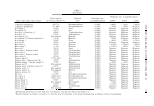
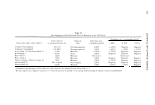
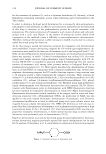
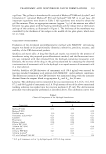
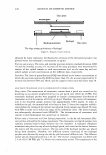
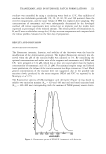
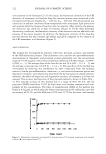
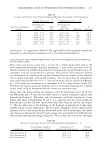
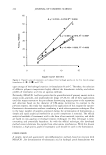
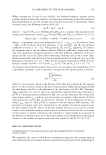
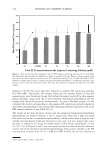
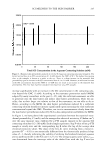
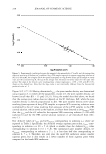
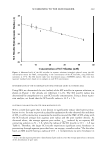
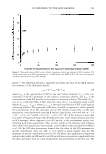
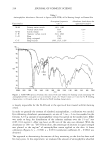
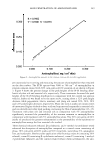
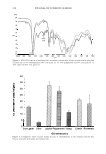
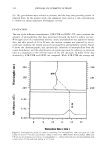
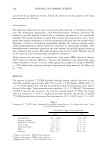
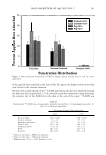
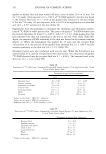
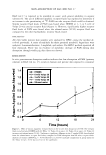
SKIN PENETRATION OF AMINOPHYLLINE 247 typically applied to skin at 1 mg/cm2 (12). Therefore, for each formulation (0.25-5.0%), six normal healthy subjects (mean age, 22 ± 1.0 years) were investigated. ATR-FTIR measurements were recorded at the site of application before treatment. These measure ments served as pretreatment control values. Taking into account the aminophylline content of the formulation (approx. 0.3 g cream), it was weighed accurately and spread over a 14 cm2 area of forearm (7 cm x 2 cm). The formulation was maintained in contact with the skin for 30 min and 60 min without occlusion, respectively. The marked skin area of the forearm was pressed on the ZnSe crystal (the window of the Skin Analyzer) by its own weight. After each measurement, the window was cleaned with alcohol. All in vivo spectra were obtained under ambient laboratory conditions and recorded at t = 0 (before emulsion application) and at t = 30 min and t-60 min after application. At each time, the values of the absorption band integrations were noted for N-H (15 5 7 cm - l absorbance) for both treated and non-treated arms. Stripping method. Six normal healthy subjects (mean age, 22 ± 1.0 years) were investi gated before (drug-free) and after 30-min and 60-min periods of treatment with a formulation of fat-burning cream. In the middle of each forearm, two sites of 14 cm2 were delineated. One forearm received no treatment and was used as a control. On the other one, the stratum corneum layer was removed by stripping, performed by applying a piece of adhesive tape (Scotch 3M™) 8 cm in length for 15 seconds, under a constant weight. The tape was then torn off. This operation was repeated several times. The skin was not occluded therefore, the vehicles were allowed to evaporate as they would during conditions of normal use. Determination by liquid chromatography. A standard stock solution was prepared by dis solving 10 mg of aminophylline in 10 ml of methanol. Working standard solutions were prepared from a standard stock solution in methanol in the range 10-80 mg 1- 1 . RP-HPLC was performed on a Phenomenex Luna C 18 (5u, 250 x 4.6 mm) column eluted methanol-phosphate buffer (20:80, v/v, pH 5.50) as the mobile phase at 1 ml min - 1 , and DAD was set at 270 nm. By means of the injection value, 20 µl of the prepared sample solution and standard solution was chromatographed under the oper ating conditions described above. Quantitation was based on the peak height of the sample. RES UL TS AND DISCUSSION The ATR-FTIR observed aminophylline absorbances in the spectra of the fat-burning cream on the human skin and is shown in Table I. Figure 1 is the infrared absorbance spectra of human skin before (a) and after (b and c) contact with fat-burning cream containing 5% aminophylline. The bands at 2915 cm-1, 2847 cm-1, and 1701 cm- 1 correspond to C-H and C=O vibrations, respectively. The strong C=O band in the 1700 cm- 1 range is mainly due to the C=O bonds present in the aminophylline, plant oil, essential oil, and fatty acids this can be demonstrated by the lack of the characteristic C=O band of the applied fat-burning cream in the skin print. In addition to a strong N-H stretch (3400 cm- 1 ), there is also a weak N-H bond at approximately 1557 cm- 1 in the stratum corneum. The intensity of the N-H bond in the skin spectra after contact with the fat-burning cream is much lower in the N-H bonds. The presence of spectral bands at frequencies characteristic of N-H bonds provides evidence for the adsorption of the aminophylline on the skin. It is therefore concluded that the adsorbed aminophylline
Purchased for the exclusive use of nofirst nolast (unknown)
From: SCC Media Library & Resource Center (library.scconline.org)