254 JOURNAL OF COSMETIC SCIENCE (12) ECETOC, Consumer Exposure, ECETOC Technical Report No. 58: Assessment of Non-Occupational Exposure to Chemicals (ECETOC, Brussels), pp. 9-39 (1994). (13) M. L. Francoeur, G. M. Golden, and R. 0. Potts, Pharrn. Res. 7, 621 (1990). (14) V. R. Sinha and P. K, Maninder, Drug. Dev. Ind. Pharrn. 26, 1131 (2000). (15) K. Kazunori, T. Osamu, M. Rakan, M., Setsuko, A. Tetsuya, K. Masawo, and K. Tamotsu., Chern. Pharrn. Bulletin 40, 3097 (1992). (16) A. C. Williams and B. W Barry, Adv. Drug Del. Rev., 56, 603-618. (2004). (17) P.R. Rao, K. B. Chalasani, A. S. Chauhan, A. K. Jain, P. V. Diwan, and M. K. Ram, Drug Delivery, 13, 207 (2006). (18) R. J. Babu, Drug Delivery, 12, 165 (2005)

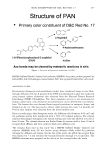
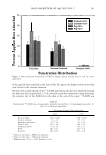
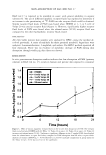
]. Cosmet. Sci., 58, 255-266 (May/June 2007) In vitro dermal absorption and metabolism of D&C red no. 17 in human and porcine skin JEFFREY J. YOURICK, CAMILLE T. SASIK, and ROBERT L. BRONAUGH, Office of Cosmetics and Colors, US Food and Drug Administration, 5100 Paint Branch Parkway, C allege Park, MD 20740. Accepted for publication March 6, 2007. Presented, in part, at the June 2005 SCC Annual Scientific Seminar. Synopsis D&C red no. 1 7 is approved for use in externally applied drug and cosmetic applications, in amounts consistent with good manufacturing practice. Concerns about the safety of the color additive (1-( 4- phenylazophenylazo}-2-napthol (PAN) is the primary color constituent) have been raised due to potential metabolic cleavage of PAN to yield 4-aminoazobenzene. 14 C-PAN was applied in a commercially available suntan vehicle containing D&C red no. 17 to viable porcine and non-viable (cadaver) human skin in flow-through diffusion cells. At the end of 24 h, unabsorbed material was removed from the skin and some cells were allowed to continue for an additional 48 h. In human skin, 0.07% and 0.17% of the applied dose were absorbed into the receptor fluid after 24 and 72 h, respectively. At the end of 24 h, 12.5% of the applied dose remained in the skin, which did not decrease at 72 h. When PAN was applied to viable porcine skin for 24 h, 0.3% of the applied dose was absorbed and 12.7% remained in the skin. Additional studies to simulate short-term exposure were completed with PAN applied to the skin for only 15 min, and absorption was determined for 24 and 72 h. These studies in human cadaver skin found 0.02% and 0.08% of the applied dose in the receptor fluid after 24 and 72 h, respectively. Viable porcine skin studies with the 15-min application resulted in receptor fluid values of 0.1 % of the applied dose after 24 h. Lipophilic receptor fluids composed of the non-ionic surfactant Volpo 20 at wt% concentrations of 1 %, 3%, or 6% in water did not increase partitioning of PAN from the skin into the receptor fluid. No metabolism of PAN was found in viable porcine skin when examined by HPLC. In conclusion, skin absorption of PAN from a commercially available suntan product was low. INTRODUCTION D&C red no. 17 is approved as a batch-certified color additive for use in externally applied drug and cosmetic applications, in amounts consistent with good manufacturing Camille T. Sasik's current affiliation is J&J Consumer Products, Skillman, NJ. The opinions and conclusions expressed in this article are solely the views of the author(s) and do not necessarily reflect those of the Food and Drug Administration. The material presented herein was the recipient of the Allan B. Black Award (sponsored by Presperse, Inc.), at the June 2005 SCC Annual Scientific Seminar, as the best paper on make-up technology. 255
Purchased for the exclusive use of nofirst nolast (unknown)
From: SCC Media Library & Resource Center (library.scconline.org)