400 JOURNAL OF COSMETIC SCIENCE these countries, they can be applied solely as cosmetics-often being then designated "cold"-or as both cosmetics and eye medicines-these often being designated "hot." In the more industrialized capital city of Doha (Qatar) there are more kohl samples imported from India and Pakistan than are found in the less industrialized capital city of Saana (Yemen). Both cities, as expected given the geographical proximity, have kohl samples imported from Saudi Arabia. To our current knowledge this is the first study of the (chemical) composition of traditional eye cosmetics used in Qatar and for Yemen, while the details of the manu facture and composition of the traditional black dye/body-paint ("hidab") have been studied (1), this is the first study done on traditional eye cosmetics. In the last few years, since our last publication (2), only a few kohl-related studies have appeared in the published literature. Three kohl samples were characterized by the relatively new technique of confocal Raman microscopy (3) a cause-effect relationship has been suggested between the use of lead-based kohls and in the accentuation of periorbital pigmentation and the development of associated anemia (4) and, most recently, a rare case of homicidal poisoning via a lead-based kohl has been presented in the literature (5 ). In our previous studies on the chemical composition of kohls obtained in Oman (6), Cairo (7), and the United Arab Emirates (UAE) (2,8), we found lead (usually as the lead sulfide, PbS) to be present in some of the samples. Thus, presented here, as part of our ongoing study into the presence of lead in traditional eye cosmetics (kohls) and as part of an ongoing education on the toxicity-especially for young growing children-of using such materials, is a comparative chemical composition study of the kohls available in Qatar and Yemen. MATERIALS AND METHODS MATERIALS A total of 28 kohl samples were purchased in the souks of Doha, the capital city of the Gulf state of Qatar. They were regarded as a good "cross section" of all such samples available for purchase in Doha. Of these 28 samples it was found that 19 were observably different. The price per kohl sample varied between 1 and 6 Qatari riyals (QR), where 3.65 QR was equivalent to 1 US$. In Yemen a total of eight kohl samples were purchased: seven in the two souks of the capital city of Saana and one in the souk of Saadh, a mountain town several hours drive northwest of Saana. An additional two kohl samples were obtained, as personal gifts, in Aden. Thus, overall, these ten samples were regarded as a "selection" of those available, rather than a comprehensive survey of all those available, in Yemen. The price of the purchased samples varied between 150 and 500 Yemeni riyals (YR), where 175 YR was equivalent to 1 US$. As in a previous publication (2), it had been decided by us that if a kohl sample's name, origin, and (information on its) container/enclosed leaflet (if present) were all found to be identical to that of another sample-either from this study or from one of our previous studies-then it would usually be assumed that the two samples had identical

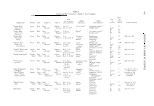
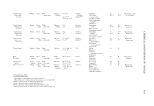
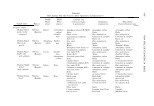
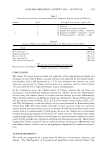
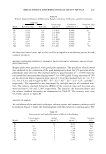
CHEMICAL COMPOSITION OF "KOHLS" 401 chemical compositions. However, for a variety of reasons (to check on the consistency of composition with location of purchase, as close inspection of the information on some containers/enclosed leaflets revealed small variations from that seen before, and to ac commodate both samples arriving over a period of time and the more immediate needs of a student's project), it was decided to analyze all (i.e., 38) of the obtained samples by scanning electron microscopy (SEM). The samples obtained in Doha with the same name, origin, and information on their containers/leaflets gave identical SEM results. Thus only the results for the 19 observably different kohl samples from Doha are given (Table I) and discussed later. Two of the Yemeni samples ("Hashmi® Kajal"-see Table II), purchased in one of the souks of Saana, appeared to be almost identical to each other. However, the seller insisted that one (the more expensive, and the one with an "emblem of authenticity" on its packaging) was the "real version" and that the other (less expensive, and without the "emblem of authenticity" on its packaging) was a "fake version." Thus these two samples were regarded as being observably different from each other, as were the six other purchased samples with no labels. All ten Yemeni samples were analyzed by the SEM technique (Table II). The second analytical technique, X-ray powder diffraction (XRPD), was applied to a total of 26 kohl samples, that is, to 16 of the 19 observably different samples from Doha and all ten of the Yemeni samples. While some of the (overall) 29 samples had been seen in previous studies, it was felt (for the reasons given previously) that most (i.e., all except three) should be redone by this technique for this study. Any previous data (SEM and XRPD, as well as availability of data on contents/medical effects) are given with our results in Tables I and II and are also mentioned in the later Discussion section. SCANNING ELECTRON MICROSCOPY (SEM) The initial SEM work, on some of the Doha samples and on all of the Yemeni samples, was done on an Hitachi S3200N variable vacuum scanning electron microscope with an attached EDS (energy dispersive spectrometer). Later, more detailed, work, on all the samples, was started on a JEOL JSM 5 300 L V (low-vacuum) SEM with an attached Rontec EDX (energy dispersive X-ray) microanalyzer. However, technical breakdown of this machine meant that the SEM work was finished on an FEI XL 30 ESEM FEG machine with a Rontec EDX analyzer attached. For all the SEM work, each sample was mounted on an (aluminum) stub using an adhesive carbon tab/disc. Also, each machine was designed so that either a graduated vacuum was employed or that the specimen chamber was differentially evacuated to low vacuum. Thus any electric charge on the specimen was neutralized, thereby allowing specimens to be studied without coating. Elements lighter than carbon (i.e., Z 5) cannot be detected using any of these machines. Elemental detection was qualitative, and the element peaks that were only just above the background are given in brackets in Tables I and II. X-RAY POWDER DIFFRACTION (XRPD) For XRPD, the kohl samples were, where necessary, ground to a uniform powder and then mounted in an aluminum holder on a glass slide. Diffraction data were collected
Purchased for the exclusive use of nofirst nolast (unknown)
From: SCC Media Library & Resource Center (library.scconline.org)