408 JOURNAL OF COSMETIC SCIENCE is no longer a safe threshold, especially for children's neurodevelopment, and it has very recently been suggested that this threshold be reduced to 2 µg/dl (16). Severe lead poisoning, resulting in encephalopathy, can result when blood lead levels are greater than 70 µg/dl. A recent report has demonstrated that young infants exposed to lower levels of lead following the use of traditional medicines can also present with encephalopathy (17). Reported cases of acute encephalopathy in infants that are directly linked to excessive use of a lead-based kohl are now fewer than were reported several decades ago, but unfortunately do still occur (18). Deliberate poisoning via lead-based kohl is extremely rare, and very recently a case of such a homicidal poisoning was reported in Egypt (5). It should also be stated that lead poisoning, from traditional remedies and cosmetics, does still occasionally occur in present-day Europe (19). Frequently, mothers apply kohl to infants and children as a traditional measure to beautify and to protect the child from the "evil eye"/"the evil one." Lead-containing kohls can be easily ingested by these infants, who may wipe their eyes and face and subsequently lick their fingers. Earlier (animal) studies (20) have shown that transcor neal transport is not a significant contributory mechanism for absorption of lead from lead-based eye cosmetics. Recent dermal studies (21,22) have indicated that inorganic lead compounds can be absorbed through skin. However, the BLL values, from such studies, do not show any significant increase. Thus more work is required on dermal absorption of lead, especially with respect to the small particle-sized (see below) lead sulfide found in some kohls. More than 90% of lead in blood resides in the red blood cells. The total body burden of lead can be divided into two kinetic pools, which have different rates of turnover. The largest pool is in the skeleton, which has a very slow turnover (a half life of more than 20 years) (12). The other pool is in the soft tissue, where lead is much more labile. Lead in trabecular bone is more labile than in cortical bone, and trabecular bone has a shorter turnover time. Lead in bone may contribute up to 50% of blood lead. During pregnancy and lactation, mobilization of lead from maternal bone is a cause for concern. Strong correlations between maternal and umbilical cord blood lead levels demonstrate that lead is transferred from the mother to the fetus (23). Cumulative effects of low levels of lead exposure in utero and after birth can have similar detrimental effects. An increase in maternal-blood lead level may contribute to a reduction in the gestation period and low birthweight. The fetal brain may also be particularly sensitive to the toxic effects of lead because of the immaturity of the blood-brain barrier. In an adult population the most critical adverse effect of lead is probably hypertension. Other toxic effects of concern are peripheral neuropathy, lead-induced anemia, and lead nephropathy. Also, as mentioned in the Introduction, there has recently been a suggested link made between the frequency of lead-based kohl use and the accentuation of peri orbital pigmentation and the development of associated anemia (4). BLL values have been investigated for children of both Yemeni and Qatari families. However, the Yemeni families studied lived as immigrants in the Detroit (Michigan, USA) metropolitan area, and there was no detailed study of any underlying risk factors such as lead-based kohl usage. The study (24) focused primarily on gender and health issues during the outreach program. Of the total of 112 blood samples tested it was found that only seven (i.e., 6.2%) had BLLs greater than 10 µg/dl (and with no samples greater than 16 µg/dl). Further projects are under way and may well include the study

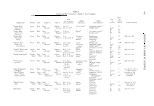
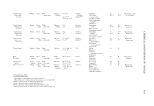
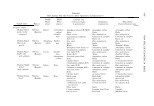
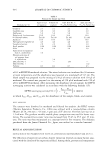
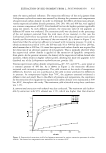
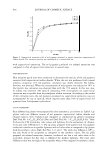
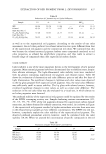
CHEMICAL COMPOSITION OF "KOHLS" 409 of such risk factors as the use of traditional medicines and cosmetics. In Qatar a study (25) of the BLLs in 200 samples collected from children under 15 years of age found that only three of the samples showed values exceeding 25 µg/dl (the then maximum value for normal blood lead in Qatar). The highest BLL value found was 38 µg/dl, and by comparing the results to those done previously in Qatar it was suggested that there had been a significant reduction in such values. As in the Yemeni study, no work was done in this Qatari study to determine if lead-based kohl usage was a risk factor. A wider national survey was recommended, and it was proposed to introduce a new (BLL) action level of 10 µg/dl for children and pregnant women. In a previous publication (7) we discussed the particle size of galena (lead sulfide, PbS) with respect to the associated kohl powder being "shiny" or "matte" in texture and with respect to its rate of dissolution in gastric fluid. It was found by us that at a mean particle size for galena of about 10 µm, the kohl powder (with galena as the major phase) became totally matte in texture. It had previously been found (20) that reducing the particle size of galena leads to a significant increase in its rate of dissolution (in gastric fluid). So, in a very simplistic toxicology sense, it can be said: "shiny is good and matte is bad" (as the latter would be much more easily dissolved in gastric fluid than the former, with the former perhaps going straight through the body with minimum absorption and negligible toxicity). Thus in Tables I and II we have stated if the powder is "shiny" or "matte" in texture when galena is the listed major phase. Only four such samples in this study are described as "matte," and so these four samples are more likely than the other galena-based samples to give rise to lead toxicity. In view of all of the above mentioned toxic effects and the still widespread use of kohls in parts of present-day North Africa/Middle East, it follows that children who have a lead-based kohl regularly applied to them are at risk of serious and fatal toxicities of the nervous system and also of more subtle, sub-clinical, long-term effects-such as the underdevelopment of neural pathways. EXTRA INFORMATION ON CONTAINER/PACKAGING/FROM VENDOR Qatar. Nine of the 19 kohl samples listed in Table I have written qualitative or quan titative "contents data" available (on the container/packaging or on an enclosed leaflet). Table III lists this data, with our best translations/interpretations and their (most likely) chemical/mineral names. When there is uncertainty, a "?" has been added. Only one sample ("Hashmi Kohl Aswad," made in Pakistan) had a major phase (galena) that was not listed in its (qualitative) "contents data." Another sample ("Hashmi Kajal," blue stick/pencil) had zinc oxide (first) listed, but no such phase was found by us. For the other seven samples with "contents data," the major phase found by us matched one listed-usually of high given percentage or at the top of the list when only qualitative data were given. As regards data on the medicinal effects of using a particular kohl sample, it was found that ten of the 19 samples listed in Table I had this (written) information available. The four "Lateef Surma" samples had essentially the same information on all the leaflets that came with the four samples-sometimes in English (the green/red and grey/black boxes) and sometimes only in other languages (the yellow and red or yellow and blue boxes). On any one of these leaflets were various statements, such as: "Excellent for blephritis and red eyes," "Immediate relief from irritating and watery eyes," and "Giateric vision
Purchased for the exclusive use of nofirst nolast (unknown)
From: SCC Media Library & Resource Center (library.scconline.org)