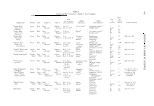
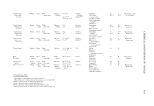
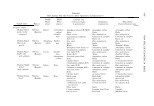
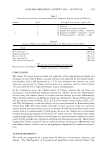
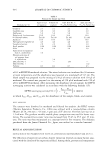
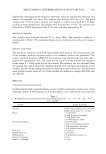
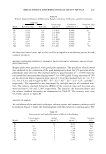
406 JOURNAL OF COSMETIC SCIENCE using a Siemens DS000 X-ray diffractometer operating with CuKa radiation. A step scan, using a step size of 0.02 degree and a time of ls/step, was done over a 2-theta range of 2-70 degrees for each of the samples. These data sets were then used to determine the major and minor components (phases) present in the samples by comparing the obtained data to the reference data in the 2004 JCPDS CToint Committee for Powder Diffraction Standards) database. The major phase was usually defined to be that phase that had a presence estimated to be� 70% any variation from this percentage is mentioned in the Results section below. The minor phases given in parentheses (in Tables I and II) are those estimated to be :s 5% of the sample. Also, each group of minor phases listed are in decreasing order of their estimated percentage presence. RESULTS In Tables I (Qatar) and II (Yemen) the various results/data are given, with the samples being listed in alphabetical order of their names (or translated names). Where samples had no name, they are listed as "None" (all samples in Table II are given a letter ("Y") and a number so they can be referred to in the text unambiguously) and, as previously stated, are regarded as all being observably different from one another. Also, for the few occasions where the same sample name occurred more than once, extra descriptive information is given in parentheses after the listed names. Also given in both Tables, on a simple YIN basis, is whether any written information is given (on the container, pack aging, or an enclosed leaflet)-here and/or in one of our previous studies-on the (chemical) contents of the sample or on the medicinal effects of using the kohl sample. For the 19 observably different samples purchased in Doha (Table I), it was found that six had galena (PbS, lead sulfide) present as the major component (phase). Three of these six (powder) samples were matte in texture and three "shiny," and were grey (1), grey-black (3), or black (2) in color. Three were made in Pakistan and one each in France, India, and Saudi Arabia. Four of these samples had minor phases (between approx. 2% and 8%) of cerussite (PbCO 3 ) and anglesite (PbSO 4 ), where these are regarded as oxidation/weathering products of the original galena ore. A further five (powder) samples had sassolite (H 3 B0 3 ) as the major phase, and all were made in Pakistan. Their colors varied from light grey to black, the grey-black/black colors being caused by the presence of varying amounts of (the minor phases) graphite or amorphous carbon. One sample ("Shamsi Surma," made in the Punjab of Pakistan) had minor phases of halite (NaCl, at about 35%), quartz (Si02 , at about 10%), and, at less than about 5% each: calcite (CaCO 3 ), anhydrite (CaSO4), and sylvite (KCl). Another four (three being greasy and one a powder) samples had zincite (ZnO) as the major phase, and again the black/ grey-black color derived from the presence of (the minor phases) amorphous carbon or graphite. Three were made in Pakistan and one in India. The latter sample also had camphor (C 10 H160) present at about 21 %. Three (two being greasy and one a powder) more samples had amorphous carbon as the major phase, and all were black in color. Two were made in India and one in Pakistan. The powder sample (from India) had talc (Mg 3 Si40 10 (0H)2) present as a minor phase, though its approximate percentage pres ence is uncertain. The final (powder) sample had talc as its major phase, with its black color again being caused by the presence of (a minor phase of) amorphous carbon/ graphite. It had additional minor phases of calcite (at about 41 %), and at less than about 5 % each were quartz and an unknown phase. Its country of origin was Pakistan.

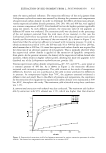
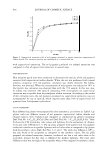
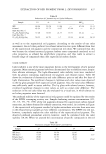
CHEMICAL COMPOSITION OF "KOHLS" 407 For the ten samples obtained in Yemen (Table II) it was found that five had galena as the main component, with a further three having it present as a minor component. One of these five samples was a "shiny" silver-grey lump, one a matte black powder, and three were "shiny" grey-black powders. One sample (100% galena) came from the mountains of either (N.) Yemen or from those of nearby Saudi Arabia, another came from Saudi Arabia (Mecca), two were of uncertain origin (possibly Yemen), and one was stated to come from the mountains north of Saana (i.e., in Yemen). Four of the five samples have, as above, minor phases (varying between approx. 2% and 18%) of cerussite and anglesite, and again these are thought to be oxidation/weathering products of the original galena ore. A further three samples had zincite as the major phase, all being black in color. Two were greasy (made in Pakistan) and one a powder (made in India). The latter sample had amorphous carbon present as a minor phase, while the two from Pakistan had galena as minor phases (at about 3 % in each sample). The two remaining samples had quartz (SiO2 , at about 95%) and iron oxides (hematite, Fe 2 O 3 and goethite, FeO(OH), at a total of about 82%) as their major phases. The latter sample was red in color and had minor phases (at about 7% or less each) of quartz, galena, calcite, and talc/an alumino silicate the former was grey in color and had minor phases (at less than 5 % each) of calcite and an unknown phase. A few other minor phases (all at less than 5%) were found: wax in the (2) greasy samples and sphalerite (ZnS), probably as an impurity in the original galena, in another sample. As already stated, the major phases listed in Tables I and II usually had a presence in the sample of 2::70%. However, for two of the samples in Table I ("Nirma Surmi" and "Shamsi Surma") the major phase listed was in fact less than 70%, being 51 % (talc) and 45% (sassolite), respectively (where both percentages are estimates). The meaning/importance of the texture (i.e., "shiny" or "matte") of a galena-based (i.e., as the major phase) sample is mentioned in the Discussion section below. Also, where samples were greasy (overall, seven such samples), this was caused by the presence of wax. This wax was assumed to be, with one possible exception (the sample "Khojati Mumtaz Cold Kajal" see below for details), paraffin wax. DISCUSSION TOXICOLOGY OF LEAD Lead compounds are toxic by ingestion, inhalation, and skin exposure. Children are more susceptible than adults to lead intoxication. Adults absorb 5-15 % of ingested lead while children can absorb as much as 41 % . The toxic effects of lead form a continuum from clinical or overt effects to more subtle ones (9). The critical effects in infants and children involve the nervous system. Blood lead levels once thought to be safe have been shown to be associated with intelligence quotient deficits, behavioral disorders, slowed growth, and impaired hearing (10,11). Blood lead level (BLL) values in children that are greater than 10 µg/dl are now considered abnormal (12), and recently it has been shown that significant intellectual impairment occurs in young children who have blood lead levels below 10 µg/dl (13,14). However, while it was initially thought that such impairments were persistent and irreversible, it is now suggested that the latter may not be true (15). Increasingly it is being suggested that the above-mentioned limit in children (10 µg/dl)
Purchased for the exclusive use of nofirst nolast (unknown)
From: SCC Media Library & Resource Center (library.scconline.org)