412 JOURNAL OF COSMETIC SCIENCE is improved and patients can see crystal clear, continuous use will remove your spec tacles." The main ingredient for all of these kohl samples was sassolite (i.e., boric/boracic acid, H 3 BO3 , with minor phases of a zinc borate and carbon (as either graphite or amorphous carbon). Sassolite is a weak antiseptic and a feeble bacteriostatic and fungi static, and has been used in the past, in weak aqueous solutions, as eye drops/lotion. However, toxic effects can sometimes occur from absorption if it is used internally or externally on broken areas of skin ((26) and references therein). Thus, we would question at least some of the medicinal efficacy claims made for these four samples. Two samples based on amorphous carbon also had information provided on their me dicinal effects. The sample "Khojati Mumtaz Cold Kajal" merely states, "It cools, soothes and protects eyes from dust and harmful effects of bright light." The other sample, "Hind Ka Noor Eye Liner," states on an enclosed leaflet (in Arabic), "Protects you permanently from diseases of the eye" and "Very advantageous against the weakness of the eye, or water in the eye, or dirt, or eye pain, or inflammation." While placing a black material, such as these kohls, around the eyes should give them some protection from dust, flies, and the glare of a bright sun, it is unlikely that the material would be of assistance against disease of the eyes. Also, the Khojati sample is the only one (of five such samples overall that list "waxes" in their "contents data"-see Table III) to spe cifically state that the wax is "honey of wax," i.e., beeswax. Only paraffin wax diffraction data is currently in the (XRPD) JCPDS database. However, we did manage to obtain (from a bee-keeping colleague) some fresh yellow beeswax and thus its diffraction pattern. Unfortunately this pattern was found to be very similar to that of paraffin wax, and so it proved impossible to determine if indeed beeswax was present in this sample. The two samples "Khojati Surma No. 13 Black" and "Hashmi Kajal" (in a B&W tube) both have limited and general medicinal effects information given on a leaflet or on packaging. Both have main phases of zincite (ZnO), with minor phases of camphor and carbon for the first sample and of wax and carbon for the second sample. "Keeps eyes cool, clean and healthy. Its an ideal tonic for the summer seasons. For external use in the eyes only" is stated for the Khojati sample on an enclosed leaflet. For the Hashmi sample we have the general comments: "Besides keeping the eyes cool and refreshing, it also protects them" and " . . . , presented in the form of black paste in tubes can be safely used for all ages." Zinc oxide is a mild antiseptic and camphor a mild counterirritant thus both samples, if used externally and in moderation, would not be expected to give rise to toxic effects. Unfortunately this cannot be said for the last two samples from Doha ("Khojati Surma Sada" and "Hashmi Kohl Aswad") that have medicinal effects data provided. Both have lead sulfide present as the main phase, and both have it present as a matte powder (i.e., having small particle size and so an increased likelihood of toxicity when absorbed-see previous section). The Khojati sample says, in English, on one side of an enclosed leaflet, "Surma is not to be applied to children below 12 years of age." However, on its other side it states, "This is the purest form of surma scientifically ground in different natural extracts. As there is no addition of any other ingredients it does not make the eyes water and can be used for children below 8 years" (our addition of bold). While it also states (on the box): "Unani medicine. For external use in the eyes only," there can be no justification for the above statement for using such a powder on young children. The Hashmi sample has the following statements on its packaging (in Arabic): "Useful for preserving sight," "Makes all diseases of the eye miserable," and "Both young and old can

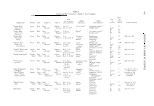
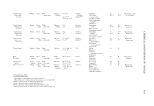
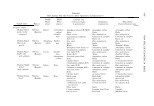
CHEMICAL COMPOSITION OF "KOHLS" 413 use it equally." It also prohibits its use if there is itching or inflammation present. This last statement is to be welcomed, but, as for the above Khojati sample, there can be no justification for the use of such a powder (pure small-particle-sized galena) on anyone. Yemen. Only three of the ten Yemeni kohl samples have (qualitative) "contents data" available, and these are listed in Table III. For the two "Hashmi Kajal" samples, the top two phases listed (zinc oxide and waxes) are found as the major and a minor phases, respectively. The third phase listed (amorphous carbon) could be present, but at a level of only a few percent, and hence essentially unobservable by XRPD. Unexpectedly, galena as a minor phase at approximately 3%, is found in both these samples. Neither sample has it listed on its "contents data," and the "real version" specifically states (on its packaging), "Lead (P.B.) at 0.00%." The third sample with "contents data" is "Hashmi Kohl Aswad" -made in India, not Pakistan, as found for the sample of the same name purchased in Doha (see above and Table I). Its listed phases are zinc oxide and camphor the first was found as its major phase, but only amorphous carbon was found as a minor phase. There is only one kohl sample from Yemen that has any medicinal effects data on its container/packaging/leaflet. This sample is the "Hashmi Kohl Aswad" mentioned above. On its cardboard packaging are statements such as (in Arabic): "It is made of raw materials of the highest quality. It is good for the health of the eye and can be used by adults and children. Do not use in cases of itching, inflammation or a burning sensa tion." Some of these statements are similar to those found on the other "Hashmi Kohl Aswad" (i.e., made in Pakistan and having an "emblem of authenticity" on its packag ing) given the actual contents of this Indian-made sample (zinc oxide and amorphous carbon) compared to those of the Pakistan-made sample (pure galena of small-particle size), use of the former is vastly preferred to that of the latter. Vendor and other personal (i.e., verbal) comments were also made, on both contents and medicinal effects, for some of the 29 samples studied here. For the samples purchased in Doha this information is given in the last column of Table I. Eight of the 19 listed samples were said to be "cold"-that is, to be used solely as cosmetics. Two were said to be "hot"-that is, to be used as either a cosmetic or as an eye medicine. Five of the samples listed as "said to be cold" are contradicted by the presence of medicinal effects information provided with the sample. The two "said to be hot" samples, which also have medicinal effects information provided in writing, have major phases of zincite or sassolite-both mild antiseptics. Some of the other information given in this column matches that found on the sample's packaging or on an enclosed leaflet-for example, unfortunately, "for children" for the "Khojati Surma Sada" sample. The phrase "mixed with Saudi stone" occurred for four samples and the only common phase is sassolite-for which we can find no published reference referring to its natural presence in Saudi Arabia. However, western/southwestern Saudi Arabia does have fumaroles (27), around which sassolite can form, and so this mineral could in fact be available as a "Saudi stone." For the ten samples from Yemen there were a few additional personal/vendor comments on only two samples. The red-colored kohl (labeled by us as "Y9," and said to be called "Ethmart" by the vendor) was said to have medicinal uses-specifically against infected (white of the) eyes. Also, one of the two samples obtained in Aden ("Y2") was believed by the donor to have medicinal properties (for the eyes) and was said by her to contain (in addition to what was in "Yl") "added medicines, fish scales and herbs."
Purchased for the exclusive use of nofirst nolast (unknown)
From: SCC Media Library & Resource Center (library.scconline.org)