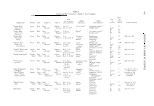
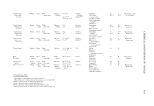
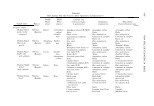
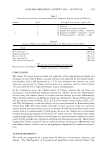
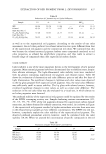
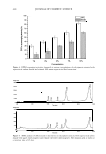
414 JOURNAL OF COSMETIC SCIENCE COMPARISON WITH OTHER STUDIES Qatar and Yemen. The kohl samples from Yemen were found to be more likely to contain galena (eight of ten i.e., 80%) than those from Doha (six of 19 i.e., 32%). The Yemeni samples were also more likely to have no written labeling (seven of ten i.e., 70%, compared to one in 19 i.e., 5%, in Doha) and to be locally made (probably six of ten i.e., approx. 60%, as compared to none from Doha). Most (17 of 19 i.e., 90%) of the samples from Doha originated in India or Pakistan, compared to only 30% (i.e., three of ten) of those from Yemen. One sample from each country definitely originated in Saudi Arabia. Only in Yemen were definite "fake" samples found. However, the two "Hashmi Kajal" samples (one described as "fake" and one as "real") were found to be almost identical in their chemical composition. On the other hand, the "Hashmi Kohl Aswad" (made in India) had a chemical composition totally different from that found for the sample of the same name (but made in Pakistan, and having an "emblem of authenticity" on its packaging and so assumed to be the "real version") purchased in Doha (and also previ ously in the Emirates (2)). In general terms, Yemen is a less industrialized country than Qatar. Thus Yemen would perhaps be expected to have fewer imports and to make more use of local/near-local (i.e., southern Saudi Arabian) resources. Such resources would include naturally occurring galena (28). Previous studies. In Table IV are listed 18 publications of previous kohl analyses. They cover a 27-year period (1979-2006) and several analytical techniques (AA, CRM, SEM, and XRPD). The percentage range for the number of samples found to contain lead varies between 22% and 100%, with an "average" of 60%. There is some evidence to suggest, from analyses done several times in a country over a period of time (i.e., Greater Cairo in 1997 and Cairo in 2004, and Saudi Arabia in 1993, 1995 (twice), and 2004), that this percentage does decrease over time. However, further studies in other countries where analyses have already taken place are necessary before this positive effect can be confirmed. In Doha it was found that six (of 19) samples (i.e., 32%) contained lead sulfide. This percentage is very similar to those found previously in Oman (32%), Cairo (33%), Bahrain (33%), and the Emirates of Ras Al-Khaimah (36%) and of Dubai and Sharjah (38% each). It is also considerably lower that the "average" (60%) of Table IV. However, the percentage found for samples containing lead sulfide in Yemen (80%) is considerably higher than this "average," and is similar to the values found in one of the studies done in Saudi Arabia (75%), Karachi (Pakistan) (80%), and Kuwait (85%). As regards the importation of kohl samples (from India and Pakistan), the percentage imported to Qatar (90%) is much higher than that to Yemen (30% ). The former value is similar to those found by us in Dubai and Sharjah (81 % each), Ajman (86% ), and Abu Dhabi city (89% ), while the latter value is similar to the values found by us for Oman (40%) and Cairo (22%). Locally made kohl samples were found to be nonexistent in the souks of Doha, a result that is very similar to what was found in the souks of the UAE (United Arab Emirates)-one such sample was found overall, in Dubai. However, about 60% of the kohl samples found in Yemen were locally made-a finding that is similar to what was found in Cairo (61 %).

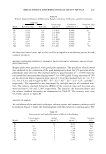
Table IV Other Analyses of Kohl Samples No. containing n Made in Purchased in lead (%) Non-lead elements/compounds 11 India and Pakistan Midlands (UK) 6 (55%) Zn, C/Menthol, herbs, pearls 13 Not given Kuwait 11 (85%) C/Fe20 3 'H20, herbs 17 Nigeria Nigeria 17 (100%) C/herbs 21 Saudi Arabia and India Saudi Arabia 14 (67%) C, 0, S, Si, Ca, Fe, Al, Ti, Sb, Na, Zn, Cl, K 47 Mostly India, Mostly Oman (39) 15 (32%) Mostly compounds based on Fe, Ca, Zn, Pakistan and Oman and B. Also, various C compounds. 23 Mostly India and United Arab Emirates (UAE) 11 (48%) Various largely as above Pakistan (Mostly Abu Dhabi, 18) 18 Egypt (11), India (4), Cairo 6 (33%) Various largely as above China, Sudan, and Saudi Arabia 27 Egypt (20), India (4), Cairo (18), Luxor (5), 6 (22%) Various largely as above China, Sudan, and and Aswan (4) Saudi Arabia 53 Pakistan, India, Iran, Dubai, Sharjah, Ajman, 23 (43%) Various largely as above Saudi Arabia, Dubai, Umm Al-Quwain, Ras France, Morocco, Al-Khaimah, and and Syria Fujairah Kohl analyses using only AA (atomic absorption) and/or CRM (confocal Raman microscopy): 22 Mostly India, Pakistan, World-wide6 13a (59%) Not given and Morocco 21 Mostly India, Pakistan, Bahrain r (33%) Not given and Saudi Arabia 6 Mostly India and Saudi Arabia 4a (67%) Sb (at less than 10%) in 5 samples Saudi Arabia 10 Pakistan Pakistan (Karachi) 8 (80%) Zn (in the 2 non-lead samples), SiOiall) 8 Mostly Saudi Arabia Saudi Arabia 6a (75%) Sb, As, Cd, and Pt (all at less than 1 %) 28 Egypt (18), imported (10) Egypt (Greater Cairo) W (50%) Not given 10 Morocco ( 6), Morocco (Marrakesh) 10 (100%) Not given imported (4) 107 Saudi Arabia, India, Saudi Arabia 62 (58%) Al, Sb (each at less than 1 % ) and camphor/ Pakistan, and Iran menthol found in a few samples 3 India (2) and Pakistan (1) United Arab Emirates (UAE) 2 (67%) Graphite/amorphous carbon a For above 1 % lead. 6 America, UK, Morocco, and Mauritania. Year and Method(s) used reference AA,XRPD (1979) (29) AA, XRPD, SEM (1981) (30) AA, XRPD, SEM (1984) (31) SEM (1995) (32) XRPD, SEM (1998) (6) n l: XRPD, SEM (2002) (8) � - XRPD, SEM (2004) (7) n r n XRPD, SEM (2006) (33) 0 � "iJ XRPD, SEM (2006) (2) 0 - 0 0 AA (1991) (34) 1-jj � AA (1992) (35) 0 AA (1993) (36) l: r AA (1994) (37) � AA (1995) (38) AA (1997) (39) AA (2001) (40) AA (2004) (41) CRM/AA (2005) (3) � ,.......
Purchased for the exclusive use of nofirst nolast (unknown)
From: SCC Media Library & Resource Center (library.scconline.org)