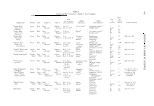
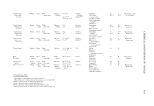
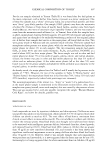
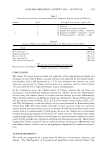
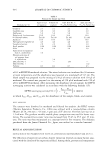
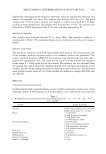
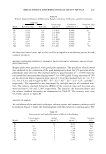
434 JOURNAL OF COSMETIC SCIENCE Table I Formula for Sample Lip Gloss Supercritical Ethanol red D&C Red No. 6 D&C Red No. 7 Formula (wt %) red pigment pigment (C 18 H14N206S·2Na) (C18HHN206S·Ca) Ozokerite 2.1 2.1 2.1 2.1 Candelilla wax 4.0 4.0 4.0 4.0 Polybutene 5.0 5.0 5.0 5.0 Polyglyceryl 2-triisostearate 10.0 10.0 10.0 10.0 Diisostearyl malate To 100 To 100 To 100 To 100 Jojoba oil 10.0 10.0 10.0 10.0 Hydrogenated vegetable oil 4.0 4.0 4.0 4.0 Tocopheryl acetate 2.0 2.0 2.0 2.0 Butyl paraben 0.04 0.04 0.04 0.04 Silica 2.0 2.0 2.0 2.0 Supercritical red pigment from L. erythrorhizon 3.0 Ethanol extraction of red pigment from L. erythrorhizon 3.0 D&C Red No. 6 1.45 D&C Red No. 7 1.02 Perfume 0.3 0.3 0.3 0.3 of 0.2 mM DPPH methanol solution. The mixed solution was incubated for 30 minutes at room temperature, and the absorbance was measured at a wavelength of 517 nm. The blank sample was prepared via the mixing of 150 µl of extract solution with 150 µl of methanol. The control was prepared via the mixing of 150 µl of methanol with 150 µl of 0.2 mM DPPH methanol. After measuring the absorbance of each sample, the DPPH scavenging activity was calculated in accordance with the following formula (15): . . . ( S A bs - B A bs ) DPPH scavenging act1v1ty(%) = 1 - ---- X 100(%) C A bs in which S A bs' BAbs' and C Abs are the absorbance of the sample, blank, and control. HPLC AN AL YSIS The extracts were dissolved in methanol and filtered for analysis. An HPLC system (Thermo Separation Products, Co., USA) was utilized with a reversed-phase column (Waters dC18, 250 mm x 4.6 mm, 5 µm) and a UV detector. The flow rate was set at 1.2 ml/min. The gradient variable mobile phase composition was used for better reso lution. The acetonitrile-to-water ratio was increased from 55:45 to 95:5 over 35 min utes. The ratio was then maintained at a constant level for five minutes. The shikonin purchased from the Junsei Chemical Co., Japan, was utilized as a standard material. RES UL TS AND DISCUSSION EXTRACTION OF RED PIGMENT FROM ROOTS OF LITHOSPERMUM ERYTHRORHIZON SIEB. ET ZUCC. The efficiency of supercritical carbon dioxide extraction depends on many factors asso ciated with the density of the supercritical fluid. Among them, pressure and temperature

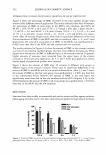
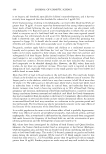
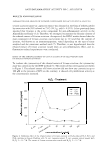
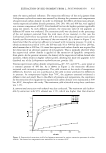
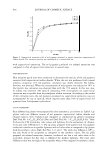
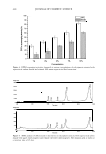
EXTRACTION OF RED PIGMENT FROM L. ERYTHRORHIZON 435 exert the most profound influence. The extraction efficiency of the red pigment from Lithospermum erythrorhizon roots was assessed by altering the pressures and temperatures of supercritical carbon dioxide. In order to determine the effects of extraction pressure, various supercritical carbon dioxide pressures, 100, 200, 300, and 400 bar, were applied at a constant temperature of 60°C. Four hundred bar was the highest pressure applicable using our system. At each different pressure, the extraction yield of red pigment at different S/F ratios was evaluated. The extraction yield was calculated as the percentage of the red pigment extracted from the total mass of raw material, in this case the Lithospermum erythrorhizon root powder. S/F is the ratio of the mass of supercritical carbon dioxide used for extraction to the mass of the raw material. As is shown in Figure 2, we determined that the extraction efficiency increased with increasing pressure. In order to obtain an extraction yield of 1.0%, the S/F was only SO at 400 bar and 130 at 200 bar, which meant that at 400 bar, 2.6 times less supercritical carbon dioxide was required for the extraction of an identical quantity of red pigment. This is normally observed when the supercritical carbon dioxide is applied to the extraction of lipophilic compounds from plants. As the pressure increases, the density of the supercritical carbon dioxide also increases, which results in higher solvent power, allowing for more red pigment to be dissolved out of the Lithospermum erythrorhizon root powder (16). Various supercritical carbon dioxide temperatures-40°, 50°, and 60°C-were tested at a constant pressure of 400 bar. As is shown in Figure 3, the extraction efficiency increased with increasing temperature. The yield increase as the result of temperature differences, however, was not as profound as the yield increase attributed to differences in pressure. At temperatures higher than 70°C, the pigment extracted evidenced a different color and smell. Due to the effects of pressure and temperature, the conditions for the extraction of red pigment via supercritical carbon dioxide were maintained at 400 bar, 60°C, throughout this study. The maximum yield achievable using these conditions was 1.2%. A conventional extraction with ethanol was also conducted. The maximum yield achiev able by extraction with 95% ethanol was 1.5%, which was higher than that observed 1.4 12 1.0 0.4 02 ■------ · 0 50 ---■-----■ -----■ ----- 100 bar -200bar --4-300 bar --.--400 bar ■--· -■--- 100 150 200 250 s/f ratio Figure 2. Supercritical extraction yield of red pigment measured at various extraction pressures of carbon dioxide. The extraction temperature was maintained at a constant 60 ° C.
Purchased for the exclusive use of nofirst nolast (unknown)
From: SCC Media Library & Resource Center (library.scconline.org)