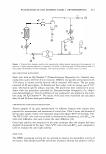
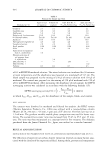
432 JOURNAL OF COSMETIC SCIENCE Despite the many advantages of natural pigments for cosmetic applications, including their generally low chemotoxicity and carcinogenicity, little progress has been made with regard to the development of natural pigments. Both photo- and thermo-instability have been obstacles to the development of natural pigments for use in cosmetic appli cations (8,9). Another obstacle has been the high cost intrinsic to the manufacture of these pigments. This is primarily attributable to the fact that the pigments must be extracted from the plants using specific solvents, most notably alcohols. The solvent extraction of specific pigment components has generally also entailed an oxidative browning, which renders the final product inappropriate for cosmetic applications. Residual solvents remaining after extraction and evaporation also have been recognized as a factor of chemotoxicity. Supercritical carbon dioxide is now well established as a solvent that can be utilized in the extraction of raw materials for cosmetic applications. This method has a number of advantages. First, the method generally allows for quicker penetration of solid samples than is the case with liquid solvents, due to higher diffusion rates, and this method also allows for the rapid transport of dissolved solutes from the sample matrix due to low viscosity. Almost no solvent residues are present in the products. It is also, of course, conducted at low extraction temperatures, which lessens the denaturalization of the bioactive natural products (10-13). In this study, supercritical carbon dioxide was applied to the extraction of a natural red pigment from the roots of Lithospermum erythrorhizon Sieb. et Zucc. Characteristics associated with the extraction performances, yield, and shikonin and shikonin derivative contents were compared with those observed after conventional ethanol extraction. Various tests with a lip gloss prepared using the supercritical extract were conducted, in order to verify the potential of the natural red pigment for use in cosmetic applications. MATERIALS AND METHODS EXTRACTS FROM ROOTS OF LITHOSPERMUM ElffTHRORHIZON SIEB. ET ZUCC. Dried roots of Lithospermum erythrorhizon Sieb. et Zucc., which was grown in China, were ground for extraction. For supercritical carbon dioxide extraction, an apparatus includ ing a one-liter extractor was used, and is shown in Figure 1. Ground Lithospermt✓m erythrorhizon root powder was filled and packed into the extractor. Liquid carbon dioxide was compressed and supplied to the extractor using a pump. The temperature of the compressed supercritical fluid was adjusted with the heat exchanger prior to its intro duction to the extractor. Various combinations of supercritical carbon dioxide pressure and temperature were applied in an effort to optimize the extraction. After extraction, the pressure of the carbon dioxide-containing extract was reduced using the backpressure regulator. It was then separated into gaseous carbon dioxide and extracts in the separator. The liquid-phase extract was harvested from the separator. The gaseous carbon dioxide was liquefied with the chiller and recycled via supply to the compression pump. For conventional ethanol extraction, the same ground root powder was extracted for 24 hours with 95% ethanol at room temperature. The extract was lyophilized after the ethanol had been removed with a rotary vacuum evaporator.

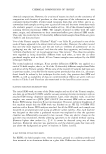
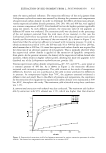
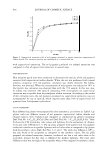
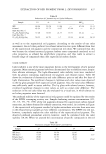
EXTRACTION OF RED PIGMENT FROM L. ERYTHRORHIZON 433 ® @) -® ® Figure 1. Process flow diagram used for the supercritical carbon dioxide extraction of red pigment. (1) extractor, (2) back pressure regulator, (3) seperator, (4) chiller, (5) working tank, (6) CO2 make-up tank, (7) CO2 pump, (8) modifier, (9) heat exchanger, (10) extracted product, (11) CO2 vent, (12) drain. SKIN IRRITATION PATCH TESTS Patch tests with an IQ Chamber™ (Chemotechnique Diagnostics Co., Sweden) were conducted to assess the level of skin irritation. Different test patches were prepared with 17% extract in cosmol, and the lipstick, which contained 10% extract. The test group consisted of 40 participants, 36 females and four males, with an average age of 39. 7 years, who had no specific allergic reactions. The patch tests were conducted in accor dance with the procedures provided by Chemotechnique Diagnostics Co. (http:!/ www.chemotechnique.se/). Twenty milliliters of test preparation was applied to the cham bers using the IQ Chamber™. The results of the tests were monitored and calculated after 24 and 48 hours from patch adhesion. CHROMATICITY AND LIGHT STABILITY TESTS Various samples of lip gloss manufactured via different formula with extracts were prepared for measurement and assessment of visual color. Table I shows the formula of the lip gloss sample. Colors were measured using Color Quest XE™ (Hunterlab, VA). The CIEL*a*b* color scale was utilized to determine the chromaticity, and LiE* ab• the total color difference, was used to assess the color difference (14). Color light stability was measured via the same technique after the samples had been daylight-illuminated for five days. The L*a*b* color scale and LiE* ab were compared in order to evaluate the color light stability. DPPH TESTS The DPPH scavenging activity test was utilized to measure the antioxidant activity of the extract. One hundred and fifty microliters of extract solution was added to 150 µl
Purchased for the exclusive use of nofirst nolast (unknown)
From: SCC Media Library & Resource Center (library.scconline.org)