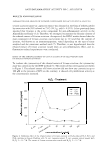
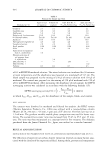
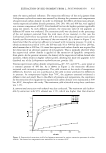
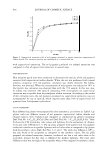
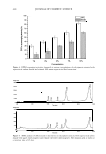
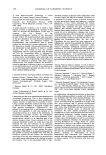
438 JOURNAL OF COSMETIC SCIENCE 100 90 80 0 70 · 60 m C 50 ·a, C 40 m 30 a.. 20 Cl 10 0 1% 3% 5% 7% 10% Concentration Figure 4. DPPH scavenging activities measured at various concentrations of red pigment extracted with supercritical carbon dioxide and ethanol. SFE means supercritical fluid extraction. Voltage (mV) 546.00 437.00 320.00 221.00 113.00 0.00 0.00 8.00 10.00 24.00 32.00 40.00 Time(mm) Voltage (mV) 546.00 437.00 320.00 221.0 113.0 8.00 10.00 24.00 32.00 40.00 Time (mm) Figure 5. HPLC analysis of shikonin and its derivatives in red pigment extracted with supercritical carbon dioxide (the upper chromatogram) and ethanol (the lower chromatogram). The shikonin peak is shown at a retention time of 25 min.

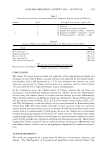
EXTRACTION OF RED PIGMENT FROM L. ERYTHRORHIZON 439 pigment from Lithospermum erythrorhizon1 we determined that the supercritical red pig ment harbored higher concentrations of shikonin and its derivatives than did the ethanol extract. Figure 5 is the result of the HPLC analysis of both the supercritical red pigment and the ethanol extract. The shikonin concentration in the supercritical red pigment was 66.0 mg/g of pigment, which was 2.4 times higher than that of ethanol extract, which was 27.7 mg/g pigment. Shikonin and its derivatives are well known antibiotics (20). The red pigment generated by supercritical carbon dioxide extraction harbored higher concentrations of shikonin and its derivatives than did the ethanol extract, which was believed to be attributable to its superior color stability. CONCLUSION The supercritical red pigment from Lithospermum erythrorhizon was prepared via super critical carbon dioxide extraction. The color difference was found to be acceptable when compared to the synthetic red pigment currently used in lipsticks. The light illuminated color stability test indicated that it was more stable than the red pigment obtained via ethanol extraction. The higher stability was also demonstrated via a DPPH antioxidant activity test. The supercritical red pigment harbored more shikonin and derivatives, and might be utilized as a stable red pigment for the production of cosmetic color products. Further studies will be conducted in order to ameliorate skin irritation by fractionation separation, which may help us to render the supercritical red pigment applicable to higher-content color products, such as lipsticks. ACKNOWLEDGMENTS This research work was supported by a grant from the Engineering Research Center for Advanced Bioseparation Technology, KOSEF. REFERENCES (1) B. Singh, M. K. Sharma, P.R. Meghwal, P. M. Sahu, and S. Singh, Anti-inflammatory activity of shikonin derivatives from Arnebia hispidissima, Phytomedicine, 10, 375-380 (2003). (2) H. Mani, G. S. Sidhu, A. K. Singh, J. Gaddipati, K. K. Banaudha, K. Raj, and R. K. Maheshwari, Enhancement of wound healing by shikonin analogue 93/63 7 in normal and impaired healing, Skin Pharmacol. Physiol., 17, 49-56 (2004). (3) S. H. Kim, L. C. Kang, T. J. Yoon, Y. M. Park, K. S. Kang, G. Y. Song, and B. Z. Ahn, Antitumor activities of a newly synthesized shikonin derivative, 2-hyim-DMNQ-S-33, Cancer Lett. 172, 171-175 (2001). (4) K. Yazaki, Root-specific production of secondary metabolites: Regulation of shikonin biosynthesis by light in Lithospermum erythrorhizon, Nat. Med., 55, 49-54 (2001). (5) A. N. Assimopoulou, D. Boskou, and V. P. Papageorgiou, Antioxidant activities of alkannin, shikonin and Alkanna tinctoria root extracts in oil substrates, Food Chem., 87, 433-438 (2004). (6) N. Yoshikawa, H. Fukui, and M. Tabata, Effect of gibberellin A3 on shikonin production in Litho spermum callus cultures, Phytochemistry, 25, 621-622 (1986). (7) H. Fukui, N. Yoshikawa, and M. Tabata, Induction of shikonin formation by agar in Lithospermum erythrorhizon cell suspension cultures, Phytochemistry, 22, 2451-2453 (1983). (8) F. Delgado-Vargas, A. R. Jimenez, and 0. Paredes-Lopez, Natural pigments: Carotenoids, anthocya nins, and betalains-Characteristics, biosynthesis, processing, and stability, Crit. Rev. Food Sci. Nutr., 40, 173-289 (2000).
Purchased for the exclusive use of nofirst nolast (unknown)
From: SCC Media Library & Resource Center (library.scconline.org)