j. Cosmet. Sci. 1 59, 469--480 (November/December 2008) Determination and validation of six sunscreen agents in suncare products by UPLC and HPLC SO-MI LEE, HYE-JIN JEONG, and 1H SEOP CHANG, Amore Pacific Corporation, R&D Center, 314-1 Bora-dong, Giheung-gu, Yongin-si, Gyeonggi-do, 446-7 29 Korea. Synopsis Methylene bis-benzotriazolyl tetramethyl butylphenol and bis-ethylhexyloxy phenol methoxyphenyl tri azine are sunscreen agents that have hydrophobic behaviors in common. They were not normally assayed with the following four sunscreen agents that have hydrophilic behaviors in a single chromatographic run: ethylhexyl methoxycinnamate, isoamyl p-methoxycinnamate, ethylhexyl salicylate, and ethylhexyl triazone. For that reason, methylene bis-benzotriazolyl tetramethyl butylphenol and bis-ethylhexyloxy phenol me thoxyphenyl triazine require much time in order to assay products with those materials. A rapid, selective, and reproducible determination method needs to be developed for the simultaneous examination of methylene bis-benzotriazolyl tetramethyl butylphenol and bis-ethylhexyloxy phenol me thoxyphenyl triazine with the sunscreen agents, ethylhexyl methoxycinnamate, isoamyl p-methoxycinna mate, ethylhexyl salicylate, and ethylhexyl triazone. This new technique could reduce time in examining the sunscreen agents and be effective for quality control of suncare products. In this paper, the HPLC and UPLC system is used for developing the determination of the sunscreen agents. Several evaluations of some mixtures of eluents and columns were obtained for the optimal condition of separation. In HPLC, the optimal peak resolution was obtained through ethanol-water gradient elution and a 75-mm ClS column with a 3.5-µm-sized particle on a flow rate of 1.0 ml/min. In UPLC, the most distinctive peak resolution was obtained through methanol-water gradient elution and a 50-mm ClS column with a 1.7-µm-sized particle on a flow rate 0.4 ml/min. Both of those chromatographic determi nation methods could be used in the examination of six types of sunscreen agents without any interference from other product excipients in the agents. The proposed determination methods were validated for specificity, linearity, repeatability, system stability, intermediate precision, and accuracy. Consequently, HPLC and UPLC determination methods could be rapid, selective, and proper applications for the assay of sunscreen agents in suncare products. INTRODUCTION Solar radiation is recognized to be one of the major causes of skin cancer, photo-aging, and photodermatoses (1--4). There is an increasing need for strong sunscreen agents to prevent UV light's damaging effect on human skin. Chemical sunscreens are compounds that can absorb or reflect deleterious UV light. They can prevent or minimize the harmful effects of solar radiation on the skin. Address all correspondence to So-Mi Lee. 469

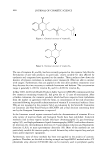
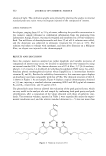
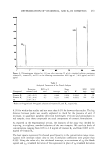
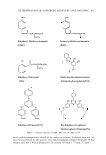
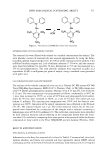
470 JOURNAL OF COSMETIC SCIENCE According to the manufacturer's reference (Ciba), a UV-A filter (methylene bis benzotriazolyl tetramethyl butylphenol) is a highly efficient sunscreen due to its triple action: UV absorption by a photostable organic molecule, light scattering, and light reflection by its microfine structure. Methylene bis-benzotriazolyl tetramethyl butyl phenol in this research is micronized powder containing more than 98.5% of the active entity. Methylene bis-benzotriazolyl tetramethyl butylphenol has been proven to be extremely photostable. It has synergistic and stabilizing effects when combined with other organic sunscreen agents. Secondly, bis-ethylhexyloxy phenol methoxyphenyl triazine is a full-spectrum UV(A+B) filter. It has high inherent photostability and also has two distinctive absorption bands with different polarization directions and extinction coefficients (UV-A/UV-B). It has been optimized for efficient dissipation of UV radiation to harmless thermal energy. This shows that methylene bis-benzotriazolyl tetramethyl butylphenol and bis ethylhexyloxy phenol methoxyphenyl triazine function as effective sunscreens. Due to their strong sunscreening effect, methylene bis-benzotriazolyl tetramethyl butylphenol and bis-ethylhexyloxy phenol methoxyphenyl triazine have been used in many suncare products as UV-A filters. Thin-layer chromatography (TLC) (5 ), high-performance liquid chromatography (HPLC) (6-11), and gas-liquid chromatography (GC) (12) have been used for determi nation of the sunscreen agents in suncare products. In spite of high utilization of the chromatographic systems, never before has there been literature reporting the effects of the simultaneous determination method of methylene bis-benzotriazolyl tetramethyl butylphenol and bis-ethylhexyloxy phenol methoxyphenyl triazine with hydrophilic UV-B filters (13,14). We have proposed a new determination method based on HPLC and UPLC for the simultaneous assay of methylene bis-benzotriazolyl tetramethyl butylphenol, bis ethylhexyloxy phenol methoxyphenyl triazine, ethylhexyl methoxycinnamate, isoamyl p-methoxycinnamate, ethylhexyl salicylate, and ethylhexyl triazone in suncare products. The proposed method is simplified and is reproducible. It can determine UV-A filters, which normally use extremely hydrophobic compounds such as methylene bis benzotriazolyl tetramethyl butylphenol and bis-ethylhexyloxy phenol methoxyphenyl triazine, with hydrophilic UV-B filters in a single run. The method is suitable for quality control of the assays of sunscreen agents in suncare products and cosmetics as it can provide a fast and efficient separation of the UV filters. See Figure 1 for the chemical structures of the six sunscreen agents examined in this study. MATERIALS AND METHODS Suncare products for validation of accuracy were prepared by Amore-Pacific (Gyeonggi do, Korea). Ten suncare products were purchased in Seoul in October 2006. INSTRUMENTATION The HPLC used in the test was the Waters Alliance system (Waters, Milford, MA). The system consisted of a 2996 FDA detector, a pump, an autosampler, and a column oven,
Purchased for the exclusive use of nofirst nolast (unknown)
From: SCC Media Library & Resource Center (library.scconline.org)