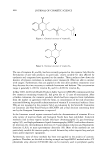
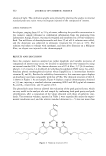
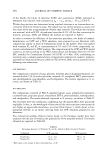
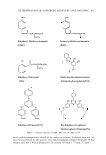
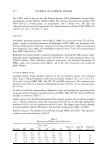
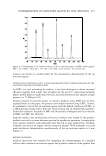
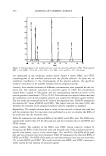
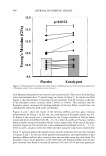
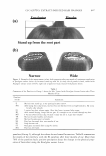
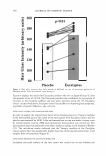
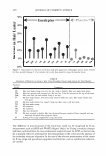
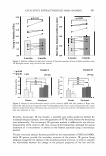
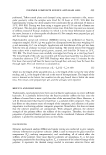
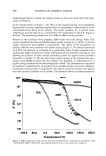
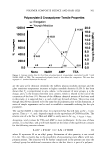
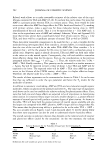
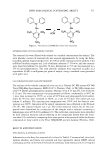
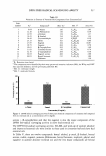
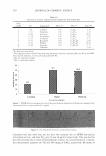
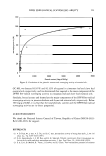
460 JOURNAL OF COSMETIC SCIENCE Figure 1. Chemical structure of vitamin K 1 . Figure 2. Chemical structure of vitamin K3 • The use of vitamins K 1 and K3 has been recently proposed in the cosmetic field for the formulation of anti-rash products. In particular, creams suitable for skin affected by erythrosis and couperose have appeared on the market. These products slow down the kinetics of tyrosine conversion to melanin since vitamins K (VKs) are able to interact with oxygen. Furthermore, they are applied on the skin after aesthetic treatments since they decrease the time necessary to reabsorb hematoma and hedema. The concentration range is generally 1-8% for vitamin K 1 and 0.1-0.8% for vitamin K3" In May 2005, the French Health Products Safety Agency (AFSSAPS) communicated that five cosmetics containing vitamin K 1 had given rise to 12 cases of sensitization. After a further evaluation, the cosmetic products which had been suspected were withdrawn from the market in agreement with the firms, in consideration of the risk of systemic reactions following the possible administration of vitamin Kin sensitized subjects. Since VKs are not regulated in the cosmetic field, an evaluation by the Scientific Committee on Cosmetics and Non-Food Products (SCCNFP) and a final decision concerning their use by the European Commission is expected. In the literature several reports concerned with the determination of vitamins K in a wide variety of matrices (foods and biological fluids) have been published. Analytical methods cited in these reports include thin-layer chromatography (3), gas chromatog raphy (4,5), and high-performance liquid chromatography (HPLC) with either ultravio let detection (6), electrochemical detection (2,7) postcolumn reduction and fluorimetric detection (1,8,9), or mass spectrometry detection (10). Most of the methods are not particularly suitable for routine quality control because they either require long analysis times and/or expensive equipment. Furthermore, none of these methods has been ever applied to the analysis of cosmetic products. Therefore, we decided to develop a simple and rapid HPLC method with a UV photodiode array detector (UV-DAD) that can be routinely used in peripheral quality

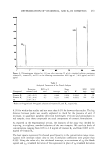
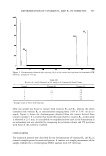
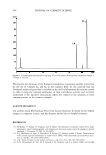
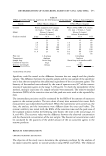
DETERMINATION OF VITAMINS K 1 AND K3 IN COSMETICS 461 control laboratories with the aim of verifying the presence of the two vitamins K in facial creams. EXPERIMENTAL REAGENTS AND CHEMICALS All reagents were of analytical-reagent grade and were used without further purification. Methanol and acetonitrile were purchased from Carlo Erba (Milan, Italy), menadione and phytomenadione were obtained from Alfa Aesar (Karlsruhe, Germany), bis-ethyl hexyloxyphenol methoxyphenyl triazine (LS.) was from Ciba (Basel, CH), and dimeth ylacetamide was from Lab Scan (Dublin, Ireland). Water was deionized and doubly distilled from a glass apparatus. All solvents and solutions for HPLC analysis were filtered through a Millipore filter (pore size 0.45 µm) and vacuum degassed by an ultrasound treatment before use. APPARATUS HPLC analysis was performed with an Agilent 1100 Series liquid chromatograph, consisting of a delivery pump with the online degasser, an injector with a variable loop, and a photodiode array detector. The equipment was managed by the "Chemstation, revision A.08.03" software (Agilent Technologies). The analytical column was stainless steel (150 x 4.6 mm) packed with a 3.5-µm Zorbax Eclipse XDB C18 (Agilent Tech nologies). A linear gradient elution was carried out, with solution A consisting of acetonitrile-methanol (ratio 75:25 v/v) and water, starting from 50% solution A. This composition was maintained for 5 min, and then a linear gradient up to 100% solution A was maintained for 5 min. This final composition was kept for 15 additional minutes before re-equilibrating the column. The flow-rate was 1.0 ml/min, the injection volume was 20 µl, and the column tem perature was 40 ° C. The preferential detection wavelength was 3 3 3 nm. The range of wavelengths examined by the photodiode array detector was 240-350 nm. CALIBRATION The calibration graphs were constructed from triplicate injections of six solutions of different concentration. Stock solutions of vitamins K1 and K3 were prepared by dis solving a weighed amount (about 1.0 g and 0.1 g, respectively) of the pure compounds in 5 00 ml of methanol. One hundred sixty milligrams of the internal standard was accurately weighed and dissolved in 10 ml of dimethylacetamide, and the solution was taken to 5 00 ml with methanol. A set of working solutions was obtained by diluting, in a 50-ml volumetric flask, aliquots of the stock solutions (1, 5, 10, 15, 20, and 25 ml) with 25 ml of the I.S. solution and bringing them to volume with methanol. These dilutions were chosen on the basis of the possible amounts utilized in the cosmetic formulations. All the ma nipulations were carried out in the dark, and the solutions were kept at 4°C in the
Purchased for the exclusive use of nofirst nolast (unknown)
From: SCC Media Library & Resource Center (library.scconline.org)