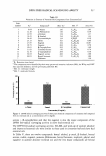
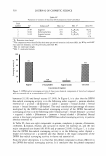
]. Cosmet. Sci., 59, 509-522 (November/December 2008) DPPH free-radical scavenging ability, total phenolic content, and chemical composition analysis of forty-five kinds of essential oils HSIAO-FEN WANG, YU-KANG WANG, and KUANG-HW AY YIH, Departments of Science and Technology for Bioindustry (H.-F. W.) and Applied Cosmetology (K.-H. Y.), Hungkuang University, Shalu, No. 34, Chung-Chie Road, Taichung, Taiwan 433, and Lorien Vana Biotech. Inc., IOF, No. 176, Chang-chun Road, Taipei, Taiwan 104 (Y.-K. W.), R.O.C. Accepted for publication May 28, 2008. Synopsis Forty-five kinds of commonly used essential oils were employed to investigate the DPPH (1, 1-diphenyl- 2-picrylhydrazyl) radical scavenging ability and total phenolic content of major chemical compositions. The free-radical scavenging ability and total phenolic content of cinnamon leaf and clove bud essential oils are the best among these essential oils. One-half milliliter of cinnamon leaf and clove bud essential oils (10 mg/ml EtOH) are shown to be 96.74% and 96.12% of the DPPH (2.5ml, 1.52 x 10- 4 M) free-radical scavenging ability, respectively. Their EC 50 (effective concentrations) are 53 and 36 (µg/ml). One milligram per milliliter of cinnamon leaf, clove bud, and thyme red essential oils were shown to be 420, 480, and 270 (mg/g of GAE) of total phenolic content, respectively. Eugenol in cinnamon leaf and clove bud essential oils (82.87% and 82.32%, respectively) were analyzed by GC-MS. It is clear that the amounts of the phenol compounds in essential oils and the DPPH free-radical scavenging ability are in direct proportion. INTRODUCTION A great number of aromatic, spicy, medicinal, and other plants contain chemical com pounds exhibiting antioxidant properties (1-5). Sources of natural antioxidants are primarily plant phenolics that may occur in all parts of plants, such as in the fruits, vegetables, nuts, seeds, leaves, roots, and barks (6). Essential oils from aromatic and medicinal plants have been known to possess biological activity, notably anti inflammatory (7), antiatherosclerotic, antitumor, antimutagenic (8), anticarcinogenic (9), antibacterial (10), or antiviral activities to a greater or lesser extent (11,12). Many essential oils also have been confirmed to possess antioxidant activity (13-15). An essential oil can be extracted from leaves and seeds it is used as a flavoring agent or Address all correspondence to Kuang-Hway Yih. 509

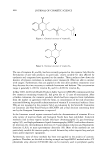
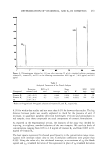
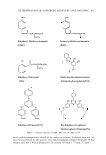
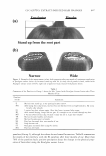
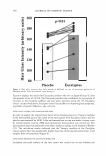
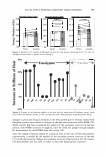
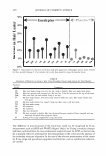
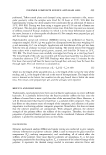
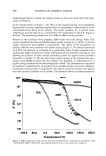
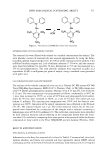
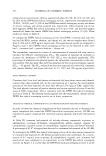
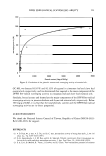
510 JOURNAL OF COSMETIC SCIENCE fragrance (16) in perfumes, soaps, and creams. The extraction of so many different essential oils from aromatic and medicinal plants and different antioxidant activities have been reported in the literature (17-19). However, it is true that the compositions of commonly and commercially used essential oils are different from the original ex traction and are rarely investigated. It is important not only for their antioxidant properties, but also because they are natural, non-synthetic products, that their appre ciation by consumers be very favorable. In this study, the antioxidant capacity of forty-five essential oils was investigated using two complimentary in vitro assays: DPPH free-radical scavenging ability and total phenolic content. These essential oils were compared with those of the commercial standard antioxidants and butylated hydroxyanisole (BHA), and the components of some essential oils showing antioxidant activity were further identified by GC-MS. MATERIALS AND METHODS CHEMICALS The chemicals 1, l-diphenyl-2-picrylhydrazyl (DPPH), butylated hydroxyanisole (BHA), �-caryophyllene, and eugenol acetate were purchased from TCI. Gallic acid, eugenol, benzyl acetate, p-cresol, linalool, and Folin-Ciocalteau's phenol reagents were purchased from Merck. Sodium carbonate was purchased from SHOWA. Benzyl ben zoate, indole, and thymol were purchased from ACROS. Jasmone and a-pinene were purchased from Aldrich. Farnesene was purchased from SAFC. The forty-five essential oils were purchased from Australian Botanical Products (TGA warrant by the Australian government, USDA and ACO certification). All the other chemicals used were of stan dard analytical grade, and solvents were of HPLC grade. DPPH FREE-RADICAL SCAVENGING ASSAY The antioxidant activity of the essential oils was measured in terms of hydrogen donat ing or radical-scavenging ability using the stable DPPH method (20) as modified by Sanchez-Moreno et al. (21). The reaction mixture containing 0.5 ml of essential oil (10 mg/ml EtOH) and 2.5 ml of DPPH (1.52 x 10- 4 M) was vigorously shaken and incubated in darkness at room temperature. When DPPH reacted with an antioxidant compound in an essential oil that can donate hydrogen (Figure 1), it was reduced and the resulting decrease in absorbance at 517 nm was recorded at 10-min intervals up to 30 min using a UV-vis spectrophotometer (Hitachi UV-vis 2001), and the mean values were obtained from triplicate experiments. The percentage of remaining DPPH was plotted against the sample or standard (BHA) concentration to obtain the amount of antioxidant necessary to decrease the initial concentration of DPPH to 50% (EC50). A lower EC50 value indicates greater antioxidant activity. The scavenging effect of a DPPH free radical was calculated by using the following equation: ( 1 - absorbance of sample at 5 1 7 nm ) Scavenging effect ( % ) = b b f 1 X 100 a sor ance o contra at 5 1 7 nm
Purchased for the exclusive use of nofirst nolast (unknown)
From: SCC Media Library & Resource Center (library.scconline.org)