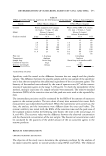
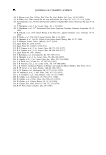
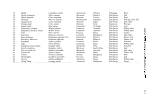
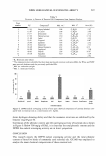
23 Myrrh Commiphora mo/mo! 24 Myrtle dalmatian Mytus communis 25 N eroli bigarade Citrus aurantium 26 Nutmeg M yristica fr a gr ans 27 Orange bitter Citrus aurantium 28 Orange sweet Citrus sunensis 29 Pepper black Piper nigrum 30 Pennyroyal pulegone Mentha pulefium 31 Peppermint arvensis, whole Mentha arvensis 32 Pine Pinus sylvestris 33 Ravensara Ravensara aromatica 34 Rose geranium Pelargonium graveolens !'her 35 Rosemary, Moroccan Rosmarinus ojficinalis 36 Rosewood Aniba rosaeodora 37 Sage Salvia offiinalis 38 Sandalwood, East Indian Santa/um album 39 Smith eucalyptus Eucalyptus smithii 40 Tea tree bush still Melaleuca alternifolis 41 Thyme red Thymus vulgaris 42 Vetiver Vetiveria zizanioides 43 Wintergreen Gaultheria procumbens 44 Yarrow Achillea millefolium 45 Ylang Ylang Cananga odorata Burseraceae Ethiopia Myrtaceae Morocco Rutaceae Tunisia M yristicaceae Indonesia Rutaceae Egypt Rutaceae Sicily Piperacede Sri Lanka Lamiaceae Australia Lamiaceae Australia Pinaceae France Lauraceae Madagascar Geraniaceae Morocco Rosaceae Morocco Lauraceae Brazil Lamiaceae Spain Santalaceae India Myrtaceae South Africa Myrtaceae Australia Santalaceae France Poaceae Madagascar Ericaceae China Asteraceae France Anonaceae Madagascar Enfleurage Resin Distillation Leaf Distillation Petal Distillation Pericarp, bark, leaf Distillation Leaf, shoot Expression Pericarp Distillation Fruit Distillation Whole plant Distillation Whole plant Distillation Conifer Distillation Leaf, shoot Distillation Flower, leaf Distillation Flower, leaf Distillation Duramen Distillation Whole plant Distillation Duramen Distillation Leaf Distillation Leaf, twig Distillation Flower, leaf Distillation Root Distillation Leaf Distillation Whole plant Distillation Flower tj ""d ""d ::r: � I tj -� n t-1 r.n n t:11 z C') - z C') t-1 - VI ...... \..),.)

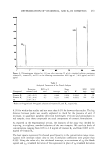
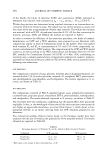
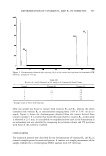
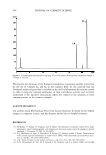
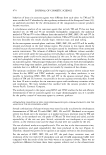
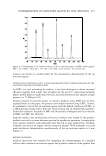
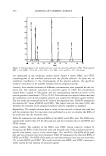
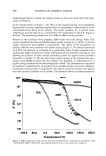
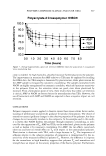
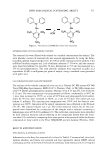
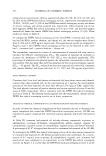
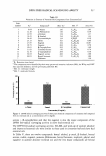
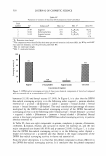
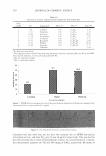
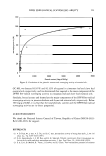
514 JOURNAL OF COSMETIC SCIENCE of essential oil concentration, the four essential oils show 96.74%, 96.12%, 93.14%, and 92.29% of the DPPH free-radical scavenging activity, respectively. Determinations of 78.82%, 78.69%, and 55.32% of the DPPH free-radical scavenging activity are shown in vetiver, nutmeg, and yarrow essential oils, respectively. Other essential oils do not show apparent DPPH free-radical scavenging activity up to 50%, and the black pepper essential oil shows the lowest DPPH free radical scavenging activity (5 .13 % ). These results are listed in Table II. To compare the DPPH radical scavenging activity of (a) BHA, cinnamon leaf, and clove bud and (6) BHA, jasmine absolute, and thyme red, the two set samples were diluted from 0-200 and 0-2000 µg/ml, respectively. The experimental results are displayed in Figures 2 and 3. The DPPH radical scavenging activity can be observed as well: clove bud cinnamon leaf jasmine absolute thyme red. The antioxidant capacities in a series of concentrations of essential oils were used to calculate the effective concentrations, EC50 . The amount of essential oil necessary to decrease the absorbance of DPPH by 50% (EC50) was calculated graphically. (The percentage of inhibition was plotted against the antioxidant concentration in the reac tion system). The data show that clove bud possesses the best radical scavenging capacity (EC50 = 36 µg/ml). The EC50 values of the best four essential oils (clove bud, cinnamon leaf, jasmine absolute, and thyme red) were 36, 53, 1297, and 1563 µg/ml, respectively. TOT AL PHENOLIC CONTENT Cinnamon leaf, clove bud, and thyme red essential oils have shown more total phenolic content than other essential oils. In the concentration of 1 mg/ml, the total phenolic amounts of the three essential oils were 420, 480 and 270 mg/g of GAE, respectively. The total phenolic amounts of jasmine absolute and yarrow essential oils were 36 and 48 mg/g of GAE, respectively. This is consistent with the DPPH free-radical scavenging activity in Table II. This finding clearly suggests that the total phenolic content and the DPPH free radical scavenging activity are in direct proportion. ANALYSIS OF CHEMICAL COMPOSITION BY GAS CHROMATOGRAPHY-MASS SPECTROMETRY In order to know the chemical composition of these essential oils and to determine the major compound that caused the DPPH free-radical scavenging activity, GC-MS was employed to analyze cinnamon leaf, clove bud, jasmine absolute, and thyme red essential oils. In Table III, cinnamon leaf essential oil includes thirteen compounds a-pinene, a phellandrene, p-cymene, �-linalool, cinnamaldehyde, safrole, eugenol, copaene, � caryophyllene, cinnamyl acetate, a-caryophyllene, eugenol acetate, and benzyl benzoate. A percentage of 82.87 of eugenol was detected in cinnamon leaf essential oil by GC-MS. To investigate the DPPH free-radical scavenging activity of the three major components in cinnamon leaf essential oil, the following experiments were undertaken. In a concen tration of 0.1 mg/ml, pure a-pinene, �-caryophyllene, eugenol, and cinnamon leaf essential oil were employed in an experiment on the DPPH free-radical scavenging activity. In Figure 4, it is clear that the DPPH free-radical scavenging activity is in the
Purchased for the exclusive use of nofirst nolast (unknown)
From: SCC Media Library & Resource Center (library.scconline.org)