528 JOURNAL OF COSMETIC SCIENCE effective protection against UV A-induced oxidative stress. Scavenging of the electrophilic species 4-hydroxynonenal, a highly cytotoxic end product of membrane lipid peroxidation, seems to be 2-oxo-1,3-thiazolidine major photoprotective mechanism. Determination of the Feel of Hair after Cosmetic Treatment - Sensory and Objective Test Methods U. Assmus (Reichardt International AG), P. Augustin (DWI), H. Hensen (Cognis), P. Hosse] (BASF), G. Lang (Procter & Gamble, Wella), H. Leidreiter (Degussa), A Markowetz (Procter & Gamble), V. Martin (Zschimmer & Schwarz), B. Noecker (KPSS), E. Poppe (Henkel Schwarzkopf), M. Pfaffemoschke (National Starch), H. Schmidt-Lewerki.ihne, Chairman (Beiersdorf), E. Schulze zur-Wiesche (Henkel & Schwarzkopf), A Schwan-Jonczyk (Procter & Gamble, Wella), J. Wood (KPSS), F.-J. Wortmann (Univ. Manchester) * * DGK Working Group - Hair Treatments This work was performed in the period from 2002 to 2006. The feel of natural and damaged hair was studied after treatment with classical conditioning formulations. A cetrimonium chloride/cetyl alcohol conditioner and shampoos based on sodium lauryl ether sulfate and polyquaternium-10 or dimethiconol, respectively, were used. In addition to a broad-based round robin test to determine the hair feel in 12 test centers, suppleness measurements, atomic force microscopy and scanning electron microscopy, combing force measurements and shine measurements were performed. The cetrimonium chloride conditioner and the silicone shampoo produced the best hair feel. There was a correlation between hair feel and the suppleness measurement. The coating of the hair surface after shampooing with polyquatemium-10 and dimethiconol could be seen with atomic force microscopy and scanning electron microscopy. There was no correlation of the hair feel with shine or ease of combing. Cuticular Damage to African-American Hair During Relaxer Treatments -A Microtluorometric and SEM Study Sigrid B. Ruetsch, Binhua Yang and Yash K Karnath TRI/Princeton, PO Box 625, Princeton, NJ 08542, USA In earlier publications [1,2,3] we discussed several in-depth studies of characterization and quantification of damage done to European dark brown hair fibers by photochemical and cosmetic-chemical oxidation (bleaching) and reduction (perming) processes. These earlier studies established considerable changes in surface chemistry such as an increase in acidity and hydrophilicity. We discussed in detail the breakdown of the lipid domains (delipidation) of the outer □-layer of the exposed scale faces and generation of anionic (sulfonic acid) groups (acidification) on the hair surface caused by these oxidative and reduction processes. The goal of this current study is to characterize and quantify the level of chemical and physical changes in the surface of African-American hair caused by various »lye based« and »no-lye« relaxer treatments [4]. This study attempts to establish which product delivers the best »hair straightening« performance while resulting in the least chemical and physical changes in the hair surface. We again use a microfluorometric technique with the help of the cationic fluorochrome Rhodamine B to detect, map and quantify relaxer-induced changes in the surface chemistry of human hair fiber. In addition, we also use SEM at various magnifications to highlight relaxer-induced changes in the physical nature of the hair surface. We attempt to associate the level of increase in fluorescence intensity, which represents an increased level of delipidation/acidification of the hair surface, with the damage level to the hair topography, and thus, determine the least damaging cosmetic chemical process. Damage to the physical nature of the hair topography as observed by SEM shows a clear difference between treatments involving lab-made relaxer solutions and commercial relaxer systems. A Highly Sensitive Method to Determine the Washing Resistance of Artificial Hair Colors Erik Schulze zur Wiesche*, Siglinde Erpenbach ** *Henkel AG & Co. KGaA, 22763 Hamburg, Germany ** Henkel AG & Co. KGaA, 40191 Di.isseldorf, Germany Due to the improved performance of modem hair colorants, the high natural variability in hair qualities and the individual influences of manual product applications, color care effects of cosmetic treatments are very difficult to detect. A new, highly sensitive test method to study the color fading behavior of human hair was established for a large variety of cosmetic treatments. This method is based on an automatic multistage application of standard wool tissues combined with automatic color evaluation by means of CIE L*a*b* measurements (DIN 5033). The delta E values are the main interest because they include all information regarding the L (black vs. white), a (red-green) and b (blue-yellow) axes defined in the Hunter Lab color space. For validation of this new method, different permanent and non-permanent hair color shades were applied to undamaged light brown Caucasian hair strands. The hair strands were washed manually stepwise 30 times and the color loss compared with the results obtained on wool tissues using an automatic application system. For most of the investigated hair colors, a coefficient of determination of r20.99 was achieved. Modem permanent hair colors show a high resistance to cosmetic treatments. Over 90% of the initial color result was retained after 30 product applications. Shampoo and conditioner formulations induce different degrees of color loss in hair. In basic formulas significant influences of single surfactants could be detected. The new method using wool tissues correlates very well with that using manually washed Caucasian hair strands. This automatic method is very time-effective and offers an excellent reproducibility with a high sensitivity for assessing product influences on artificial hair colors.

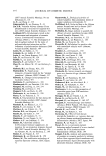
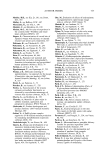
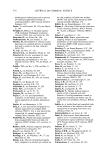
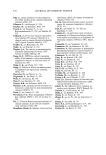
j. Cosmet. Sci., 59, 529-538 (November/December 2008) AUTHOR INDEX TO VOLUME 59 Aboulmagd, E., see Gomaa, Y.A., 291 Abriat, A., Psychological and physiological evaluation of emotional effects of a perfume in menopausal women (Abstract, IJCS), 75 Abrutyn, E.S., Rapid screening protocol of sunlight exposure to damaged hair (2008 Annual Scientific Seminar), 365 Abu-Jdayil, B., Determination of optimal Dead Sea salt content in a cosmetic emulsion using rheology and stability measurements, I Acosta, E.J., see Yuan, J.S., 370 Adao, A., see Gelo-Pujic, M., 453 Afifi, F.U., see Issa, R.A., 523 Ahmed, F.K., Organic, natural, and other "green" labeling regulations (2008 Annual Scientific Seminar), 346 Ahshawat, M.S., Preparation and characterization of herbal creams for improvement of skin viscoelastic properties (Abstract, IJCS), 452 Akutsu, N ., see Kobayashi, Y., 250 Alard, V., see Pissavini, M., 159 Aldous, S., see Bleasel, M.D., 524 Altemus, M., Effects of acute and chronic stress on skin: Clinical studies (2007 Annual Scientific Meeting), 91 Altuve, A., Linking surface energy to cosmetic beauty on the skin (2007 Annual Scientific Meeting), 192 Amighi, K., see Durand, L., 160 Amos, J., see Li, W., 99 Amro, B.I., see Issa, R.A., 523 An, S.M., see Kim, H.J., 117 Anand, C.V., see Lakshimi, C., 524 Anderson, P., Utilizing rheological parameters to predict consumer-perceived sensory attributes of cosmetic creams (2008 Annual Scientific Seminar), 380 Anton, J.M.G., see Puig, A., 164 Aoki, W., see Sagehashi, Y., 456 Arakawa, N., Development of quantitative analysis for the micro-relief of the skin surf ace using a video microscope and its application to examination of skin surface texture, (Abstract, JSCC Japan), 71 Arct, J., see Krus, S., 165 see Pytkowska, K., 457 Asensio, J.-A., see Viladot, J.-L., 78 Ashley, D., see Rheins, L.A., 172 Assmus, U., Determination of the feel of hair after cosmetic treatment-Sensory and objective test methods (Abstract, IFSCC), 528 Aubert, A., see Korichi, R., 127 Aucar, B.F., see Song, L.S., 349 Augustin, P., see Assmus, U., 528 Bacon, R., see Ertel, K., 253 Baldassari, S., see Villa, C., 335 Ballarin, J., Influence of cellulose polymers on the semipermanent dyestuff process for yak hair: An analytical investigation, 105 Barbosa, V.H., Ethnic skin: Unique properties, challenges and solutions (2007 Annual Scientific Meeting), 177 Bartley, V., see Pauly, G., 455 Barkat, S., see Abriat, A., 7 5 Barker, S., see Duena-Koganov, O.V., 188 Barri, T., see Msagati, T.A.M., 525 Barss, P., see Hardy, A.D., 399 Bauza, E., see McMullen, R., 356 Beaulieu, H., Drawing the line on wrinkles by supporting the dermal-epidermal junction (DEJ) (2008 Annual Scientific Seminar), 351 Bensafi, M., see Abriat, A., 75 Bergamaschi, M.M., A simple analysis of the changes during evaporation of a commercial emulsion of unknown composition, 15 Bernardi, A., see Ostacolo, C., 75 Bertin, C., Combined retinol-lactose-glycolic acid effects on photoaged skin: A double-blind placebo-controlled study (Abstract, IJCS), 453 Bianchini, R., see Daly, S., 358 Bifulco, M., see Cavallo, P., 353 529
Purchased for the exclusive use of nofirst nolast (unknown)
From: SCC Media Library & Resource Center (library.scconline.org)