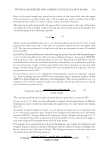
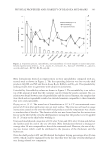
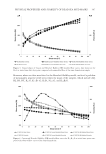
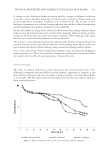
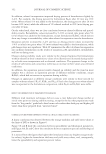
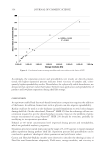
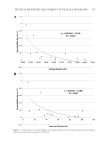
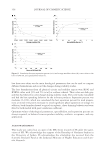
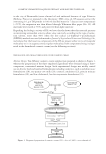
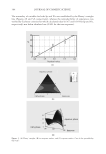
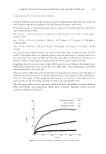
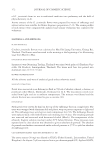
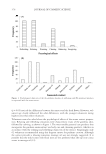
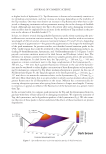
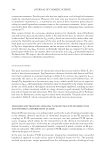
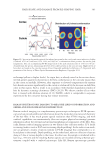
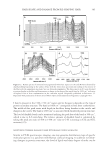
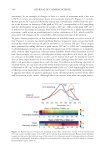
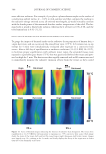
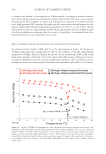
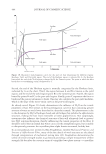
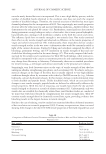
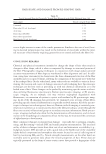
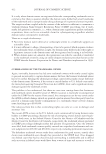
PHYSICAL PROPERTIES AND STABILITY OF DEAD SEA MUD MASKS 347 However, when our data were fi tted to the Herschel–Bulkley model, we faced a problem of meaningless negative yield stress values for many of the samples, which include AQ, BL, BS, NC, K15G, K7.5B7.5G, K5B5, N0.05G, and K10B2G. Figure 3. Typical shapes of Casson and Herschel–Bulkley (HB) modeled fl ow curves, data shown are for B10G at initial time (fi rst day) point compared with unmodeled fl ow of the same formulation sample. Figure 4. Casson and Herschel–Bulkley (HB) modeled fl ow curves for K7.5B7.5G at initial time point com- pared with observed fl ow curves of the same formulation.

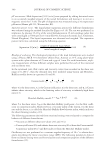
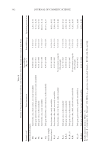
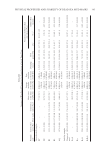
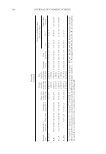
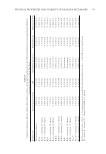
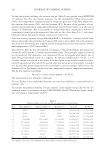
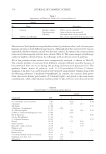
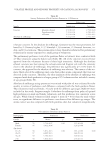
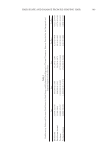
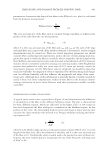
JOURNAL OF COSMETIC SCIENCE 348 Several procedures can be followed to overcome the problem of negative meaningless yield stress values (18), the most applicable one for our samples involves using the Casson model to calculate yield stress for all samples and incorporated the calculated yield stress to the Herschel–Bulkley model and used it to fi t the data to calculate both consistency and fl ow indices. All formulations fi tted to both models with high R2 values except K15G,K7.5B7.5G, K10B2G, RV, and NC, which had negative meaningless values for all or some of the pa- rameters yield stress value (either Casson, Herschel–Bulkley, or both), consistency index, fl ow index, and infi nite shear viscosity. The behavior of K15G, K7.5B7.5G, and RV did not fi t either model, whereas that of NC fi tted to Casson model only and K10B2G fi tted to Herschel–Bulkley model only as shown in Table III. Correlating this deviated behavior with formulation composition revealed that the maxi- mum level of thickener concentration that can be incorporated into a mud formulation without producing a deviation from the ideal shear thinning fl ow curves is 10% of either one thickener (kaolin and bentonite) or a combination of the two of them. Casson yield stress values for our formulations were higher than that of the over-the-shelf samples the highest was that of N0.05G. All in-house prepared formulations mentioned in Table I had higher Casson yield stress compared with untreated mud, except K5B5G. While only BL from over-the-shelf products had higher value than the untreated mud. Yield stress is the minimum shear stress required to initiate material fl ow. It is an impor- tant determinant of the product stability and the ease of product application by the end user (20). Higher yield values ensure that the material will preserve its structure and consistency and maintain particles in the medium with minimal sedimentation (20). On the other hand, lower yield stress guarantees easier distribution of a semisolid on the skin and easier extrusion out of its tube (21). An optimum yield stress value is required to balance between the ability to pump and fi ll the product and the stability during transfer and storage (3). Consistency index values were comparable for most of our stability samples (300– 400 Pa·sn), the highest was that of N0.05G and K10 and the lowest was that of K5B5. All in-house prepared formulations included in the stability study had higher values of consistency index compared with the untreated mud, except K15G and K7.5B7.5G for which could not calculate the consistency index. The consistency index is an indicator of structural strength and serves as an index of the viscosity of the system (14), and when the formulation consistency index is higher, the formulation viscosity, thickness, and yield stress are higher and the lower spreadability is lower. The consistency index of the prepared in-house formulations was higher than that of the over-the-shelf products the lowest value was for AQ brand. Flow index values, an index of the shear thinning tendency of the samples (14), were less than one for all tested samples, which is an indicator of a shear thinning behavior (13). Viscosity value differences were more obvious at lower shear rate (25 s-1) than higher shear rate (75 s-1). The highest viscosities were for K15G, K10B2G, K7.5B7.5G, and K10, while over-the-shelf products had the lower values.
Purchased for the exclusive use of nofirst nolast (unknown)
From: SCC Media Library & Resource Center (library.scconline.org)