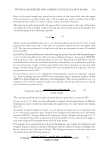
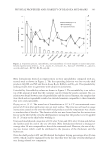
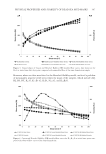
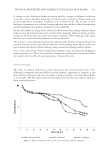
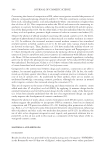
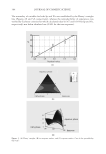
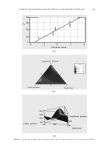
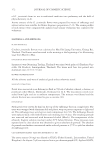
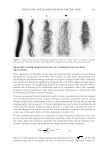
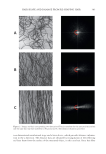
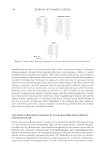
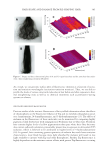
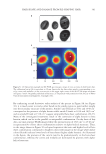
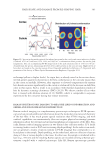
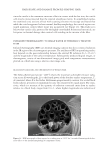
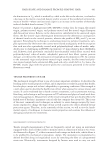
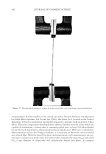
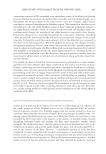
HAIR SHAPE AND DAMAGE FROM RE-SHAPING HAIR 385 As a result, we can generate surface plots of fl uorescence emission as a function of excita- tion and emission wavelengths (excitation–emission matrices). Thus, we are able to profi le the levels of various structural molecules in hair before and after exposure to ther- mal straightening irons as well as to chemical treatments such as permanent waving systems or relaxers. SPECTROFLUORESCENCE BACKGROUND Previous studies of the intrinsic fl uorescence of hair yielded information about the effects of chromophores on the fl uorescent behavior of Trp and its metabolic/degradation prod- ucts: kynurenenine, N-formylkynurenine, and 3-hydroxykynurenine (15). The effects of melanin on the fl uorescence of these molecules can be monitored by comparing highly pigmented dark brown hair with nonpigmented Piedmont hair or white hair. Piedmont hair contains higher levels of yellow pigmentation than pure white hair. Gray hair may also contain yellowish coloration, presumably present due to exposure to ultraviolet (UV) radiation, which is believed to be attributed to higher levels of 3-hydroxykynurenine (16). In general, hair containing greater quantities of melanin has much lower emission characteristics, most likely because more light absorbed by melanin will result in less light available to interact with Trp and other fl uorophores. Further, Trp fl uorescence is highly dependent on the moisture content of hair, with greater Trp fl uorescence occuring Figure 4. Images and three-dimensional plots of (A and C) virgin frizzy hair and the same hair that under- went a hair straightening treatment (B and D).

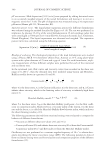
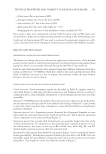
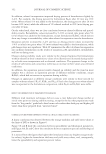
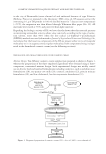
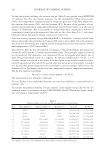
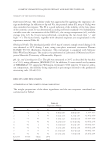
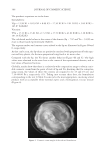
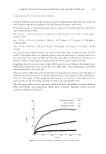
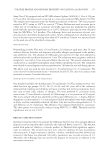
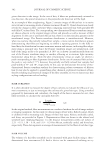
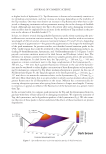
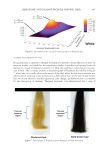
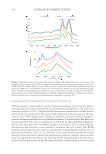
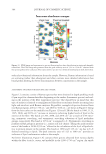
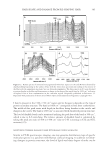
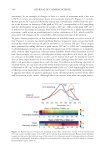
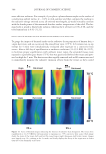
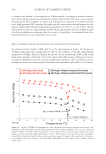
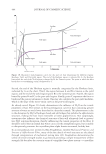
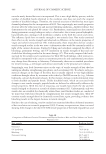
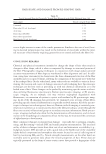
JOURNAL OF COSMETIC SCIENCE 386 at higher levels of hydration (15). Trp fl uorescence is known to be extremely sensitive to its immediate environment, and may increase or decrease depending on the mobility of the Trp residues. One may even observe an increase in Trp fl uorescence when hair is sub- jected to damaging treatments such as permanent waving due to the cleavage of disulfi de bonds. Although one may expect less Trp to be present after such a damaging treatment, such an effect may be explained by an increase in the mobility of Trp residues in the pro- tein in the absence of disulfi de bonds (17). In hair, we observe several distinguishable fl uorescence peaks when examining the spec- trofl uorescence excitation–emission matrices. Trp is the most familiar with an excitation wavelength of 290 nm and an emission maximum between 335 and 345 nm, depending on the degree of pigmentation—the greater the pigmentation, the longer the wavelength of the peak maximum. In previous studies, we identifi ed several emission peaks in the UVA–visible region that could be attributed to Trp metabolic/degradation products, in- cluding N-formylkynurenine, kynurenine, and 3-hydroxykynurenine (15). Figures 5 and 6 provide excitation–emission matrices for dark brown and Piedmont (white) hair. The difference in melanin content between these two samples greatly affects the spectrofl uo- rescence thumbprint. In dark brown hair, the Trp peak (Iex = 290 nm, Iem = 343 nm) appears as a minor constituent next to the large conglomerate of the kynurenines (Iex = 366 nm, Iem = 433 nm). Such a greater fl uorescence emission in the case of the kynuren- ines may be attributed to either higher concentration of these fl uorophores or less quench- ing by melanin (as compared to Trp where melanin absorption is greater). In the case of Piedmont hair (Figure 6), the Trp peak appears to be barely present (Iex = 292 nm, Iem = 337 nm) due to its miniscule emission relative to the kynurenines (Iex = 378 nm, Iem = 448 nm). More than likely, this is an optical effect in which case less melanin allows much greater fl uorescence for all fl uorophores in the tissue. Melanin has a monotonically de- creasing absorption spectrum when going from shorter to longer wavelengths. Contrary to intuition, it appears to infl uence the fl uorescence of the kynurenines to a greater extent than Trp. In the sections below, we compare peak intensities for Trp and the kynurenines from vir- gin hair with those of hair subjected to damaging treatments. We report the intensity of Trp, the kynurenines, and a degradation product of the kynurenines (I509). We also exam- ine the ratio of these peaks to better understand the effects of these treatments on protein degradation. Figure 5. Spectrofl uorescence excitation-emission matrix of dark brown hair.
Purchased for the exclusive use of nofirst nolast (unknown)
From: SCC Media Library & Resource Center (library.scconline.org)