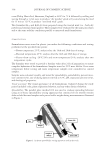
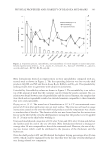
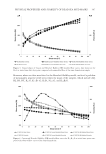
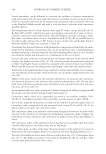
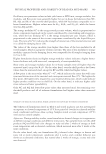
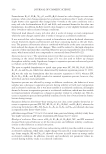
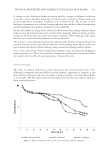
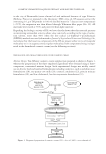
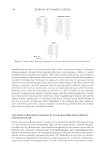
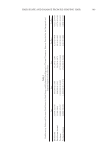
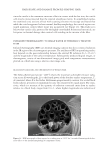
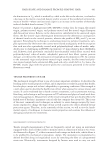
COSMETIC CREAM WITH AQUEOUS EXTRACT AND DATE FRUIT SEED OIL 361 in the city of Boumerdès (sweet almond oil and embossed beeswax of type Ickowicz (Bollone, France) or prepared in the laboratory: DSO, olive oil, DS aqueous extract (by immersing 0.1 g of DS powder in 100 ml distilled water for 7 days at room temperature (∼25°C), the suspension was then fi ltered through Whatman fi lter paper (No. 42). All materials were stored at +6°C and protected from light until use. Regarding the biologic activity of DS, we have already shown that this material presents an interesting antioxidant activity whose value can reach, according to the type of extrac- tion solvent, more than 90% when the free radical 2,2-diphenyl-1-picrylhydrazyl (DPPH•) method was used (submitted to Journal of Agricultural Science and Technology). So, we believe that the bioactive components of the DS are present either in its oil (nonpolar molecules) or in its aqueous extract (polar molecules), both components being incorpo- rated in the formulated cosmetic cream (see the following sections). PREPARATION AND CHARACTERIZATION OF THE COSMETIC CREAM Mixture Design. Ten different cosmetic cream samples were prepared as shown in Figure 1, whereas the proportions of the three employed ingredients were obtained using a three- component, constrained mixture design. Such experimental design was widely carried out on diverse food and nonfood formulations including cosmetics, such as jackfruit sauce formulations (28), soy-peanut-cow milk (29), cosmetic emulsions (22), protein mixture formulation (30), and low-cholesterol, low-fat mayonnaise formulation (31). Figure 1. Diagram of preparation of cosmetic creams. OO = olive oil, SAO = sweet almond oil.

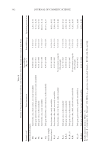
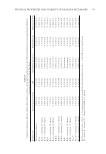
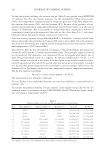
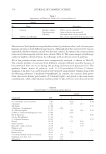
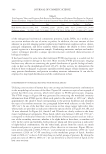
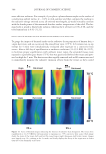
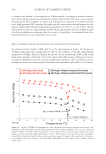
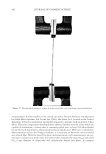
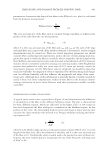
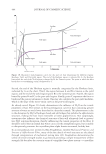
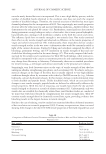
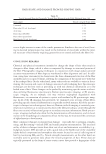
JOURNAL OF COSMETIC SCIENCE 362 To fi nd the optimal mélange, the mixture design (Table I) was applied using MINITAB 15 software. For this, the chosen responses are the spreadability (YSp) and viscosity (YVis), the independent variables being the weight proportions of the fatty phase (X1), the aqueous date extract (X2), and the beeswax (X3). Because of the presence of con- straints, the proportions of components should not vary between 0 and 1, as in the case of absence of constraints. But it is possible to obtain with these constraints a new set of components (named pseudocomponents) that take on the values from 0 to 1, this trans- formation allows making the design construction easier (32). After hot mixing (agitator of type Heidolph-RZR 0, Schwabach, Germany) of the fatty phase compounds, the emulsifi er and aqueous DS extract were added. Once the emulsion was obtained, the heating was stopped and the homogenization was maintained until the fi nal temperature (∼20°C) was reached. Spreadability. The Sp was determined according to the methodology preconized by Czarnecki and Gierucka (33) with minor modifi cations. The principle applied is that of an extensometer. The dispositive was constituted of two rectangular glass plates, one of them being horizontally fi xed on a support. At ambient temperature (∼25°C), 1 g of cosmetic sample was placed at the center of the fi xed plate using stainless steel microspat- ula with tapered end, after which the second plate was put down on the sample. A weight of 1 kg was then gently deposed on the second plate, over the sample. After 8 min, the diameter (D) of the imprint induced by the compressed cosmetic sample was measured. The Sp was expressed as follows: Sp (cm2) = surface of the imprint = π (D/2)2 The measurement was realized in triplicate. Viscosity. Earlier, it was established that the viscosity of an emulsion is correlated with its stability (34). To evaluate the physical stability of each cosmetic cream sample (20 g), the Vis was de- termined using a viscosimeter of type VISCO BASIC Plus/R7 (Barcelona, Spain), with a rate of 10 rpm at temperature of 20°C. Table I Mixture Design in Actual and Pseudocomponents (in Parentheses) Run Fatty phase (%) Aqueous phase (%) Beeswax (%) Sp (cm2) Vis (Pa·s) 1 45 (0) 30 (0) 25 (1) 14.18 ± 0.10 17.23 ± 0.68 2 45 (0) 45 (1) 10 (0) 15.19 ± 0.06 33.81 ± 1.87 3 60 (1) 30 (0) 10 (0) 8.89 ± 0.10 17.23 ± 0.68 4 55 (0.66) 32.5 (0.16) 12.5 (0.16) 11.93 ± 0.17 34.91 ± 2.32 5 47.5 (0.16) 40 (0.66) 12.5 (0.16) 11.93 ± 0.17 28.29 ± 2.44 6 47.5 (0.16) 32.5 (0.16) 20 (0.66) 14.51 ± 0.00 26.34 ± 0.85 7 50 (0.33) 35 (0.33) 15 (0.33) 7.86 ± 0.12 36.13 ± 2.89 8 52.5 (0.5) 37.5 (0.5) 10 (0) 18.58 ± 0.06 38.43 ± 0.54 9 52.5 (0.5) 30 (0) 17.5 (0) 10.55 ± 0.12 22.23 ± 0.07 10 45 (0) 37.5 (0.5) 17.5 (0.5) 10.74 ± 0.17 35.79 ± 0.01 Fatty phase = olive oil + sweet almond oil aqueous phase = aqueous date seed extract.
Purchased for the exclusive use of nofirst nolast (unknown)
From: SCC Media Library & Resource Center (library.scconline.org)