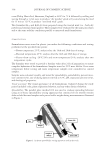
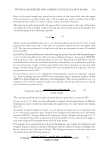
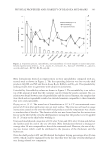
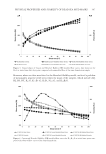
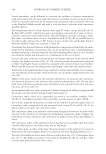
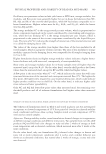
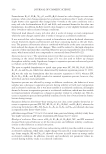
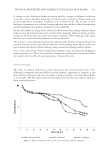
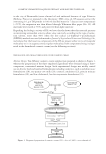
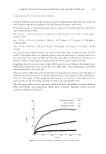
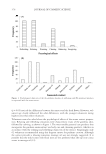
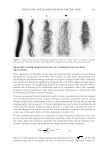
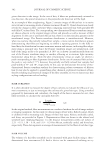
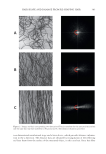
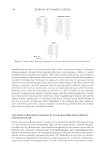
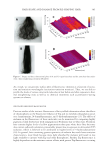
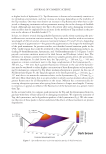
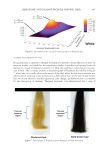
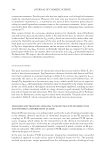
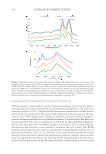
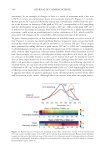
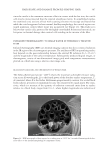
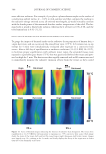
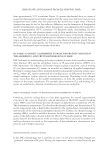
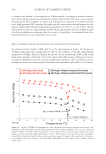
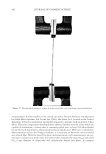
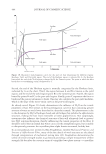
HAIR SHAPE AND DAMAGE FROM RE-SHAPING HAIR 401 the diminution in TD, which is marked by a shift to the left on the abscissa, is related to a decrease in the matrix cross-link density and/or scission of the nonhelical terminal do- mains of the IFs—where one functional culprit is an increase in the number of thermally induced disulfi de bond scissions (35,38). Figure 16 portrays a high-pressure DSC (HPDSC) overlay data for virgin, fl at-ironed virgin, polymer-treated virgin, and polymer-treated and fl at-ironed virgin European dark brown hair tresses. Relative to the characteristic endotherm for the untreated virgin fi bers, the fl at-ironed virgin thermogram demonstrates the deleterious consequences of thermal insult on the cortical proteins, wherein the profi les of ΔHD and TD are not apparent. Extending the technique to evaluating protective polymer treatments, sam- ples represented by the bottom two curves were treated analogously, with the exception that each was also equivalently treated with poly(methylvinyl ether-alt-maleic anhy- dride) prior to challenging in HPDSC experiments (4.5 mg polymer/g hair). McMullen and Jachowicz had previously concluded that thermally styled fibers treated with poly(methylvinyl ether-alt-maleic anhydride) protected hair fi bers against protein damage, as evidenced by the attenuation of tryptophan decomposition (39). In contrast to the untreated virgin and polymer-treated virgin samples, the fl at-ironed and poly- mer-treated sample had a substantial ΔHD peak and only a small shift in TD hence, the HPDSC results align with the protein-protective conclusions presented in the earlier fl uorescence work. TENSILE PROPERTIES OF HAIR The mechanical strength of hair is one of its most important attributes. It describes the bending and/or tensile properties of hair, and is important not only for general hair health, but also plays a major role in hair’s adaptability to grooming conditions. Hair strength is a term often used to describe the health state of hair when exposed to various stresses and strains. It can be weakened due to harsh cosmetic treatments, such as permanent waving, bleaching, and relaxing as well as exposure to UV radiation and physical insult with ther- mal styling appliances. Measurement of the tensile strength of hair specifi cally refl ects the health state of the hair’s innermost cortical cells that comprise the cortex (40). This is one of the most commonly used techniques in industry to assess damage incurred by treat- ments employed to change the shape of hair as well as protective effects afforded by hair protection agents. Therefore, in the remainder of this section, we will review the funda- mental aspects of techniques to measure tensile properties and examine the infl uence of damaging and protective treatments. MEASUREMENT OF TENSILE STRENGTH Tensile strength measurements of hair are frequently carried out using an instrument equipped with a load cell that is able to monitor stress as a function of strain or vice versa. As illustrated in Figure 17, a fi ber is mounted with crimps on both sides, which allows it to be grabbed by mechanical or pneumatic clamps. The instrument is programmed to deform the fi ber along its longitudinal access by stretching the fi ber at a programmed strain rate. Historically, instruments designed by Instron were used to carry out such

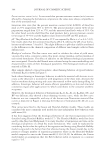
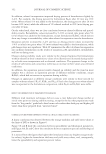
JOURNAL OF COSMETIC SCIENCE 402 measurements. Similar studies can be carried out with a Texture Analyzer, manufactured by Stable Micro Systems, Ltd. In the late 1980s, Dia-Stron, Ltd., located in the United Kingdom, devised an instrument specifi cally designed to measure such properties of hair fi bers. This same company has developed more advanced models over the years, which are capable of automation, a feature that is extremely useful since at least 100 fi bers should be used for each data point to obtain good statistical signifi cance. Moreover, to obtain key fi ber properties such as the Young’s modulus, it is necessary to know the cross-sectional area of each fi ber. With the latest Dia-Stron instrumentation, such measurements are car- ried out in conjunction with a laser micrometer that measures the large (Dmax) and small (Dmin) axis diameter of elliptically and cylindrically shaped hair fi bers. A common Figure 17. Photograph of pneumatic clamps of an Instron tensile tester containing a mounted hair fi ber.
Purchased for the exclusive use of nofirst nolast (unknown)
From: SCC Media Library & Resource Center (library.scconline.org)