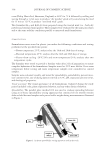
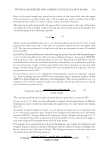
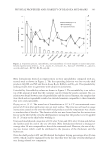
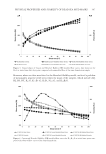
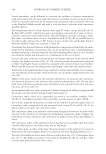
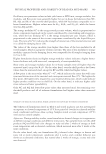
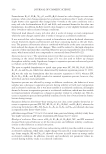
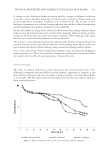
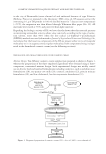
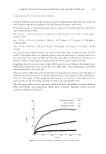
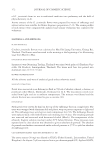
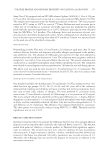
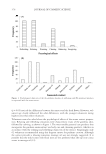
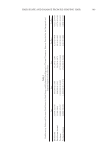
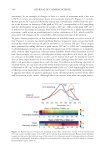
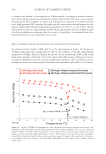
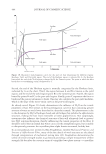
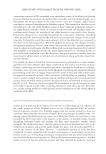
PHYSICAL PROPERTIES AND STABILITY OF DEAD SEA MUD MASKS 351 A change in this rheological behavior during stability storage at different conditions constitute a direct indicative parameter of structure and consistency changes, and gives an early expectation of product instability over its shelf life (8). The increase in most rheological parameters at accelerated testing indicates the stability of these formulations and the minimal risk of product separation over its shelf life. On the other hand, no changes were observed in fl ow index values during stability, which indicates that all formulations preserved their shear thinning behavior during stability testing, at all time points and under all storage conditions. Shear thinning is the target behavior for a semisolid mud preparation as discussed earlier. The increase in most rheological parameter values and the decrease in separation percent could be attributed to the poor barrier effi ciency of the package used, which could cause loss of water and volatile solvents during storage period and change product texture. Freeze–thaw cycling. Freeze–thaw cycling did not produce clear correlations for all physical characterization tests. There was variation in separation and rheological values for differ- ent samples whereas pH and visual appearance remained the same. EFFECT OF ETHANOL The effect of ethanol addition was more obvious at the concentration level of 5%. Although it improved the extrudability and the aesthetic appearance of samples, it also decreased the yield stress and viscosity values as shown in Figure 5 for formulation K5B5, as an example. The fl ow index values of all samples were less than one, which indicates a shear thinning behavior. Figure 5. Effect of ethanol on the viscosity curves of K5B5 at initial time point.

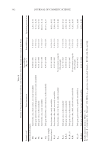
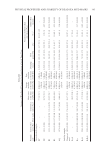
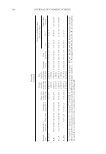
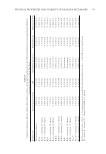
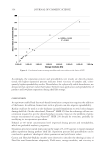
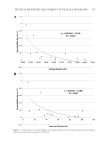
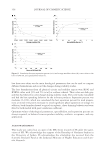
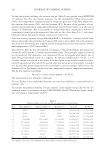
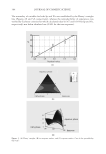
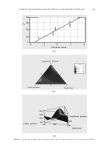
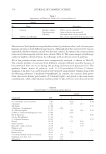
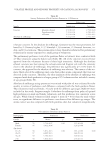
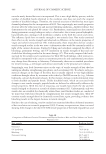
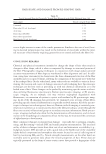
JOURNAL OF COSMETIC SCIENCE 352 In addition, ethanol incorporation improved drying percent of formulations slightly by 2–4%. For example, the drying percent for formulation B10G after 20 min was 16% (w/w). When ethanol 1% was added to the formulation, the drying percent after 20 min became 18% (w/w), while the addition of 5% ethanol resulted in 20% (w/w) drying per- cent after 20 min. On the other hand, there was no clear correlation between ethanol addition and spread- ability results. Extrudability values increased by 5–10% at initial time point when 5% (w/w) ethanol was added to the formulations, except formulation K5B5G, which did not show any change in extrudability values after ethanol incorporation into the formulation. Separation percent increased by 2–4% and loss on drying percent values increased by 1–4% at initial time point when 5% (w/w) ethanol was added to the formulations, while pH changes were not signifi cant. Table IV summarizes the effect of ethanol incorporation into in-house formulations on the results of separation, pH, spreadability, extrudability, and loss on drying tests. Changes during stability study were similar to the changes happened for formulations without ethanol in their composition values of oscillatory tests increased during stabil- ity at both room temperature and accelerated conditions. The apparent change in the results of yield stress and consistency index was an increase in their values at accelerated conditions. In addition, the separation percent results changed on stability and the trend in most samples was a decrease in separation percent at different stability conditions, except K5B5G, which had an increase in separation during stability. Changes in appearance at different storage conditions were similar to those noticed for samples without ethanol. K15G, K5B5, and N0.05G had color changes even when ethanol was incorporated in the formulation composition, while B10G and K5B5G were stable. EFFECT OF DIFFERENT MUD TREATMENT TECHNIQUES Different mud treatment techniques did not cause a clear behavioral change neither at initial time point nor during stability testing, except for the fact that preparations made from the “dry powder” grade had a faint brown color rather than dark gray and higher pH values than those prepared from “untreated mud.” CORRELATION BETWEEN DIFFERENT PHYSICAL CHARACTERIZATION PARAMETERS A linear correlation was observed between the storage modulus and yield stress values at the limit of LVE as shown in Figure 6. Figure 7A and B show the correlation between spreadability and rheological parameters, and Figure 8A, B, and C show the correlation between separation percent and rheological parameters. It is noticed from the fi gures that higher the formulation elasticity (higher storage modu- lus values), higher the formulation thickness and yield stress values, and, consequently, lower the spreadability and separation percent values.
Purchased for the exclusive use of nofirst nolast (unknown)
From: SCC Media Library & Resource Center (library.scconline.org)