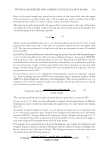
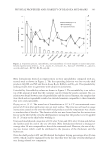
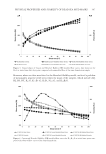
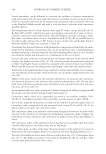
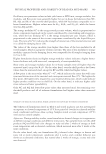
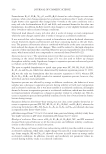
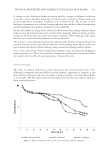
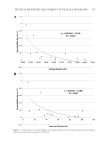
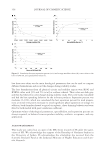
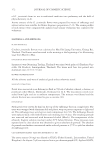
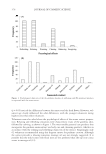
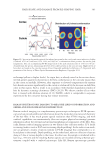
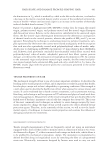
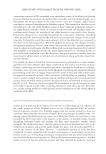
PHYSICAL PROPERTIES AND STABILITY OF DEAD SEA MUD MASKS 343 Most formulations showed an improvement in their spreadability compared with un- treated mud as shown in Figure 2. The best spreading behavior was for over-the-shelf products AQ, BS, and NC and the in-house B10G, K5B5G, and N0.05G. The spreadability ranking results were in agreement with subjective assessments. Extrudability. Extrudability values are shown in Figure 2. The extrudability is an indica- tor of the amount of mud that the customer can eject from the pouch container. No cor- relation was found between ease of spreadability and the ejected amount the samples that were thick and not spreadable resulted in extruded amounts comparable to those formulas that were easily spreadable. Drying rate at 32 °C. The water loss of formulations at 32° ± 1°C was monitored over a period of 20 min after application onto an inert surface. The time was set based on usage instructions stated on the over-the-shelf mud products and the temperature was chosen to simulate that of the skin. The duration of the test was chosen based on the instructions for use in the label of the over-the-shelf products stating that the product is to be applied for 15–20 min on the skin before washing it. Untreated mud showed a mass loss of 10% after 5 min and 20% after 10 min and did not dry further until the end of the test (20 min). Most formulations showed a drying per- centage after 20 min comparable to that of the untreated mud. However, the rate of dry- ing was slower, which could be attributed to the presence of the thickeners and the humectant. Over-the-shelf products RV and BS showed the highest drying percentage after 20 min (28%), which could be explained by the fact that they were the only over-the-shelf prod- ucts listing ethanol as a component. Figure 2. Separation percent, spreadability, and extrudability of tested samples at initial time point. Results represent mean ± SD (n = 3). K = kaolin, B = bentonite, N = Natrosol® 250 HHX, G = glycerin, over-the-shelf mud = RV, NC, BL, BS, and AQ.

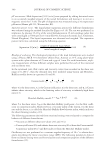
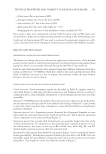
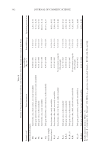
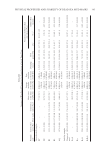
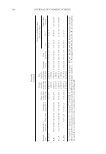
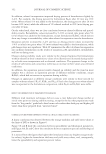
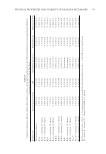
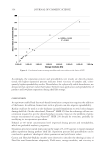
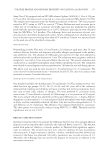
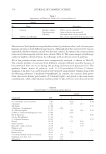
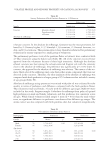
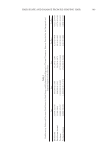
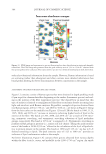
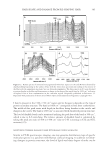
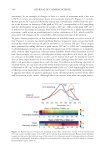
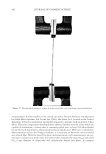
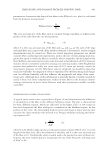
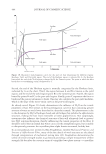
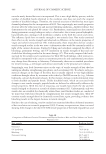
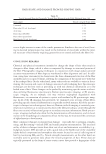
JOURNAL OF COSMETIC SCIENCE 344 Percent moisture content (w/w). It was noted that percent moisture content (w/w) was not affected by changing the formulation composition the values were always comparable to that of the untreated mud. Literature data state that the percent moisture content (w/w) (LOD%) of Dead Sea mud at 25°C ranges from 30% to 40% (5). The percent moisture content (w/w) of our preparations ranged from 32% to 37%, and the untreated mud had a value of 35%. On the other hand, over-the-shelf Dead Sea mud products had a percent moisture content (w/w) range of 34–41% and the highest values observed for RV and NC products. pH. The pH value of the Dead Sea mud at 25°C was reported by Ma’or et al. as 6.4–7.6 (5). Our results show that the untreated mud had a pH of 8, whereas the pH of our formu- lations varied between 7.9 and 8.3. This slight difference in pH value could be attributed to the differences in the chemical composition of different mud samples collected from different sites. Rheological evaluation. The fl ow curves were used to calculate the values of yield stress, viscosity, fl ow index, consistency index, fl ow point, storage modulus, and loss modulus of each tested formulation. The effect of additives on the different rheological parameters was investigated. Over-the-shelf brands were evaluated using the same methodology and characterized in terms of their rheological parameters. The rheological results are sum- marized in Table III. Most samples showed a typical viscoplastic, shear thinning behavior. A typical behavior of formula B10G is shown in Figure 3. Such a shear thinning or thixotropic behavior, in which the material will decrease in vis- cosity as the shear rate is increased or with progression of the shear time, decreases the load on machines during mixing and causes the material to fl ow easily during fi lling. In addition, thixotropic behavior will ensure effi cient spreadability on skin and structural consistency regain after application (3), which contributes to the consumer aesthetic acceptance. However, the rheological behavior of formulations K15G, K7.5B7.5G, K10B2G, NC, and RV was different they showed a shear thinning viscosity curve, while the fl ow curve behavior was not compatible with any of the known non-Newtonian material fl ow curves as depicted in Figure 4 showing the behavior of formulation K7.5B7.5G as an example. Flow curves were fi tted to the Casson and Herschel–Bulkley models. These models are considered the most commonly used models for time-independent fl ow behaviors with yield stress (16). It has been suggested that the rheological behavior of clay water suspensions is best described using Herschel–Bulkley model (17). The Herschel–Bulkley model has been used by Abu-Jdayil and Mohameed (3) to study the effect of temperature and time on the rheological properties of a Dead Sea mask formulation. This could be explained by considering the fact that the quality of the regression and fi tting using Herschel–Bulkley model is expected to be better than that obtained using the Casson model due to the presence of larger number of regression parameters (three in the Herschel–Bulkley model compared to two in the Casson model) (14,16,18,19). In addition, the Casson model makes an assumption that the fl ow behavior index or exponent is a constant equal to “0.5.”
Purchased for the exclusive use of nofirst nolast (unknown)
From: SCC Media Library & Resource Center (library.scconline.org)