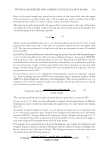
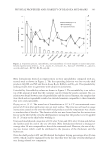
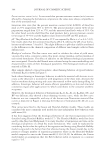
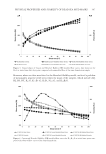
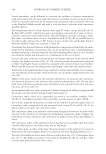
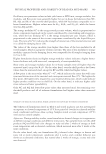
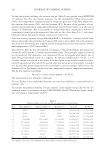
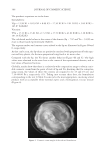
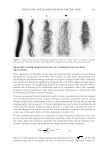
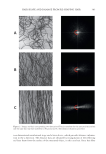
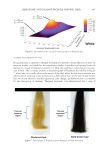
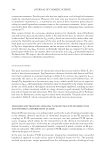
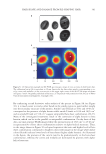
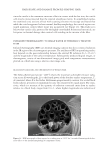
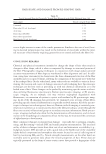
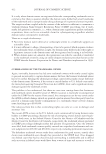
HAIR SHAPE AND DAMAGE FROM RE-SHAPING HAIR 397 since the cuticle is the outermost structure of hair in contact with the hot iron, the cuticle cells may be more protected than the internal amorphous matrix. In unpublished studies, we examined cross sections of hair with scanning electron microscopy and found that while the cuticles appeared to have normal, healthy morphology, the cortical region con- tained numerous cavities where tissue was incinerated (see Figure 14). This leads us to believe that cuticle cells, protected by the highly cross-linked A-layer and exocuticle, are less prone to thermal damage than cortical cells residing in the interior of the fi ber. INFRARED THERMOGRAPHY TO IMAGE WATER IN THERMALLY TREATED HAIR Infrared thermography (IRT) uses thermal imaging cameras that detect emitted radiation in the IR region of the electromagnetic spectrum. The usefulness of IRT in quantifying surface heat depends on the quasi-relationship between the emitted IR radiation (λ=3–15 cm-1) and the magnitude of the surface temperature. Subsequently produced digital images, or thermograms, consist of two-dimensional image grids with temperature measurements plotted on a third axis using a relative color image scale. BLACK BODY RADIATORS AND THE EMISSIVITY OF HUMAN HAIR The Stefan–Boltzmann law (Q = εσT4) relates the maximum achievable emissive radia- tion across all wavelengths, Q, to the fourth power of the absolute surface temperature, T, of a material, where σ is the Stefan–Boltzmann proportionality constant. For a solid black body radiator, Q reaches its maximum because the emissivity (ε) equals unity. The emis- sivity, which is a measure of the quantity of radiation a material emits from its surface relative to a black body, ranges from 0 to 1, where higher magnitudes are indicative of Figure 14. SEM micrograph of hair exposed to a curling iron at 230°C for 5 seconds illustrating the delete- rious effects to the internal morphological components of hair.

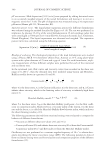
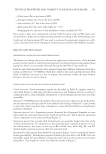
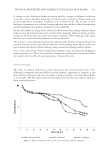
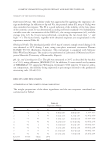
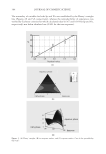
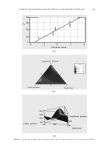
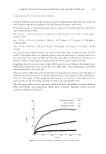
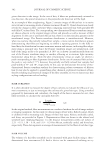
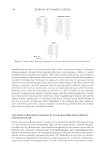
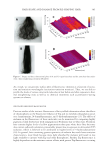
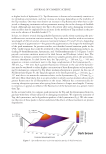
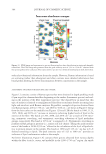
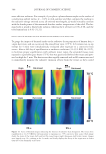
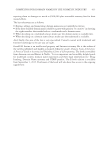
JOURNAL OF COSMETIC SCIENCE 398 more effi cient radiators. For example, if you place a planar thermocouple on the surface of a sweltering asphalt tarmac (ε = 0.93) in mid-summer and then compare the reading to the radiative energy emitted across all emitted wavelengths, Q would virtually correlate with the fourth power of the measured absolute surface temperature of the solid. The hu- man body is nearly a black body radiator, wherein the ε of water is 0.96–0.98, and the ε for human hair is 0.91 (31,32). EFFECT OF FLAT-IRONING ON THE RADIATIVE PROPERTIES OF HUMAN HAIR To gauge the impact of thermal insult on the radiative decay properties of human hair, a virgin hair tress, and an excessively fl at-ironed hair tress (175°C, 0.6 in/min root-to-tip sweeps for 5 min) were simultaneously evaluated after exposure to a convective heat source. After a full day of equilibration at ambient conditions (32–35% RH 20–22°C), to facilitate proper equilibration with ambient water vapor, the extended tresses were exposed to a portable space heater (75°C) that was positioned behind the tresses and pow- ered on high for 5 min. The heater was then rapidly removed and an IR camera was used to immediately monitor the radiative emission of heat from the tresses as they cooled Figure 15. Series of thermal images indicating the kinetics of radiative heat dissipation. The tresses were equilibrated at 32–35 %RH for 24 hours prior to exposing to a 75°C convective heat source. Each image shows the states of the virgin (left) and hot fl at-ironed virgin (right) European dark brown tresses. Images were logged every 10 s, starting at the 5 s mark, and clearly displays the decay of the virgin tress is slower than that of the thermally styled tress.
Purchased for the exclusive use of nofirst nolast (unknown)
From: SCC Media Library & Resource Center (library.scconline.org)