VOLATILE PROFILE AND SENSORY PROPERTY OF GARDENIA JASMINOIDES 373 Santa Clara, CA) equipped with an HP-5MS column (Agilent 19091S-433, 30 m × 250 μm, 0.25 μm fi lm thickness) and connected to a mass spectrometer (MS Agilent 5973N). The samples were separated under the following analytical conditions. The oven program started at 80°C, rising to 300°C at a rate of 7°C/min. Helium was used as carrier gas at a fl ow rate of 1.0 ml/min at a pressure of 64 kPa. Injection was performed in splitless mode with the injector temperature set at 220°C. Reference mass spectra were obtained from the MS-Wiley 7n.1 database. The enfl eurage bases and maceration solvents were also injected to determine background cutoffs. Aroma compounds were identifi ed on the basis of the mass spectra showing more than 95% similarity. Content was reported based on the peak area of the identifi ed compounds. PREFERENCE TEST Nonsmoking, healthy Thai male (21) and female (22) volunteers aged more than 16 years without olfactory disorders and fragrance and pollen allergies participated in the prelimi- nary preference test. The absolute de enfl eurage and concretes (50 mg) were prepared in amber bottles with a sniff port diameter of 1 mm. The volunteers were assigned to sniff each sample for 1 min with a 2-min rest period before the next test. This sensory evaluation was conducted in a controlled-environment room without interference factors. The volunteers were denied access to fragrance and scent products for 3 h before the test and during the test. The Likert scale was used for odor intensity (1–5) and preference (1–5) evaluations. The score interval was [(maximum means – minimum means)/5]. The data were analyzed and presented as means ± standard deviation. ODOR QUALITY OF ABSOLUTE DE ENFLEURAGE One hundred and fi fty-two healthy male (76) and female (76) Thai volunteers were clas- sifi ed into four age groups: 16–25, 26–35, 36–45, and 45 years. All of the volunteers refrained from smoking and drinking of liquor, and they did not have respiratory disor- ders such as head colds, asthma, or allergies. The most preferred G. jasminoides aroma extract from 2.5 was diluted in mineral oil (Namsiang) at a concentration of 50 mg/ml. The aroma sample (20 μl) was adsorbed on fi lter paper (Whatman no. 1, Sigma-Aldrich, Singapore) cut into squares (1 × 1 cm) and placed inside the amber bottle with a sniff port as above, and was sensorially evaluated. A Likert scale was used for odor preference (1–5) and difference (1–5) evaluations. The difference was compared with fresh G. jasminoides. The odor quality was statistically analyzed using SPSS V.11.5 (IBM, Thailand) and the signifi cance was set at p 0.05. RESULTS AND DISCUSSION Spermaceti wax was selected to prepare the enfl eurage base because of its optimal physical properties and no rancidity that could alter the extracted fl ower scent (11). The wax was mixed with palm oil, which is a versatile product in Thailand with signifi cant applica- tions in cosmetics. The oil and wax ratio were varied to optimize the base for gardenia odor extraction. A high-consistency, odorless, colorless, semihard base that allowed easy removal of the fl ower was obtained (10) with a spermaceti wax to palm oil ratio of 3:2. Thereafter, the enfl eurage base was used for the fragrant oil extraction in addition to the maceration extraction.

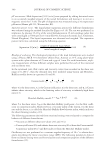
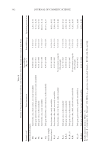
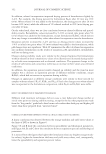
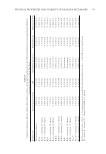
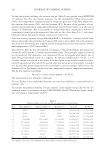
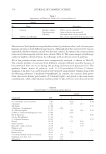
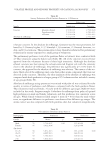
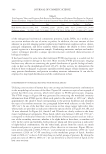
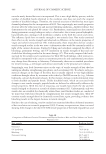
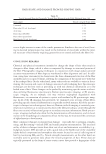
JOURNAL OF COSMETIC SCIENCE 374 Maceration of fresh gardenia using absolute ethanol, petroleum ether, and n-hexane gave fragrant oil extracts with different appearances. Although all of the concretes were viscous semisolids, absolute ethanol concrete was the least colored. In contrast, the concretes from extractions with nonpolar solvents were colored (Table I). The aroma sample of enfl eurage yielded a slightly colored absolute de enfl eurage with an obvious scent of gardenia. All of the gardenia aroma extracts were comparatively analyzed, as shown in Table II. The volatile profi les of concretes from different solvents differed, possibly because of bioconversion that can occur during the picking and extraction processes (10). The gardenia fl ower waxes of palmitic acid, E-5,10-secocholest-1(10)-en-3,5-dione, stigmasta-5,22-dien-3-ol, and γ-sitosterol were extracted using absolute ethanol, along with the fl avoring substance 2-methoxy-4-vinylphenol. In contrast, the concrete from petro- leum ether and n-hexane gave linalool, Z-3-hexenyl tiglate, and guaiol as the main aroma contributions, while ethyl linoleate and bicyclo[4.3.1]dec-1(9)-ene were detected in the Table II Volatile Profi les (%) of Gardenia Aroma Extracts Compound RT Sample 1 2 3 4 E-3,7-Dimetyl-1,3,6-octatriene 6.81 - 0.39 - 0.28 L-Linalool 8.21 - 2.34 2.17 - 1H-Indole 12.98 - - - 0.15 2-Methoxy-4-vinylphenol 13.35 0.66 - - - Z-3-Hexenyl tiglate 13.52 - 1.64 1.01 0.42 6-(Pent-2’-enyl)-tetrahydropyran-2-one 16.90 - 0.76 - - E,E-α-Farnesene 17.09 - - - 0.60 2,4-di-t-Butylphenol 17.22 - 0.52 - - Z-3-Hexenyl benzoate 18.25 - - - 0.22 Guaiol 18.78 - 1.73 0.83 - Ethyl linoleate 23.19 - - 1.05 - Bicyclo[4.3.1]dec-1(9)-ene 23.29 - - 2.78 - Palmitic acid 24.17 1.18 - - - E-9-Octadecene 25.11 - - - 0.12 Linoleic acid 46.44 - 0.78 - - E-5,10-Secocholest-1(10)-en-3,5-dione 47.52 1.75 - - - Stigmasta-5,22-dien-3-ol 48.35 1.75 - - - γ-Sitosterol 49.97 2.45 - - - Table I Appearances and Extractive Yields of G. jasminoids fl ower oil Sample Appearance No. Name 1 Concrete Absolute ethanol Yellow viscous semisolid 2 Petroleum ether Deep yellow viscous semisolid 3 n-Hexane Greenish yellow viscous semisolid 4 Absolute de enfl eurage Pale viscous liquid with fresh gardenia odor
Purchased for the exclusive use of nofirst nolast (unknown)
From: SCC Media Library & Resource Center (library.scconline.org)