J. Cosmet. Sci., 66, 371–377 (November/December 2015) 371 Volatile profi le and sensory property of Gardenia jasminoides aroma extracts MAYUREE KANLAYAVATTANAKUL and NATTAYA LOURITH, School of Cosmetic Science, Mae Fah Luang University, Chiang Rai 57100, Thailand Accepted for publication October 9, 2015. Synopsis The volatile profi les of aroma extracts prepared from the fl ower of Gardenia jasminoides by different methods were investigated using gas chromatography-mass spectrometry. The enfl eurage extraction using spermaceti wax and palm oil afforded the best aroma extract with a preference that was signifi cantly (p 0.05) better than those from solvent extractions, as sensorially evaluated in 43 volunteers. The odor quality of the absolute de enfl eurage was similar to the fl oral scent of fresh gardenia, as confi rmed in 152 volunteers. Although female volunteers were insignifi cantly (p 0.05) better sensed than male volunteers, age was signifi cant (p 0.05). The nuance gardenia fl oral scent was contributed by farnesene, Z-3-hexenyl tiglate, Z-3-hexenyl benzoate, and indole. The relaxing and refreshing sensations of the gardenia odor suggest its applications in body care, cleansing products, and perfume. This study addresses the increasing interest in fl oral fragrances. The aroma profi le and sensory property of this sweet and elegant scent fl ower will strengthen and expand the applications of gardenia from traditional medicine to those of perfumery and the fi eld of phytochemistry. INTRODUCTION Gardenia jasminoides Ellis (Rubiaceae) or gardenia is a fragrant fl owering plant that has long been used in traditional Chinese medicines. Its fruit is used for hepatic pain caused by cirrhosis, abdominal pain caused by dysentery, and it is considered to have antiphlo- gistic, diuretic, laxative, choleretic, and homeostatic effects when applied topically. In addition, the fruit also shows antiangiogenic activity. Accordingly, the fruit has been studied extensively to identify the active components, which are mainly iridoids (1,2). In addition, use of the fruit extract for treatment and/or protection of gastritis has been reported (3). This herb with white fragrant fl owers is largely cultivated in warm temperate and sub- tropical climates and is abundant in Thailand. However, the volatile components of the G. jasminoides fl ower have received sparse attention. We consider that aroma profi le analy- sis of this sweet and elegant scent fl ower will strengthen and expand the usefulness Address all correspondence to Nattaya Lourith at nattayal@mfu.ac.th.

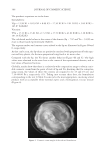
JOURNAL OF COSMETIC SCIENCE 372 of G. jasminoides from its use in traditional medicine into perfumery and the fi eld of phytochemistry (4–6). Aroma extracts of the G. jasminoides fl ower were prepared by means of enfl eurage and solvent extraction suitable for fl ower fragrance preparation (7–9). The aroma profi les of each extract were comparatively analyzed and sensory evaluation was conducted by volunteers. MATERIALS AND METHODS PLANT MATERIALS Gardenia jasminoides fl owers were cultivated at Mae Fah Luang University, Chiang Rai, Thailand. The fl owers were harvested in the morning at the beginning of its blossoming stage from March to May. ENFLEURAGE BASE PREPARATION Spermaceti wax (Namsiang Trading, Thailand) was mixed with palm oil (Tanakorn Veg- etable Oil Products, Samutprakarn, Thailand). The warm melt base was poured into aluminum trays (4.5 × 17.0 cm). FLOWER OIL PREPARATION All the solvents used were of analytical grade unless otherwise stated. SOLVENT EXTRACTION Petals were macerated in an Erlenmeyer fl ask in 700 ml of absolute ethanol, n-hexane, or petroleum ether (Merck, Darmstadt, Germany) for 24 h. The maceration vessels were sealed from light and air at ambient temperature. The mixture was fi ltered and the solvent fraction was concentrated to give a concrete (10). ENFLEURAGE Fresh petals were strewn by hand on the top of the enfl eurage bases in a single layer. The trays were wrapped with aluminum foil and plastic wrap to prevent exposure to light and air. The enfl eurage trays were kept at room temperature for 24 h. The defl eurage fl owers were replaced daily with fresh fl owers each morning for 14 days. The resulting pomade was removed and extracted with denatured alcohol (Merck). The temperature of the ethanolic fragrant solution was kept under 20°C before fi ltration. These processes were repeated until a clear solution was obtained to give an absolute de pomade. The absolute de pomade was further concentrated under reduced pressure at 35°C to yield an absolute de enfl eurage (10). GAS CHROMATOGRAPHY–MASS SPECTROMETRY (GC–MS) The aroma extract (50 mg) was diluted in CH2Cl2 (Fisher Scientifi c, Leicestershire, United Kingdom). An aliquot (5 μl) was injected into a gas chromatograph (GC Agilent 6890N,
Purchased for the exclusive use of nofirst nolast (unknown)
From: SCC Media Library & Resource Center (library.scconline.org)