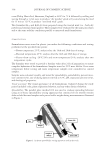
PHYSICAL PROPERTIES AND STABILITY OF DEAD SEA MUD MASKS 339 Excess of the mud sample was spread on the surface of the lower slide, then the upper slide was used to cover the sample and a 100 g weight was used to compress the sample between the two slides for 2 min to obtain a layer of uniform thickness. The time (in seconds) required for the upper slide to move away to the edge of the lower one when the 100 g weight is placed on the pan was recorded and spreadability was calculated using to the following equation = × l S m t (1) where S is the spreadability (kg cm·s-1), m is the mass placed on the pan (0.1 kg), l is the length of the slide (cm), and t is the time (in seconds) required to move the upper slide (10). The test was performed in triplicates and data are presented as mean ± standard deviation (SD). Extrudability. The extrudability was evaluated using the method described by Purushothamrao et al. (11) after modifi cations. The test was performed using a clean pouch (PET/PE, 500 g capacity) with a tip opening diameter of 1 cm. The pouch was half-fi lled with the mud formulation, then for each formulation the extrudability was evaluated in triplicate by measuring the weight of mud ejected from the pouch opening on pressing with fi ngers, while holding the pouch in hands. The test was performed in triplicates and data are presented as mean ± SD. Percent moisture content (w/w). Duplicate measurements of percent moisture content (i.e., Loss on Drying percent LOD%) were performed using a moisture analyzer (Adam AMB 310 Adam Equipment, Kingston, United Kingdom). The test was performed on 1–2 g samples at 60°C until a constant weight was achieved, and the percent moisture content was calculated as percent (w/w). - initial weight final weight % moisture content= 100 initial weight × (2) The test was performed in triplicates and data are presented as mean ± SD. Drying rate at 32 °C. This test was performed to evaluate the drying behavior of different formulations under conditions mimicking the application of a mud mask onto human skin (12). Accurately weighed samples of about 1 g were spread on square pieces of aluminum foil (5 × 5 cm) using a spatula to get a uniform layer. Samples were then placed in a laboratory incubator (IN-010 Gemmy Industrial Corporation, Taipei, Taiwan) maintained at 32° ± 1°C to simulate human skin temperature and monitored for 20 min, which is the applica- tion time suggested by manufacturers of facial mud masks. Four samples were prepared from each tested formulation one sample was withdrawn and weighed using an analytical balance (Shimadzu AY120 analytical balance Nakagyo-ku, Kyoto, Japan) every 5 min up to 20 min. The drying percentage at each time point was calculated using the following equation original weight weight after incubation % drying = 100% original weight - × (3)

JOURNAL OF COSMETIC SCIENCE 340 pH measurement. Mud dispersions [10% (w/w)] were prepared by adding deionized water to an accurately weighed amount of the tested formulation and leaving it to stir on a magnetic stirrer for 1 h (9). The pH of dispersions was measured using a microprocessor pH meter (Hanna pH 211 Woonsocket, RI). Separation percent (w/w). The liquid phase separation percent for different formulations was evaluated using the method described by Zague et al. (9). The test was performed, in triplicates, by placing 15–20 g of the tested formulations in 15-ml centrifuge tubes that were centrifuged at 3500 rpm for 15 min (K2042 Centurion Scientifi c Ltd., Chichester, United Kingdom). The liquid supernatant was decanted and weighed. The separation percent (w/w) was calculated using the following equation weight of separated liquid phase Separation % w/w = 100 initial weight of sample × (4) Rheological evaluation. The rheological properties of the mud formulations were studied using a Physica MCR 301 rheometer (Anton Paar, Austria) at 25°C using plate–plate system with a plate diameter of 25 mm and a gap of 1 mm. For each formulation, tripli- cate measurements of three different samples were performed for each of the rotational and oscillatory tests. In the rotational tests, fl ow curves and viscosity curves were recorded in the shear rate range of 0–100·s-1, then the obtained data were modeled using Casson and Herschel– Bulkley models shown in equations (5) and (6). Casson model: τ τ η γ 1 1 1 1 2 2 2 2 c c q (5) where τ is the shear stress, τc is the Casson yield point, γ is the shear rate, and ηc is Casson infi nite shear viscosity, which is the limiting value of viscosity at infi nitely high shear rates (13). Herschel–Bulkley model: τ τ γn HB k + × (6) where τ is the shear stress, τHB is the Herschel–Bulkley yield point, k is the fl ow coeffi - cient or consistency index, which serves as a viscosity index of the system, γ is the shear rate and the factor, n, is called the Herschel–Bulkley fl ow behavior index, which indicates the shear thinning tendency (14). The following parameters derived from rotational testing were evaluated to compare the behavior of different formulations. —Viscosity at different shear rate values (25/s and 75/s) —Casson yield stress (Pa) and infi nite shear rate viscosity (Pa·s) from the Casson model. —Consistency index (Pa·sn) and fl ow index (n) from the Herschel–Bulkley model. Oscillatory test was performed at a constant angular frequency of 10·s-1 to obtain rheo- grams describing the linear viscoelastic range (LVE). The following parameters derived from oscillatory testing were used for evaluation and comparison purposes of the different formulations (15).
Purchased for the exclusive use of nofirst nolast (unknown)
From: SCC Media Library & Resource Center (library.scconline.org)