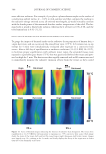
J. Cosmet. Sci., 66, 379–409 (November/December 2015) 379 Quantifying hair shape and hair damage induced during reshaping of hair ROGER L. MCMULLEN, GUOJIN ZHANG, and TIMOTHY GILLECE, Ashland, Inc., Bridgewater, NJ 08807. Accepted for publication September 14, 2015. Synopsis The manipulation of hair shape, either to straighten or curl hair, is carried out on a grand scale in the hair care consumer market. Often, such changes are brought about through chemical or physical treatment, resulting in changes to hair chemistry. In this article, we review existing and present new data on methods to assess the effi cacy of such treatments, mostly concentrating on imaging technologies used in conjunction with image analysis. In addition, we introduce spectroscopic imaging techniques and fl uorescence spectrophotometry as tools to assess the biochemical state of the hair fi ber as a result of hair shape modifi cation regimens. Finally, we demonstrate how the structural integrity of the fi ber is monitored with dynamic scanning calorimetry and traditional mechanical testing of the tensile properties of hair. INTRODUCTION As an outward expression of beauty, individuals often manipulate the shape of their hair to make themselves more attractive. Often, this involves subjecting hair to chemical and physical treatments that are carried out to change the shape of hair, such as permanent waving, relaxing, and hair straightening treatments (e.g., hot fl at iron, Brazilian hair treatments, and Japanese straightening). Although permanent waving may be more of a niche market, relaxers are used almost universally by individuals with African hair, espe- cially in the United States (1). In recent years, the use of hot straight irons and Brazilian hair treatments (e.g., Brazilian Blowout) has exploded (2). In order to gain a better grasp of the effi cacy of products and treatments, it is desirable to have established techniques to quantify such changes in the three-dimensional geometry of the hair fi ber assembly. One of the most suitable avenues for carrying out such analyses involves photographic imag- ing in combination with image analysis techniques (3). In most circumstances, these modifi cations to hair are accompanied by irreversible damage to the fi ber’s chemical and morphological structure. For example, thermal treatments carried out with hot irons can result in a loss of free and bound H2O, tryptophan degradation, color changes, increases in mechanical combing forces, cuticle cracking (axial and radial), cuticle fusion and Address all correspondence to Roger McMullen at rmcmullen@ashland.com.

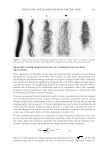
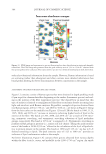
JOURNAL OF COSMETIC SCIENCE 380 bubble formation, and an increase in tensile strength (cross-linking). Such information was garnered from decades of research with both wool and hair (4–8). Chemicals treat- ments, such as permanent waving and hair straightening with relaxers, are also very damaging to hair. Typically, permanent waving is accomplished by treating the hair fi rst with a reducing agent (e.g., mercaptoethanol) to break disulfi de bonds, and then once hair is manipulated in the desired formation, it is treated with H2O2 to reform the disul- fi de links (9). As a result, the ensuing damage to permanently waved hair is paramount and leads to a reduction of the fi ber’s overall mechanical properties as well as surface dam- age. Commonly employed by individuals whose hair can be characterized as very tightly curled (e.g., African-type hair) or frizzy, hair straightening formulations (chemical relax- ers) rely on the activity of strongly basic formulations that result in chemical and mor- phological changes in the hair shaft. Traditionally, NaOH-based (lye) relaxers were used to carry out such a task, resulting in a great deal of damage to the fi ber including: disul- fi de bond cleavage, formation of lanthionine cross-links, supercontraction of the fi ber, protein conformational changes (e.g., denaturation of the alpha-helical structure), and an increase in mechanical combing forces (10). More recently, lower pH chemical relaxers have been introduced into the market place however, they still damage the fi ber. In this article, we demonstrate the utility of imaging techniques for quantifying hair shape as well as state-of-the-art methods to monitor damage induced by treatments intended to reshape the hair. IMAGING TECHINQUES AND IMAGE ANALYSIS TO QUANTIFY HAIR SHAPE In the past decade, advances in photographic imaging have reached new heights, allow- ing scientists to gather data in pictographic form rather quickly and inexpensively. High- resolution images of hair are now easily generated by DSLR cameras with full exposure control that can be used in combination with sophisticated, yet economic, illumination systems. Another option for generating high-quality images is to utilize fl atbed scanner technology. Some of the major advantages of scanners include reproducible light illumi- nation as well as increased depth of fi eld, both extremely applicable for examining hair tresses of varying shape. Regardless of the technique employed to generate images, data can be extracted from the photographs utilizing image analysis software, which is easily accessible for most laboratories. In the paragraphs that follow, we demonstrate the use of image analysis in combination with photographic techniques to measure the shape of hair. We are specifi cally interested in determining the amount of frizziness or curliness of hair as well as monitoring fi ber alignment, which is extremely useful for measuring the straightening effi cacy of a chemical relaxer or thermal styling treatment. Morphological differences in various hair types lead to distinct geometries in the overall three-dimensional structure of the fi ber assembly. In effect, we have a variety of hair shapes including: extremely fi ne to coarser grades of Caucasian hair of European descent, frizzy hair such as that of mulatto origin from Brazil, African hair types that tend to be extremely curly, hair from Middle Eastern countries and of Arabic descent, and Asian hair, which is probably a gross simplifi cation of a selection of hair from distinct corners of this continent ranging from Japanese to Southern Indian and everything in between in- cluding a variety of Chinese hair types. Figure 1 contains photographs of a selection of hair types to illustrate the variety of fi ber assembly shapes found in humans of different racial backgrounds.
Purchased for the exclusive use of nofirst nolast (unknown)
From: SCC Media Library & Resource Center (library.scconline.org)