JOURNAL OF COSMETIC SCIENCE 336 Dead Sea mud is a suspension of very fi ne clay particles in water (4) it is the natural sediment of solid mineral clays with an interstitial solution of inorganic salts and sulfi de compounds that arise from microbiological activity (5). It is characterized by its blackish color and the distinct sulfur smell (1). In addition, at 25°C, it has a pH of 6.4–7.6, density of 1.6–1.8 g/l, water content of 30–40%, nonpatho- genic microbial content of less than 100 CFU/g, and 86–98% of particles with size less than 5 mm (5). The therapeutic effect of Dead Sea mud is related to its high mineral content and ability, due to its black color, to retain heat for many hours (3). In general, Dead Sea mud is used as packs for the treatment of rheumatic disorders such as myalgias, neu- ralgias, and osteoarthritis masks to treat cutaneous skin disorders such as acne, der- matitis, psoriasis, xerosis, and eczema and baths to treat lipodystrophy and cellulite (6,7). In addition, Dead Sea mud and salts have been widely used in cosmetic and personal care products including lotions, masks, soaps, creams, and shampoos (1,3). The formulation and processing of Dead Sea products is not a simple undertaking, and should be tackled using valid scientifi c and technical approaches. For example, the formulation of cosmetic emulsions containing Dead Sea salts is known to give rise to production and stability problems and development scientists must take into consideration the maximum salt level that can be incorporated into a formulation without affecting stability, consistency, and liquid phase separation while maintain- ing effi cacy (8). On surveying the commercially available Dead Sea mud mask products in the Jordanian market and interviewing technical and quality staff of Dead Sea products manufacturers, we have identifi ed phase separation, stability issues as well as diffi culty in processing, and fi lling as the major problems in this product category. Rational use of formulation additives can improve the properties of mud formulations. These additives include thickeners that are expected to decrease phase separation of fi n- ished product, humectants that may be used to prevent dehydration, and ethanol that accelerates mud drying after application onto the skin. This study was initiated to evaluate the effects of commonly used additives in Dead Sea mud formulations as well as mud treatment techniques on the physical properties, rheology, stability, and aesthetic acceptance of the fi nished mud products. MATERIALS AND METHODS MATERIALS Dead Sea mud was provided by Numeira Mixed Salts & Mud Company Ltd. (Amman, Jordan), bentonite (Al2O3.4SiO2.H2O) was purchased from Vickers Laboratories Ltd. (West Yorkshire, England), kaolin (Al2H4O9Si2) was purchased from Merck (Darmstadt, Germany), Natrosol® 250 HHX (hydroxyethyl cellulose) was provided by Ashland Inc., (Wilmington, DE), and glycerin (99.5%) and ethanol pure (96%) were obtained from AZ-Chem (Selangor, Malaysia).

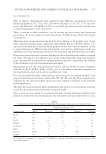
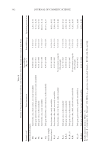
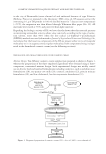
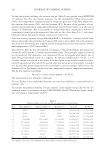
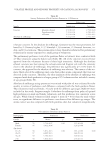
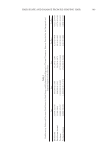
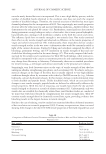
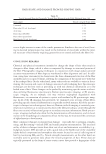
PHYSICAL PROPERTIES AND STABILITY OF DEAD SEA MUD MASKS 337 MUD PREPARATION Effect of additives. Formulations were prepared using different concentration levels of thickeners [kaolin at 5%, 7.5%, 10%, 15% (w/w), bentonite at 2%, 5%, 7.5%, and 10% (w/w), and Natrosol® 250 HHX at 0.05% (w/w)] while glycerin was used as a humectant in some formulations at 10% (w/w) level. Then, according to their aesthetics, ease of mixing and processing, and separation percentage, the most satisfactory formulas (shown in Table I) were chosen for further investigation. Thickeners were incorporated into the mud by slow addition, as dry powder, over 15 min with continuous mixing using a planetary mixer (Home Electrics TC-800, China, 5.5 l capacity) at medium speed, then the whole preparation was left to mix for another 15 min to ensure homogeneity. When kaolin and bentonite were used in combination, kaolin was added fi rst since it produced lower thickness than bentonite, and then bentonite was added. Humectants were reported to prevent dehydration of the fi nished mud products on aging (9). Thus 10% glycerin was added to some of the studied Dead Sea mud mask formula- tions. Glycerin was incorporated by mixing with the mud for 5 min before the addition of the thickener as per the abovementioned procedure. Ethanol was used at two concentration levels [(1% and 5% (w/w)] in selected formula- tions (K15G, B10G, K5B5G, K5B5, and N0.05G). It was added as the fi nal component to the mud mask mixture and mixed for an additional 5 min. Five over-the-shelf Dead Sea mask products were selected to be studied parallel to our prepared formulations and were coded as RV, NC, BL, BS, and AQ. These samples were evaluated by the same procedures and at the same stability conditions as the prepared mud formulations. The Dead Sea mud used in the above formulations was used as received without treatment except for the manual removal of stones (untreated mud). Effect of mud treatment method. To investigate the effect of mud treatment method on the properties of Dead Sea mud formulations, the untreated mud was either dried in a tray Table I Compositions of the Selected Dead Sea Mud Mask Formulations Evaluated in the Stability Study Composition percent (w/w) Formula codea Mud Bentonite Kaolin Natrosol Glycerin K15G 75 — 15 — 10 K10 90 — 10 — — B10G 80 10 — — 10 K5B5G 80 5 5 — 10 K7.5B7.5G 75 7.5 7.5 — 10 K5B5 90 5 5 — — N0.05G 89.95 — — 0.05 10 K10B2G 78 2 10 — 10 a K = kaolin, B = bentonite, N = Natrosol® 250 HHX, G = glycerin. The subscript represents percent (w/w) level of the additive.
Purchased for the exclusive use of nofirst nolast (unknown)
From: SCC Media Library & Resource Center (library.scconline.org)